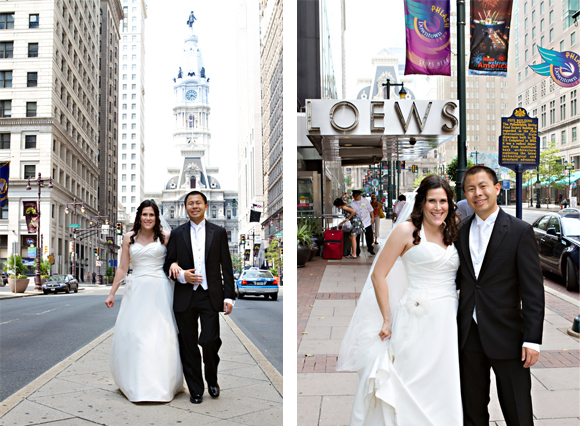
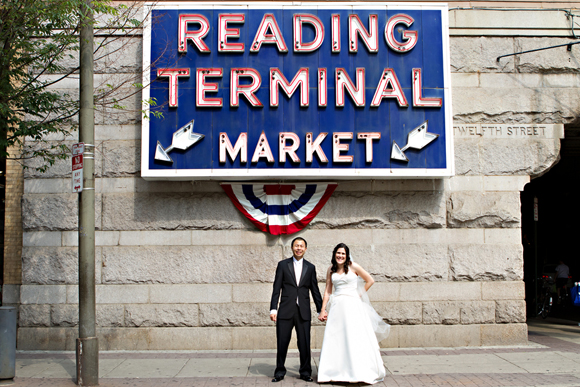
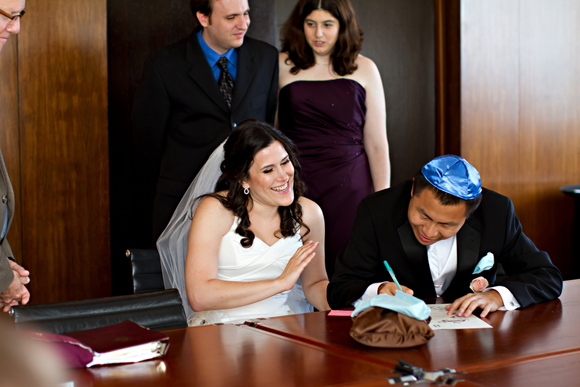
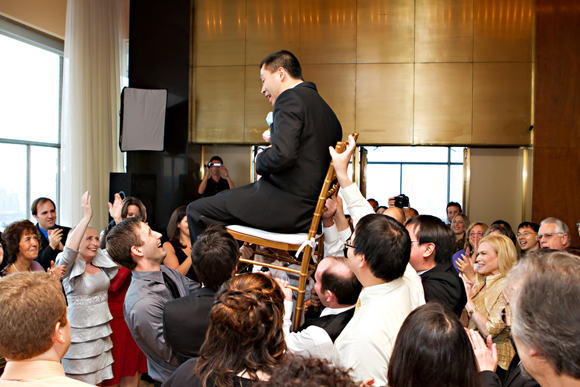
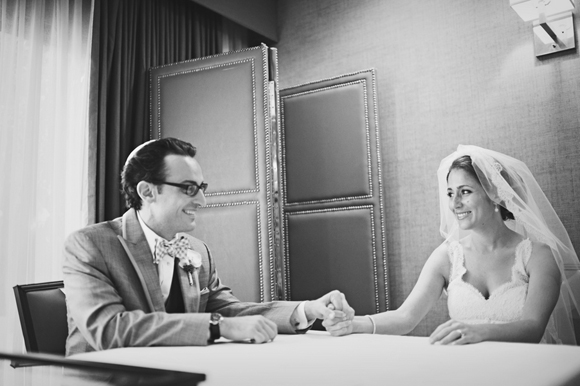
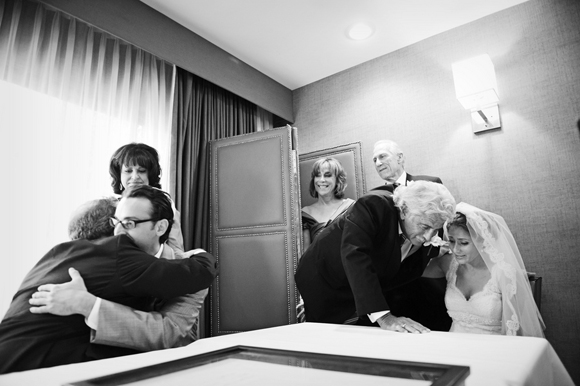
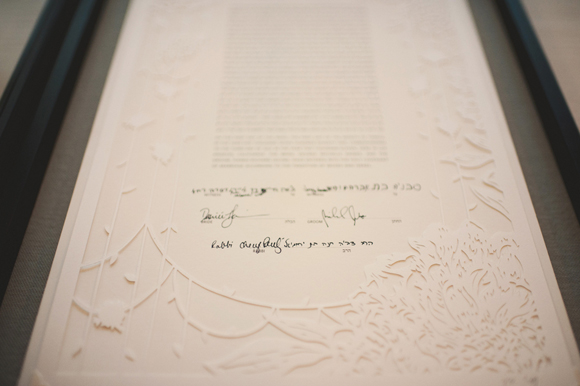
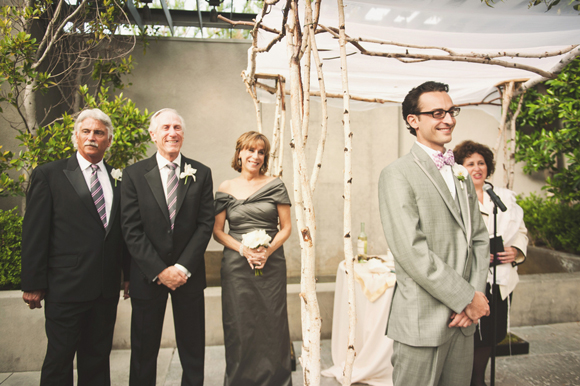
We are honored to have a rock star cantor guest-blogging for The Wedding Yentas today! Cantor Debbi Ballard of My Personal Cantor is here to unmix any mix-ups you may feel if you’re planning a mixed wedding! If the man of your dreams isn’t Jewish or if you’re still getting the hang of the Big J, you might be feeling some stress or confusion. Relax and read on as Cantor Debbi provides you some nuggets of wisdom from her many years of officiating interfaith weddings!
Congratulations! The day you’ve dreamed of forever has finally arrived, and you are newly engaged! What joy! It is so much fun to choose the venue, flowers, music, and colors for that special day. There are so many choices to make, and so many ways to make your wedding day a reflection of your individual personalities, and you are having fun doing it! Well, at least it was fun, until one of your parents asked you the “Question” –
Mother # 1: “Of course, you will respect your heritage and have a Rabbi officiate at your wedding…right?”
Mother #2: “Fabulous! I’ll call the Pastor! The wedding will be so beautiful in the church you grew up in!”
(notice that inevitably – there is just the appropriate amount of guilt inserted in Mother #1’s request….)
OMG! What to do? How are you going to pull this one off? Colors? Easy. Music? You knew exactly what band/DJ you wanted from the minute he proposed! Venue? A few tastings, and extra calories to work off, and you’ve got a hot spot. But, how on earth are you going to please your mothers, and make this ceremony a fair representation of both of you?
I cannot tell you how many desperate emails I receive every day from brides and grooms who are ready to pull the plug on the whole wedding planning idea because they have found out that the problems they encounter seem insurmountable, and they have no idea where to turn.
I hear from people all the time: “Well, we took out all the Jewish and all the Christian, and came up with a beautiful ceremony.” Great, but that pretty much gives you a civil ceremony. Certainly you want something a little more special (or faith-full) than that?
You both came from different faiths, and those rituals and traditions that you always dreamed of having are important to you, perhaps not in your every day secular lives, but your grandparents and parents are counting on you “honoring” your faiths, and you owe it to them — and to yourselves — to do just that.
RELAX! I know your hearts are beating fast and your pulse is racing just at the thought of the conflict this process is going to entail. But, with a little bit of guidance, and a few very simple rules to follow, you can do it!
Let’s get one thing straight: in the world of interfaith weddings, there are no rules! You need an officiant who will embrace you — a couple from two different faiths, and all that goes along with that. Sure there are Rabbis/Cantors who will tolerate you and tell you what has to happen, but then again, there are others who believe, at their very core (yes, this is me!) that love is amazing, and because it’s no longer a given that love happens within the boundaries of our faiths, we should celebrate the love and unity of the couple, focusing on what unites us rather than what divides us. Therefore, rules, traditions, rituals, etc. are there for us to use as guides, not hard core must-dos. Many rituals and traditions of a Jewish wedding have specific biblical origin, but they also carry modern-day symbolism that you can incorporate as far less religious and way more meaningful today.
Planning what that ceremony looks like most definitely begins with that awesome officiant who is creative and open minded, but also eloquent and able to handle sensitive issues and questions from parents and inquiring relatives. (So many times, it’s an aunt or uncle who proves to be the most “interested” in how things are going to look).
Each ritual/tradition brings with it a biblical/religious meaning, but also a modern-day, spiritual interpretation. You can include biblical traditions such as the Seven Blessings, the chuppah, and the breaking of the glass by incorporating the meanings and relevance to our lives today, rather than the strong religious connotations it might have originally carried.
Often, my couples incorporate the Seven Blessings, but have their friends and family read seven custom-written blessings, rather than the biblical translation. Or, when I am co-officiating a wedding, I often sing the Birkat Kohanim (Priestly Blessing), while my co-officiant leads the Lord’s Prayer. (Actually, the Lord’s Prayer is rooted in our Jewish prayer, The Kaddish, so they’re actually related!)
The important thing to remember about planning your interfaith wedding is that you want and need this day to be about your union, so you need to focus on the things that unite you, rather than divide you. From there, everything is possible to negotiate and navigate.
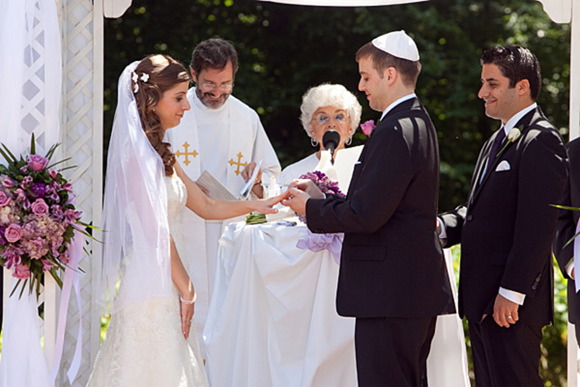
Of course, some more serious issues arise, such as the style of the processional, parents standing at the chuppah, whether a yarmulke (kippah, or head covering) is worn, and many other issues, but again, when you are focusing on what you want to create for your wedding, and making choices based on that desire, everything will work out.
But when it doesn’t, when things begin to break down, and you are feeling overwhelmed, remember that it is a day, not a lifetime. Have conversations about what you want your life to look like, and remember you are each others’ best friends. Look to your officiant for guidance, or enlist the help of resources like www.Interfaithfamily.com. I highly recommend Rabbi Devon Lerner’s book, Celebrating Interfaith Marriages, or just seek out advice from other brides on the web. You are not the first, nor will you be the last, but you absolutely can plan a beautiful, inclusive, and original interfaith wedding! Enjoy the process, and most of all, have fun!
 After more than 20 years in corporate management, Cantor Debbi Ballard decided to pursue the passions of her heart, and combine her love for music, faith, and people into the most rewarding career of her life! Today, as a Cantor specializing in performing Jewish and Interfaith weddings, you might find her officiating a ceremony in Florida, The Caribbean, Mexico, or even on top of a mountain! Debbi is known throughout the world for creating personalized, spiritual ceremonies, filled with warmth and passion. Her deep sensitivity for people, eloquence, and dynamic personality, help her create wedding ceremonies her clients and guests remember for a lifetime! Visit Cantor Ballard online at www.mypersonalcantor.com.