Monthly Archives: April 2012

From The Expert: 3 Tips For Creating Your Own Interfaith Ceremony

Daniel Sroka is the artist and owner of Modern Ketubah. He creates modern fine art wedding ketubahs from his abstract photographs of flowers and leaves for interfaith, Jewish, and multi-cultural couples. The first ketubah he ever made was for his own wedding. He and his then-fiance, Cara, wanted to make sure they loved the artwork to proudly hang it in their home, and they also wanted to be sure that the text and symbolism was meaningful, especially as an interfaith couple. They decided that his fine art photography would be the ideal style to express their marriage, as many other ketubahs they saw while shopping were adorned with Jewish symbols, and did not match their taste or represent them equally. Since then, Daniel has successfully built a ketubah business that honors individual style and spirituality.

Interfaith weddings represent a beautiful moment: the joining of two families with different traditions into one. This gives interfaith couples the opportunity to create a wedding ceremony that not only appeals to them artistically, but also symbolizes how their marriage brings together their religions and backgrounds.

When my customers ask me for advice on how to create an interfaith ceremony, I usually give them a few pieces of advice:
(1) Make no assumptions about what should be in the ceremony.
(2) Be ready to compromise, discuss, and learn.
(3) Remember that while you are trying to honor your families and religions, be sure to create a ceremony that is meaningful to you personally.

Make no assumptions: We all grow up with ideas of what a wedding should look like, grounded partly in our religion and the weddings we attended as children, and partly in the glamorous depictions of Hollywood. But when you create your own ceremony, be ready to set these ideas aside and start from scratch. Don’t assume that your partner shares your same romanticized vision. What you consider essential to a wedding might be something that he or she can’t stand. So while these ideas can influence you, and help guide you, don’t assume that your wedding must follow those patterns.

Be ready to compromise and learn: I always recommend that a couple write down their ideas of what should be in a wedding, and then go through them step by step and explain to each other the meaning and importance of each. This is especially important for religious traditions that your partner may have no understanding of. Be patient, and be open-minded. When my wife and I did this, we began to realize that some traditions we originally considered essential really had no meaning once we tried to explain them. And other traditions we never paid attention to suddenly became very meaningful and important. So be ready to compromise, and be ready to learn how to balance each others’ needs, concerns and ideas. Creating this wedding is one of your first big challenges as an interfaith couple.

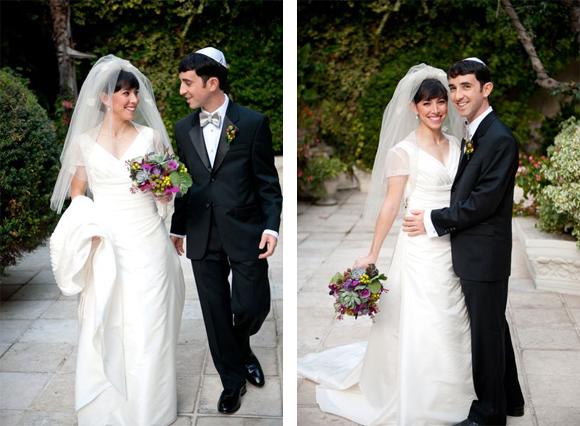
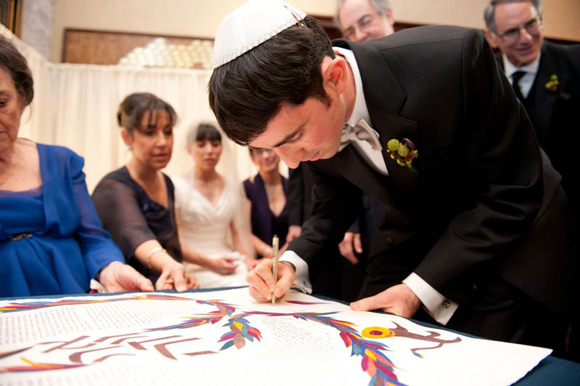
Artist Daniel Sroka and his bride with their interfaith ketubah he created.

Remember that the ceremony is about you: Families can put a lot of pressure on a couple, especially when they are interfaith. Consciously or not, your family will try to influence what should be in your wedding. This can be a good thing, especially when they help you understand and explain your traditions. But it can also become an unnecessary burden. Grandma won’t come to a wedding that doesn’t have a chuppah. Your father won’t be happy unless he walks you down the aisle alone. Aunt Sally insists that a valid wedding must be held in a church. Subtle demands and suggestions can start to overwhelm you! But don’t let these family pressures dictate what your wedding should be like. Remember that this is your ceremony, the start of your marriage. Your family is important, but they are there for you, not the other way around. Listen to their concerns, be don’t feel obligated to them.

While an interfaith wedding can often feel like a diplomatic mission between warring factions, it doesn’t need to be. It can really be a way to introduce both sides of your family to the traditions and religion of their new in-laws. When my wife and I got married, we created a ceremony that combined both her Jewish and my Catholic traditions, while also introducing some new traditions and ideas of our own. This combined ceremony worked to bring our two families together in a beautiful and special way. Each side could relate to part of the ceremony, and also share the experience of something new. We explained the traditions throughout the ceremony in simple terms so that everyone could appreciate the parts they weren’t familiar with. We worked carefully with our rabbi and priest to make sure the ceremony came together as a whole, and that no one felt left out or confused. And in the end, our families loved it as much as we did. It was as much a celebration of our new marriage, as it was of our families and traditions that helped make us who we are. It let us honor our religions and families while defining our own newly combined values, and began to establish what it would mean to live together as an interfaith couple.

Tales From The Veil: Reflections On A Wife’s Identity

Today’s Tale is from Lauren of San Francisco, whose bride experience began in the most non-traditional way, and she continued blending tradition with uniqueness for her wedding day. Lauren has been married since September of 2011 and now that the planning of her wedding is over, she goes on to thoughtfully plan her life as a wife.

************

Whether it is for two years, one year, or six months, wedding planning consumes you, takes over who you are, and changes your identity. In fact, you are so consumed with planning, that your new timeline in life is in relation to your wedding date, and you lose all sense of seasons, holidays, and real time.

Then the day comes, and it is the best day of your life, or shall I say the the best six hours of your life. It comes and it goes, and that is that. Then what? Well, seasons and holidays return, and your sense of time goes back to normal. But, at the same time, you may suddenly feel blue. For some, like me, feeling blue may have nothing to do with the wedding ending at all.

My post-wedding blues have been entirely unrelated to wedding planning or the wedding celebrating being over. In fact, I was ecstatic the day after the wedding, because my to-do list was finally non-existent, and I finally had a husband. Yet, post-wedding, I find myself blue as I reevaluate my overall life in its entirety. Am I happy with my career? Am I happy with those that I surround myself with daily? Becoming a wife triggered a mini, and quite early, life crisis when I discovered that the answer to these questions is “no.”

I am an attorney. Although I am not sure what my destiny is, I am sure that it is not to remain in the legal field. Yes, this means taking my J.D. and, in a way, throwing it away. Meanwhile, my law school loans remain with me at the same time that my husband and I should be saving for our future home. And, it means leaving behind 28 years of shoving my face in a book, the only thing I really know how to do. But, post-wedding, I realize that I am meant to do something else in life. I am meant to be more creative, and to leave my academic comfort zone. I am tired of saying to myself, “One day I will…” Now, actually, is the time. So, six months into marriage, I’ve left the legal field, with current dreams of joining a tech start up — an environment that is the antithesis of law; organized chaos and undefined roles await me.

I also realized that as life goes on, we get busier and busier. The amount of time I have for friends diminishes quickly, especially as my family unit grows. I suddenly realized post-marriage that I felt as though I wasn’t giving the people who really matter as much time as they deserve, and at the same time, I was giving mere acquaintances too much time. My plan? Come to terms with the fact that as an adult, my intimate network decreases in number and is composed mainly of family and friends who feel like family. Then, when I’m not spending time changing the world through my career, spend most of my time with my intimate network. This has meant continuing to travel back home monthly to Southern California to see my family, planning a trip for them to visit my husband and me in San Francisco, and visiting my grandparents who live locally as much as possible.

Why is now the time to change my personal and professional life during this post-wedding stage? I don’t know. My best guess is that this crisis has hit for two reasons: (1) because my life is “complete,” yet I still feel as though something is missing; and (2) because I need to be complete before we have children. So, for me, post-wedding blues have taken the form of life reevaluation. I have my family unit, and now I feel as though it is time to assess other aspects of my life — the ones that I have not quite figured out.

Perhaps my marriage gave me the confidence and courage to look at the parts of me that are weak. I definitely don’t want any life crises hanging over my head when we bring a new little person into this world. Rather, I want to know who I am, who my support network is, and how to manage the craziness that is adult life. Now, post-wedding, seems to be the ideal time to re-assess, to fix, and to finish developing myself.

Real Jewish Weddings | Los Angeles, CA

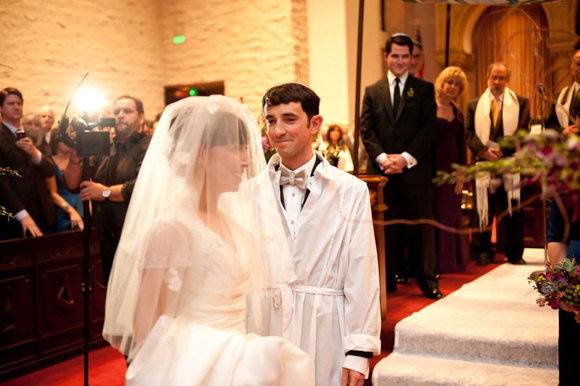
They met as teenagers. Ari and Vanessa went to neighboring high schools and attended summer school together in 1997. But that was it. Just summer school. Thirteen years later, they reunited at a bar where Ari went to escape Super Bowl parties he wasn’t interested in attending, and Vanessa was there for a birthday party. They recognized each other, exchanged numbers, and it all began… at a bar.

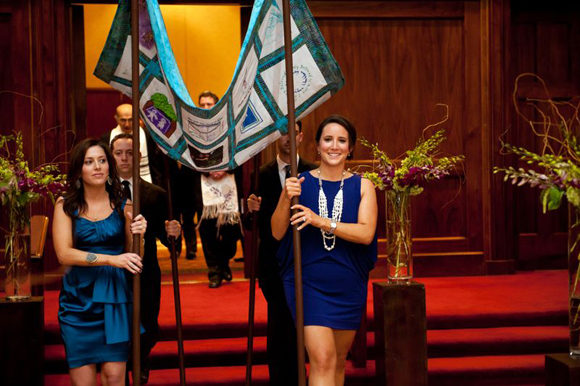
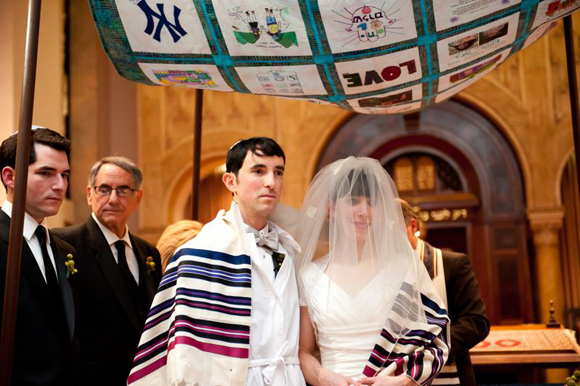
An interesting and sweet detail from their wedding: Each close family unit received a square to design that would be quilted into a canopy on their chuppah. What a lovely way to include the union of two families!

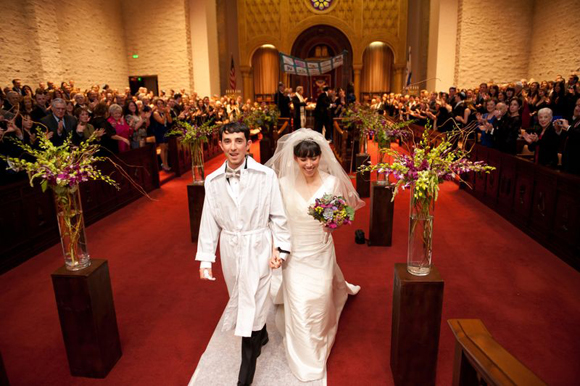
Mazel tov, Vanessa and Ari!

real-jewish-weddings-|-los-angeles,-ca

real-jewish-weddings-|-los-angeles,-ca

real-jewish-weddings-|-los-angeles,-ca

real-jewish-weddings-|-los-angeles,-ca

real-jewish-weddings-|-los-angeles,-ca

real-jewish-weddings-|-los-angeles,-ca

real-jewish-weddings-|-los-angeles,-ca

real-jewish-weddings-|-los-angeles,-ca

real-jewish-weddings-|-los-angeles,-ca

real-jewish-weddings-|-los-angeles,-ca

real-jewish-weddings-|-los-angeles,-ca

real-jewish-weddings-|-los-angeles,-ca

real-jewish-weddings-|-los-angeles,-ca

real-jewish-weddings-|-los-angeles,-ca

real-jewish-weddings-|-los-angeles,-ca

real-jewish-weddings-|-los-angeles,-ca

real-jewish-weddings-|-los-angeles,-ca

real-jewish-weddings-|-los-angeles,-ca

real-jewish-weddings-|-los-angeles,-ca

real-jewish-weddings-|-los-angeles,-ca

real-jewish-weddings-|-los-angeles,-ca

real-jewish-weddings-|-los-angeles,-ca

real-jewish-weddings-|-los-angeles,-ca

real-jewish-weddings-|-los-angeles,-ca

real-jewish-weddings-|-los-angeles,-ca

real-jewish-weddings-|-los-angeles,-ca

real-jewish-weddings-|-los-angeles,-ca

real-jewish-weddings-|-los-angeles,-ca

real-jewish-weddings-|-los-angeles,-ca

real-jewish-weddings-|-los-angeles,-ca

real-jewish-weddings-|-los-angeles,-ca

real-jewish-weddings-|-los-angeles,-ca

real-jewish-weddings-|-los-angeles,-ca

real-jewish-weddings-|-los-angeles,-ca

real-jewish-weddings-|-los-angeles,-ca

real-jewish-weddings-|-los-angeles,-ca

real-jewish-weddings-|-los-angeles,-ca

Venue: Sephardic Temple in Westwood, California
Photographer: Stacey Adams Photography
Florist: McCann Florist
Caterer: Pat’s Kosher Catering
Videographer: Video Services Un-limited by Maury Gomberg
Bride’s Dress: Lili Bridal

Wedding Invitations: A Step By Step Guide

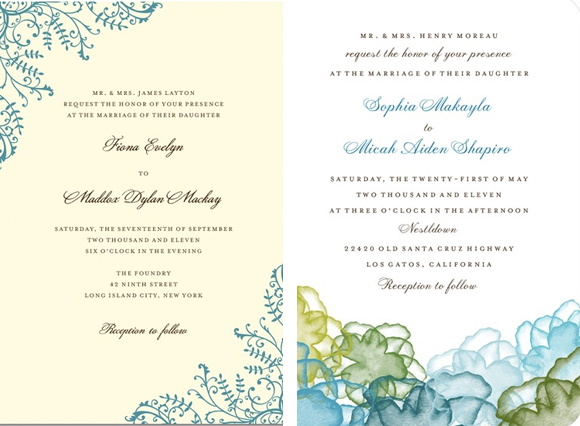
Out of all your wedding tasks you have to accomplish, ordering and organizing wedding invitations may seem like the biggest headache. It may not be the most glamorous task (oo la la, dress shopping!) or the yummiest (cake tasting for the win!), but it’s a really important one. After all, how else are your guests going to know when and where to show up on your big day? It’s the foundation of your wedding day and can even set the tone for what guests can expect.

Want the scoop on the process? Here’s a breakdown before you have a breakdown.

Get Organized:
Before you even have to pick out your invitations, you have to pick out the people you want to receive them. Start early and start collecting addresses once you’ve finalized your guest list. Keep an organized spreadsheet and have it handy because once you receive your ready invitations, you’ll need to mail them out and the last thing you want to do is catalog addresses because it’ll slow your process down.

Plan Out:
If your wedding is Fall of 2012, you might think you have tons of time. It’s only April! What’s the rush? The wedding is the end of October! You have six-ish months! Right? WRONG! Work backwards. You need to mail out the invitations six to eight weeks before your wedding date. (late August/early September). Prior to that, you’ll need to assemble the invitations (may take a week). Before that, you’ll have order the invitations and they will take some time come in (sometimes four to six weeks depending on the vendor or manufacturer). That brings you to ordering in early July. Searching for the perfect invitation won’t be an instant task, either. You’ll look at many samples or visit many boutiques or designers. Take your time to shop. Give yourself at least a month. So now you’re looking at starting in June. It’s April now. Need I say more?

Play it extra safe and assume something will go wrong. I know, what happened to the optimistic Yenta? You never know! The manufacturer could go under (yay economy!) or there could be a typo on your response card. You never know. Don’t wait until the last minute to place your oder in case you have to make a quick reorder.

Search According To Your Budget:
Invitations work the same way as shopping for your dress: don’t fall in love with something out of your budget. If you can’t put down the cash for the Monique, by all means, don’t try on the Monique (I know, it’s so hard, but this is for your sanity). It’s no different with your invitations. If you know you can’t have letterpress printing in your budget, don’t even look at samples with such deliciously beautiful and drool-worthy fine details. You don’t want to have to overspend on invitations and you definitely don’t want to have to go take away from another area of your budget in order to have the suite you — oops! — fell in love with. Be up front with your invitation consultant about your budget and be sure to stick to it. If the consultant or designer tries to upsell you, it’s disrespectful and you should not continue with their services.

If you have no budget to speak of and money is of no object, well, by all means, why are we not friends? I like Marc Jacobs and I wear a size 8 shoe.

Shop By Feature:
Ask yourself: what’s the one element your invitation absolutely must have? A specific color? A design? A paper size or shape? Pick that one element and shop by that one element. In a perfect world, that one element complements your overall wedding style. Let’s face it, there are lots of pretty invitations to choose from, but if you select all the ones you like, you’ll never pick THE one. If it’s a turquoise and white color them you’re going for, that means you will shop invitations with only that theme. If you’re working with a designer who’s making a custom suite for you, feel free to bring pictures with you to share the features you like. Many wedding invitation websites allow you to search by feature as well, so utilize that convenience. A personal favorite is Wedding Paper Divas. Don’t get sidetracked and distracted by other — oooo!! Shiny invitations with rhinestones!!! You’ll be married before your invitations even go out. Get it?

Invest In Samples:
Once you’ve narrowed down your top picks, and I mean, tip top tippy-top picks (top three?), order samples. This way, you can touch your paper, feel the print, smell that fresh new paper smell — mmmmmmm. This is your invitation test drive. Get to know and love it because once it’s out of your hands, it’s hanging on someone’s fridge.

Overall, you’ll just feel better about your order because you courted before your committed. Hopefully you did the same thing with the fiance, yes?

Decisions Beyond Invitations:
Remember, you’re not just mailing an invitation. You’re mailing an envelope, a response card, maybe a directions insert, and so on. Oh yes, and are you choosing to line your envelopes? What about an outer fancy shmancy envelope? These are the big decisions, people! Don’t forget to weigh your priorities. That outer envelope with the guests’ name and address contains another big envelope which has the real good inside that one. Do you really need the outer envelope? It’s formal and it looks cool and who doesn’t like opening multiple envelopes from one mailing? But, not only does it give you more glue to lick, but it also will cost you an additional amount. The add-ons and extra components require you to do a little more research, so just when you think you’ve selected the invitation itself, you still have to settle on a couple more choices.

But wait! There’s more! Many designers also happen to have paper for other uses in each invitation line. Everything from table numbers to escort cards to thank you notes. Do you want to tie in your entire suite with what your guests see at the wedding? Some may say, “Oh, who’s going to remember the invitation once they’re at the wedding anyway?” I can’t answer that question for you, but you can at least weigh in and make that decision. This can be seen as a convenience or as an added expense. Up to you.

Decide On The Amount:
Here’s where you do some math. Remember your guest list that you compiled at the beginning of this exercise? Count up your guest list by household. Not people, but each address. Aunt Ruthie and Uncle Murray count as two people for your caterer, yes, but they are really only one combined person — or household — for your invitation order. Don’t assume the guest list equals the amount of invitations you should order. You’ll end up ordering about double of what you actually need!

Then, you’ll actually order about 15% more than the actual amount of households that will receive invitations. You may have last minute additions to who you want to invite or you might want to activate the [gulp] B List for those who can’t make it from the A List. Hey, it happens. The good ol’ trusty USPS may lose some in the mail or your friend moved and didn’t bother to tell you her new address, so you’ll have to resend some. Also, you or your parents may want to keep some invitations for scrap books or photo albums, so you’ll need some extras.

Proof ‘Em:
There is absolutely nothing more atrocious than placing your order, receiving your oder a month later, and finding that you are apparently marrying Wilma instead of William. Oy vey. Proof the invitations before you send the OK to print. Proofreading does not mean reading them over and giving a nod of approval. Proofreading is executing the following tasks:

  • Read it to yourself.
  • Read it out loud.
  • Take a sheet of notebook paper with holes and slide the hole over the line of print so as to isolate every. individual. word. on. the. invitation. Any mistake that’s there will stand out at you!
  • Double check that the names and places are spelled correctly, addresses are listed correctly, numbers are ordered correctly, and basic English mechanics like commas and apostrophes are inserted correctly. It’s also a good idea to quadruple check that the wedding date and time are correct as well. You know, only a little important.

Celebrate:
You have placed your invitation order! Make another check on your list and breathe because this one was a doozy.

And then it’s time to move on to the next item.

So You Think You Can First Dance

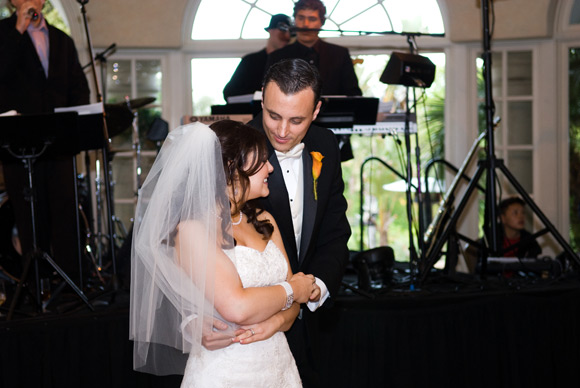
The order of the big day usually goes a little something like this:

  • Get dolled up.
  • Sign that ketubah and make it Jewishly official.
  • Say “I do” under the chuppah.
  • Squeal with delight that you’re married — eeeeeek!
  • Take lots of photos so your cheeks hurt while guests make friends at and with the bar.
  • Assemble with the (intoxicated) bridal party and family for a grand entrance into the reception.
  • Hustle like you’re on “The Price is Right” down to the dance floor.
  • Receive your introduction as the new Mr. and Mrs. {insert your name here}.
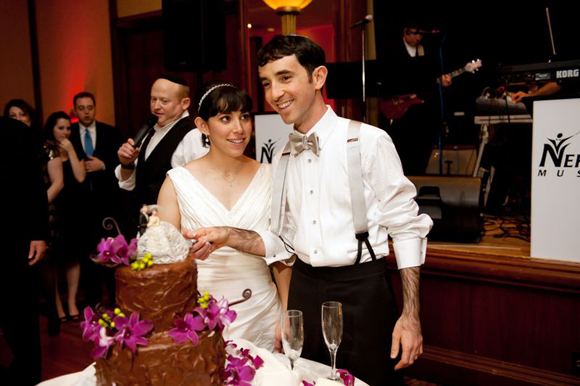
  • Freeze like a deer in the headlights when you hold on to each other awkwardly like 7th graders at the Spring Fling as you wish away the next 3.5 minutes of the slowest song you should have never picked for your first dance.

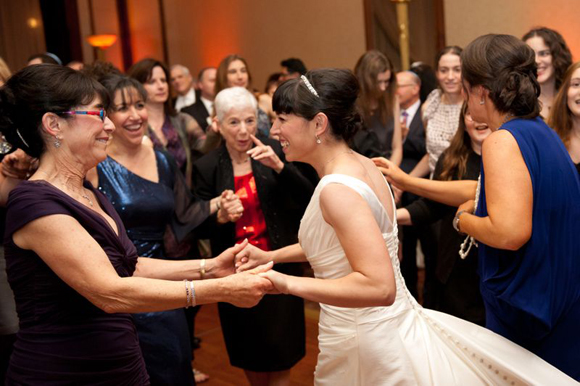
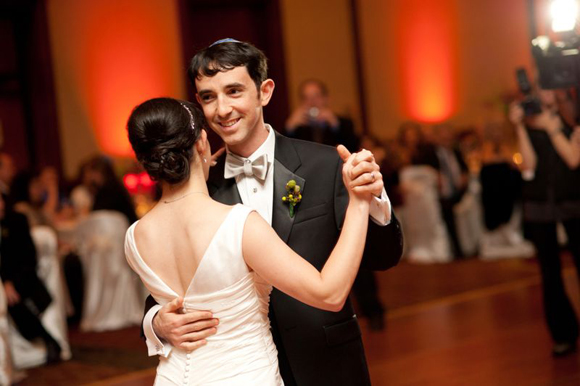
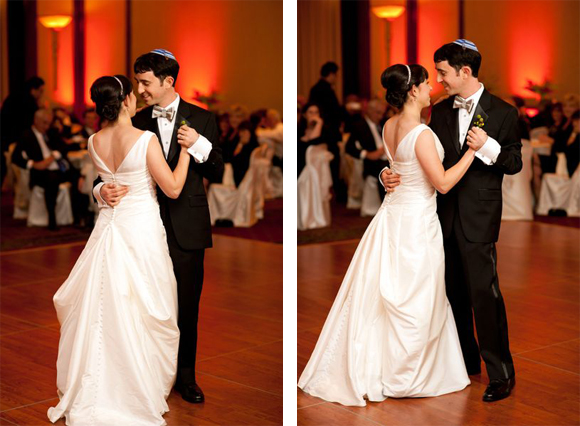
Slow song, fast song, whatever — most couples are deathly afraid of performing that much-anticipated first dance for all of their family and friends to witness. The idea of improvising steps while having all eyes on you can be intimidating, but the first dance doesn’t have to be a stressful moment.

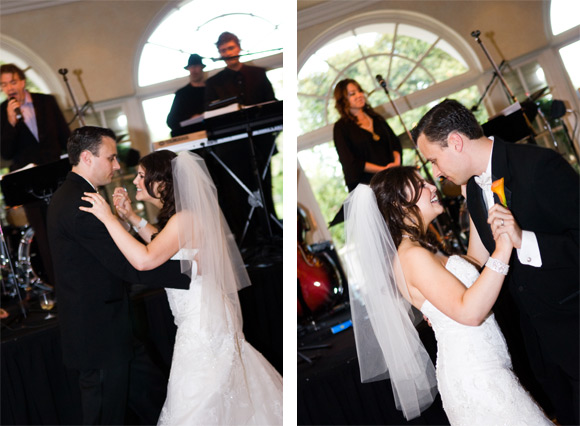
One of the tips I always pass along to brides and grooms is to take dance lessons and even take it up a notch: choreograph the first dance so you don’t have to worry about looking awkward during the song. You don’t have to work as hard or perform in a sparkly little number like the “Dancing with the Stars” cast (although, there is the perk of taking dance lessons and shedding some extra baggage a la Kirstie Alley…). Your guests definitely don’t expect a dance recital from you, but you might feel better knowing the dance is planned in advance. After all, you’ve already done so much planning and all that thought went into your perfect color scheme, the cake flavors, and the signature drink, so what’s another thing to plan?

Choreographing your first dance is also a great time to bond with your groom and get him involved in the wedding planning process. Having an excuse for a date night and shaking your groove-thing (or is it thang?) together really brings you closer and gets you both pumped for the wedding.

You can find dance lessons at a studio or hire a private choreographer. Give the teacher an idea of what you’re looking for. It helps to have the song in mind as well. Don’t worry about the steps being too hard; your choreographer will design a dance for you that fits your skill set. Even if it’s just a combination of a few sways and rock steps, you’ll feel good knowing that you don’t have to come up with the steps and their order on the spot.

Start the first dance choreography about a month or two before the wedding. This gives you time to learn the steps and then practice them at home in the weeks leading up to the big day. Bryan and I would clear out the coffee table in our living room and drill the steps until we could remember the order. We actually had a lot of fun and neither of us are exactly Fred and Ginger.

I’ve seen couples get fancy-shmancy with their dancey and do a full-on performance with “costumes” and everything. That is totally one way to do it! Go big or go home, right? But you can also keep it simple and be adored by your guests just the same. My one super-big, hard-core, must-know advice: Make sure someone who knows how to bustle your dress is nearby just before entering the dance floor for your song. My bustle came undone immediately because it wasn’t fastened all the way, and I ended up dancing like I was on a Slip and Slide and all I could think about was, “Left together, right together, oh crap, don’t snag the lace and crush the beads, rock step.” Hey, you live and learn.

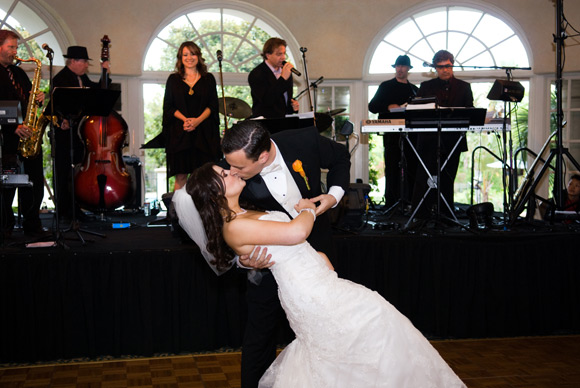
Just remember: nobody puts Bride-y in the corner. Start dancing. You’ll have the time of your life.

*All photos by eight20 photography and video by Moonlight Video.