




It’s so easy to get caught up in the details of the reception and the expectations you may have for the big day, that it’s common for modern Jewish brides to forget some of the details and customs of a Jewish wedding.
We all know the big ones: we can identify the chuppah, the bride and groom sign a ketubah, there’s the whole stepping-on-the-glass thing, and when it’s time to party, people toss us around in chairs. Yes, those big moments are just par for the Jewish course.
But there are other rituals and facts you may not know about. The Wedding Yentas isn’t going to go into immense detail on each one, but it might be important for you to graze on this information and take in this food for thought (yes, I am a Jewish girl and I use a lot of food metaphors in my writing) as you mull over the kinds of traditions you may want to include in your Jewish wedding.
So here, a little buffet (there I go again) of tid bits that you may or may not know about:
- During the week before the wedding, it is customary for the groom and bride not to see each other, even during the day.
- From a few days prior, until a week after the wedding, the couple are considered royalty and are, therefore, not to be seen in public without a personal escort.
- Since on the day of one’s wedding G-d forgives the bride and groom of all their previous transgressions, it is seen as a private Yom Kippur for the couple.
- Jewish weddings may be held anywhere – there are no religious limitations on the location of the wedding ceremony.
- Traditionally, a bride will go to the mikvah, a purifying bath, on the evening before her wedding in order to begin her married life in a purified state.
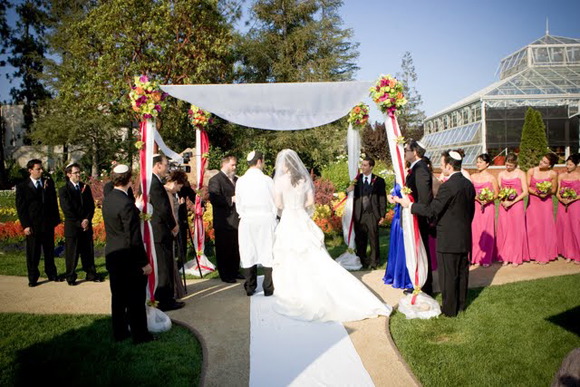
- It is a custom that the groom wears a kittel (white garment) under the chuppah. Therefore, he does not wear a kittel on the Yom Kippur following his marriage. On the following Yom Kippur he begins wearing a kittel.
- Knots on the groom’s garments (e.g. tie, shoelaces, etc.) are to be untied.
- The groom should not have money, silver articles, gold, precious stones, etc. in his pockets at the time of marriage.
- Two sisters may have their weddings in the same week, but not on the same day.
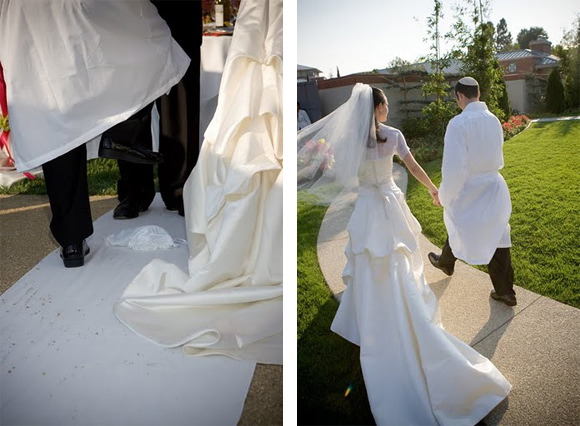
- Mothers of the bride and groom break a plate! Breaking a plate symbolizes the seriousness of the couples’ intentions towards one another. A smashed plate cannot easily be made whole again; just so, an engaged couple cannot easily renege on their promise to be married.
- In recent times, friends of relatives of the bride will often decorate a plate for this ceremony, knowing full well it will soon be broken into little pieces. The shards are distributed to the bride’s single friends as good-luck pieces.
What traditions do you think you’ll include in your ceremony? Are you observing customs prior to the actual wedding day? Is there anything you’d like to know more about? Share below or visit The Wedding Yentas on Facebook to get the dialogue going.


