Category Archives: Inside Scoop

Wedding Planning Reality Check

What you are about to read is based (cough, cough!) on a true story.

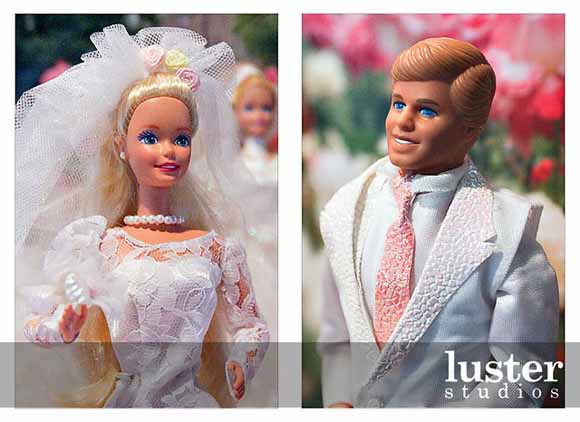
Raise your hand if you are one of those brides who had your whole wedding planned as a little girl. Guilty. Yup. Yenta Alison is that girl. As a very young child, I appointed my Barbies and their Dream House as the models and prototypes for what would become the best day of my life. So, 20-ish years later, the actual wedding was set to happen and my groom — my own personal Ken — was not made of plastic and his swim trunks didn’t stop mid-thigh. He was excited about the wedding, too, and trusted me to realize all my plans that previously existed in the world of Mattel.
wedding-reality-bites

I would have colorful, floral centerpieces with flowers that coordinated with my bouquet. “Yes,” he said.
I would include pink, pink, pink in all of the decor elements and favors. “Yes,” he said.
I would order chair covers and accenting sashes tied in knots and not bows. “Yes,” he said.
He would wear a black tuxedo, with a white vest and a white Windsor tuxedo tie. “No,” he said.

Did you hear that?
That was the sound of the Barbie Corvette coming to a loud, screeching halt as if it was about to intersect a train on tracks.

What? He wouldn’t wear a tuxedo with a tie? “No,” he said. He wanted to wear a bow tie.

From here began a series of heated discussions about how I’d always imagined my groom wearing a tuxedo with a tie because in every blog I was stalking, that’s what the other guys were wearing, and all the photos at the tux stores featured hunky models in modern long tuxedo ties! I pulled out every piece of ammunition for this argument and I insisted on winning. After a while, I lost sight of what I was actually fighting for and didn’t want to go back to my corner as the loser. I mean, did I really expect him to be catching up on what’s hot in wedding blogs or should I have let him achieve his classic, crooner look that’s an expression of himself? Obviously, looking back now, I should have answered the latter.

But it was too late. I was the loser. I was the loser as soon as I had assumed and then insisted my husband-to-be wear a long tuxedo tie. On his own body. On his wedding day.

And that’s when it hit me. Even though my groom had voiced his wardrobe preference, and even though he cared about one thing and one thing only to even voice his preference, I lost the battle before I even opened my mouth. It was my only bridezilla hiccup and it was not pretty.

There were tears. We said bad words that the ladies of The Wedding Yentas aren’t supposed to say. We experienced that awkward, touchy time as the dust settled. And then we talked. And finally, I told him to wear his bow tie and wear it good. That he could wear a potato sack on our wedding day and still be the most handsome groom. I realized that my man was not even close to being a groomzilla. The guy just had his own vision of what he wanted to wear. And that was okay. I was being a brat that day and I’m not normally a brat, but I let the wedding planning serpents get the best of me, and meanwhile, I was not my best me. I’m not proud of my tantrum, but it has since allowed me to find perspective in cases where there’s a difference of opinion.

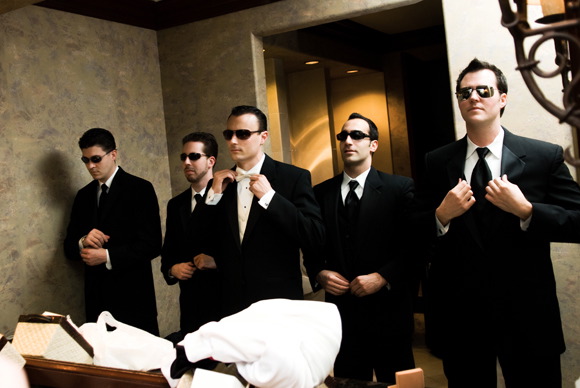
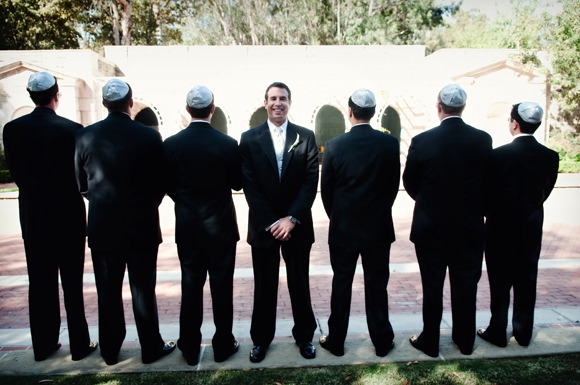
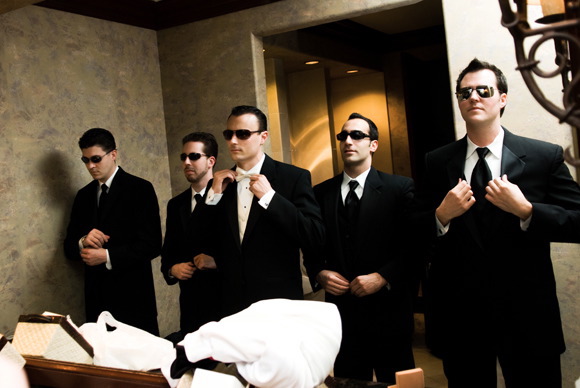
Fast forward to the wedding day which featured a good looking group. The groomsmen looked like total studs in their black tuxedos, white shirt, black vests, and black Windsor ties. And their buddy, my groom, stood out in his white vest and bow tie, looking so dapper and coordinated. It all turned out beautifully and, looking back on it, my foot tasted horribly in my mouth.
wedding-reality-bites

So why am I sharing this? Why am I admitting this brush with an inner wedding-planning monster? Because it all works out. There may be a few bumps in the road and you might experience stress. You could flip out about anything from the chipped piece of paint on your otherwise perfectly manicured fingers or you may have a panic attack about the mismatched shoelaces in your husband’s rented tux shoes, but you know what? You still get married. You still leave that chuppah as a Mrs. and you still get a whole lifetime to love up your hubster. It’s okay to want everything to be right. It’s okay to have a blueprint for your wedding dreams. And it’s totally okay to have wedding nightmares and vent to your mom and girlfriends. But don’t lose sight of the final destination and let the speedbumps become cliff dives. Create and raise standards for your wedding, but do not etch your expectations into stone. A little “go with the flow” goes a long way.

Allow your groom to voice his opinions and open up the planning to discussion. I often dished about the wedding plans with my Mr., but his usual response was something like, “Do what you want, love. You’ll do a wonderful job and I don’t know anything about [insert detail here].” So the one thing he did care about, that actually had to do with him, personally, ended up being the right thing. And he looked better than Ken looks in any of his tacky 80s outfits in my doll box.

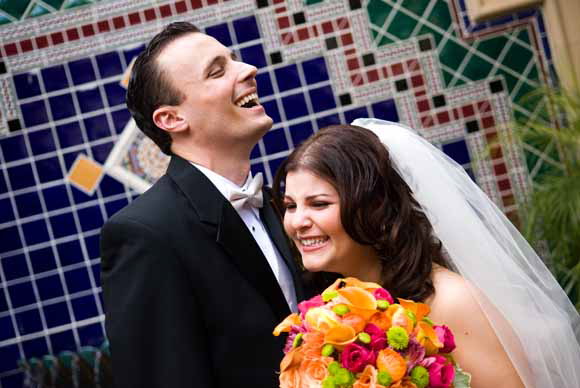
Today, we are married and my husband has granted me final say on the outfits that he chooses from the closet. And when we revisit that all-out discussion fight, I roll my eyes and we both laugh.
wedding-reality-bites

Ask The Yentas: Edition #2 – The Chair Scare

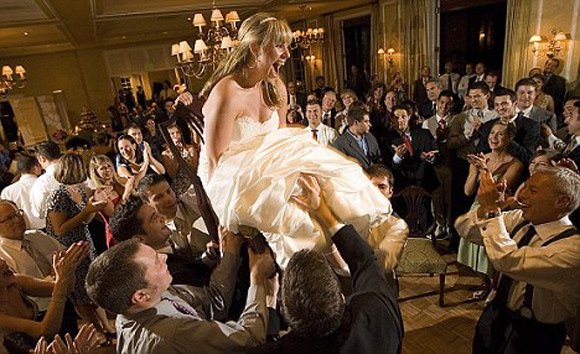
The Chair Scare: The feeling of butterflies about going up in a chair a handful of feet above the ground while holding onto a napkin, grinning with clenched teeth through the tight corset of the wedding dress during a series of bounces and hollers from the crowd.

Sound fun?

It doesn’t have to be scary. The tradition of going up in the chair is a festive and fun part of the reception’s Hora dance and we’ve received questions about how to get over the fear of this custom.

Dear Yentas,
My wedding is around the corner, and everyone tells me that the fun part is the reception where my soon-to-be husband and I will go up in the chair. I’m afraid of heights. I hate roller coasters. What if I drop the napkin? What if I fall off the chair? I don’t want to break any rules, and I’d like to get over my fear, but maybe I can just avoid it altogether. What do you think?
Thanks,
Elise
Tampa, Florida

Elise, and all others who are feeling under the weather with The Chair Scare,
This is supposed to be a fun tradition and definitely not something that causes you stress. First, make sure that your venue or wedding coordinator set aside two arm chairs for you. There should be two chairs with arms. Make sure the chairs have arms. You should use arm chairs. Is the point clear? This gives you something to hold on to and provides your body with boundaries as you become (lightly) jostled around.

the-hora-chair-lift

Also, there are no rules! Just hop in the chair, hold on, and enjoy the ride. Someone will probably toss you a napkin to hold with your new partner and if you drop it through all the excitement – meh! – so what! The napkin isn’t a Torah; it’s okay if it falls. Many couples do and they lived happily ever after.

Before you plop down on the chair, remember to do a quick smooth-out on the tushie part of your dress. That way, if you have any beading or details on your dress, you won’t be uncomfortable from getting them lodged in nooks and crannies when you sit on them. The more comfortable you are, the more you can relax, and the less afraid you’ll be. See? It all comes full circle.

If you’re wearing a short dress or a tea length dress, cross your legs at the ankles. You are a married woman for goodness sake! You don’t want all those eligible bachelors to get a free show! Be a lady and make sure the tops of your feet touch each other.

image-courtesy-of-michael-tallman

You don’t have to stop eating for 2 weeks before the wedding. Give some strong men a heads up about the chair lift portion of the Hora and they’ll carry you like you’re Tinkerbell. Do not be afraid of being dropped. With four legs on the chair and at least one man per leg, it’ll be easily for the strong men to balance you. Perhaps in the days leading up to the wedding, call some of the men you’d like to be your chair lifters and give them advance warning that they’ll have this duty at your reception. That way, you can relax knowing that this very important task is handled and you don’t have to worry about it during your ketubah signing, aisle walk, circles, wine blessings, photos, and shmoozing that all take place during the Wedding Olympics.

Remember, the Hora is a joyous and happy part of the wedding reception. So as you are six feet off the ground and literally high on life, look at your husband who is up there with you and know that together you’re on top of the world. Then, look down, and enjoy all of your favorite people singing and clapping and loving you right back.

Love,
Alison & Nicky
The Wedding Yentas

the-hora-chair-lift

Hebrew School for Groomsmen

The Wedding Yentas are happy to have Brian Becker guest-blog today! Brian, who is not Jewish and more of a practicing Nothingish, has been the Best Man in a Jewish wedding and brings his expert opinion to the Yentas family of readers. Here he explains what every Jewish bride and groom should tell their non-Jewish wedding party.

I am not a Jewish Bride. I’m not even Jewish. But having been the Best Man, I do have an important piece of advice for anyone getting ready to tie the knot – a little list I like to call “Things to Tell Your Gentile Groomsmen.”

image-courtesy-of-eight20-photography

Look, men are already at a disadvantage because…well…we don’t know about weddings. And unlike bridesmaids who are let in on every little detail, for the most part, nobody tells us anything. So imagine how confusing it can be to be the goyim in the wedding party when the more traditional customs start to unfold. For example…

Yarmulkes. We’ve probably never worn one. In fact, I just had to look up how to spell it. On top of that, we’re expected to fasten it with another foreign piece of hardware: a bobby pin. In my case, the groomsmen did such an abysmal job that the bridesmaids had to do emergency readjustments just seconds before we escorted them down the aisle. So please, do everyone a favor and offer a little kippah 101 in advance.

image-courtesy-of-eight20-photography

Rings. As the Best Man, I was the nearest person with pockets at any given moment. That meant that I was constantly being handed more things to carry. In fact, I ended up carrying three ring boxes (one for the groom, one for the bride and one plain, unornamented ring for the bride to use during the ceremony). Add to that other last-minute cargo like vows and tissues, and the groomsmen can start to feel like we’re wearing saddle bags. Do your best to think through who will schlep around your wedding day accessories – and give that person a heads up!

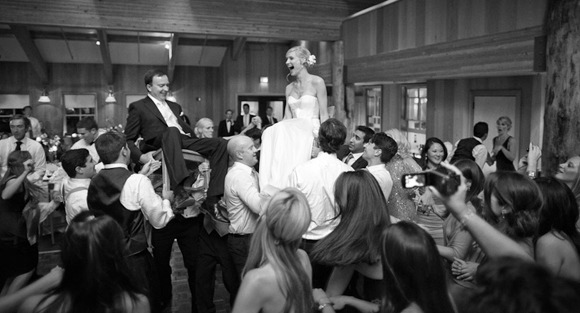
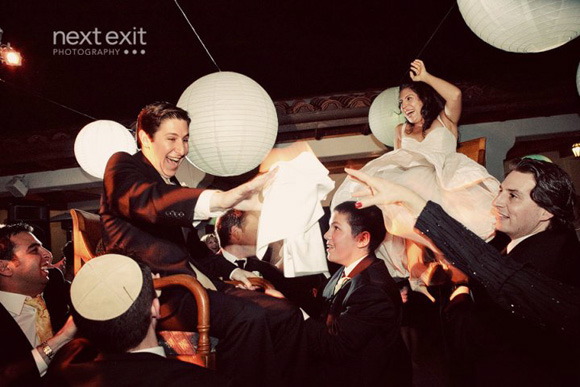
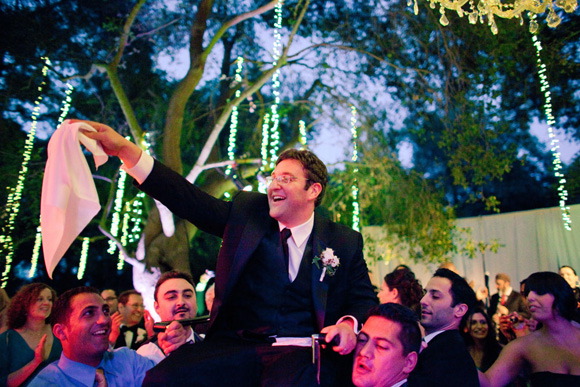
The Hora. Think for a second what it must be like to witness a giant whirlpool form on the dance floor just moments before someone grabs your hand and pulls you into the vortex. Speaking for the “non-chosen people,” we do not see that one coming. What’s more, we’re expected to hoist the groom up on a chair and carry him around for several minutes. This is a great moment, and a lot of fun. Just make sure you prep your bridal party that some heavy lifting may be required.

image-courtesy-of-meghan-aileen-photography

The Ceremony. If you’re incorporating Jewish traditions into your wedding, it’s a nice idea to explain them in advance. Otherwise, while you’re circling your husband seven times, your groomsmen may be scratching their heads. If you fill the bridal party in on the significance of the customs featured in your ceremony, they’ll be able to share the moment with the rest of your guests, instead of wondering what’s going on.

Take it from a Jewish wedding survivor: A little orientation can go a long way. Make a point to share some your wedding customs with the gentile-men in your bridal party, and you’ll help ensure that every one is relaxed and happy on your special day. Good luck…and l’chaim!

brian-becker-best-man

Brian Becker is a freelance writer and editor, and most importantly, a Best Man extraordinaire. He lives in the Los Angeles area and enjoys a good Captain and Coke, an Aaron Sorkin flick, and a round of trivia.

Jewish Wedding: Cantor vs. Rabbi

Did you know that a Jewish wedding ceremony does not require a rabbi or a cantor? Yes, we’re serious! Despite common belief, you and your betrothed can still exchange, stomp, and kiss without a member of Jewish clergy present. Jewish tradition says that a member of clergy does not marry the bride and groom; they marry each other.

By Jewish law, all that’s required to make a marriage official is a ketubah and a couple of witnesses. A Jewishly knowledgeable person who steers the wedding rituals can “officiate” the chuppah ceremony and oversee the ketubah ceremony. Also according to Jewish law, you need two kosher witnesses, who, depending on your Jewish affiliation, can be either men or women, related or not to the bride and groom, and varying degrees of Jewish observance including the laws of kashrut (eating and keeping kosher). If you have a family rabbi, this would be something to clarify before the wedding day to make sure you’re following correct laws and traditions. As long as your ceremony officiant is ordained by your state, he or she can guide the ceremony for it to count Jewishly and civilly. The ceremony, if it is religious-based, simply requires a license that is filed with the secular authorities (your state) and it ends up fulfilling both secular and Jewish law.

Some couples choose to have a friend officiate the ceremony, but rabbinical student, Aderet Okon Drucker, stresses that it is important for a couple that is getting married within the “Conservative Jewish,” “Reconstructionist Jewish,” “Renewal Jewish,” “Reform Jewish,” or any other movement of traditions run their plans for the ceremony with a rabbi they trust. “There are some things that are required for a wedding to be considered ‘kosher’ and if a couple is going through all of the trouble of getting the day to be perfect, they should do the same for their ceremony,” she says. “so they feel the integrity of the ceremony and don’t need to worry about anything.”

But what if you do want an official member of Jewish clergy to perform your wedding ceremony? You have some options. You can decide if you’d like to hire a rabbi, cantor, or both!

image-courtesy-of-todd-rafalovich title=

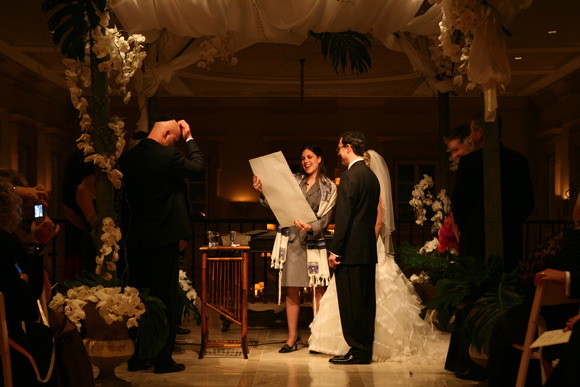
According to Drucker, depending on the person, their training, and the movement, a rabbi and a cantor can have similar roles in a Jewish wedding. “I am a rabbinical student who enjoys singing,” she said. “When I did Dana and Mark’s wedding [above], I chanted all of the blessings and spoke under the chuppah. Rabbis [in the conservative movement] are trained to recite the blessings with the traditional melodies.”

You may luck out with a rabbi who can carry a tune, and while that’s awesome, you can’t start asking Randy, Paula, and Simon (or whoever their replacements are these days) to join you at Rabbi Idol auditions. So if you happen to know that your rabbi sings, you could probably stop there. Rabbis may chant blessings regardless of their singing talents. Just because a rabbi chants doesn’t mean they are ready for a Vegas lounge. Upholding the integrity and tradition of the chants is any rabbi’s first priority. A rabbi can still officiate your wedding even if he or she can’t sing. If it’s important to you to include music beyond the regular chants in your ceremony, you may want to hire a cantor as an addition to your rabbi. Or, the cantor can gig the wedding alone.

According to Cantor Debbi Ballard of My Personal Cantor, “a rabbi and a cantor are equally qualified under civil law and religious law to perform weddings.” So while cantors can absolutely perform weddings by themselves, they can also definitely sing. That is, by nature, a cantor’s job. If there’s a Jewish song that’s meaningful to you and your betrothed, you could have your cantor sing it. Or, if you’d just like a level of musicality included in the regular wedding ceremony blessings, a cantor would be a good choice.

Cantor Debbi reminds couples, “You are publicly stating your commitment to each other, and you want someone who will capture the essence of your union as a couple, and share it with your family and guests.”

my-personal-cantor-debbie-ballard

So remember, for your marriage to be considered official among the members of the tribe, you don’t need a member of clergy. But for your marriage to be recognized by the state, you do. It does not have to be a rabbi or a cantor; this clergy member can be a justice of the peace of a friend or a father or a sister, as long as they become ordained through the state as a secular clergy member. If you do want an official Jewish presence under the chuppah, you can choose to have a rabbi, a cantor, or both! One is not more official than the other. Both autographs make your ketubah valid and consider you to be married. It’s up to you and your personal and religious preference, and we wish you a hearty mazel tov for whatever it is you choose.

The Wedding Yentas is looking for in-house rabbi and cantor friends. If you would like more information about being featured with The Wedding Yentas, please send us an email at: info@theweddingyentas.com — we would be honored to have you join our mispucha that’s full of ruach!
For wedding officiating and consulting, you can contact Aderet Okon Drucker at aderetokondrucker@gmail.com
If you are looking for a cantor for a traditional, at-home, destination, or interfaith wedding, contact Cantor Debbi on her website.

L’Chaim to the Heights

Most people know that there are two things I couldn’t love any more than I already do: Broadway musicals and wedding toasts. Both are performances, craving acceptance and still oozing with pride. A moving instrumental overture that precedes the first bit of action of a Broadway show has the same effect on me as a father of the bride who is so tearfully happy on his daughter’s wedding day as he welcomes the room with champagne in hand. Likewise, comedy bits in funny musicals make me literally LOL the way I’ve caught myself howling with laughter during a best man’s speech, filled with anecdotes he may regret sharing the next day. A wedding and a Broadway musical are not dissimilar: they both cost a lot of money, they both require a team of people to pull it off, and they both include a leading man and leading lady to make the whole thing worth seeing.

So, what happens when a Broadway star includes a Broadway musical into his wedding day as a surprise to his new wife?

Check out my new favorite video that had me laughing and crying, going down as one of the best “speeches” in wedding history. The creative, rapping genius behind Broadway’s smash hit “In the Heights” tipped his hat to “Fiddler on the Roof” and arranged a toast like I’ve never seen that left me with the biggest smile on my face. To you, Lin-Manuel Miranda, I say “L’chaim!” and “Bravo!” and “Mazel tov!”