Category Archives: Jewish Traditions

How To Write Your Own Ketubah Text For Your Jewish Wedding

From-The-Expert
By Anna Abramzon of Anna Abramzon Studio

Ketubah text has been a hot topic lately, with the custom of a ketubah (or a decorative marital contract) becoming more and more popular among couples from all different backgrounds and faiths. A good way to think about your ketubah is as a “marriage” between visual art and written word. So, you found the perfect art that speaks to you, but what next? If you are getting married with an Orthodox or Conservative rabbi then the choice is easy, at least for the Hebrew portion of your ketubah — there is a standard Orthodox Aramaic text and what is known as the Conservative text with Lieberman Clause. If you have a rabbi from one of the more liberal movements then you have more decisions to make. Either way, most rabbis don’t mind if you pair the Hebrew or Aramaic with an English text of your choice, especially because the Orthodox and Conservative texts are pretty cut and dry. Ketubah websites and shops usually have a variety of texts for you to choose from, but what if none of them fully express what you want to say to each other? After all, it’s a very personal conversation between you and your fiancé!

Here are some tips for writing your own ketubah text:

The Basics:

A ketubah is a contract, so there is some information that it traditionally includes:

The date of the week of the wedding — if you are having the ceremony on a Saturday before sunset, some rabbis prefer that you list your wedding as Sunday so you are not getting married on Shabbat. This is something to check with your officiant.

The English date of the wedding

The Hebrew date of the wedding: remember, Hebrew days start at sunset, so if your chuppah is after sunset then you should list the next day’s Hebrew date. Here is a great site that will convert the date for you.

The location of the wedding: Definitely the city and state, some rabbis also like to add the country.

Your names and your parents’ names: traditionally the names are written in this form: “Jennifer daughter of Jacob and Elizabeth/Sam son of Michael and Rachel.” Of course whether or not you want to include the parents’ names is ultimately a decision for you and your rabbi. Most Orthodox rabbis prefer to just have the fathers’ names, while Conservative rabbis are often times more open to including both parents’ names.

A sample first paragraph of a ketubah text:

On the _________ day of the week, the _________ day of the month of _____________, corresponding to the __________ day of the month of ______________ in the year _________________, here in __________, ____________, the bride ________________ daughter of ____________ and ____________, and the groom ______________ son of _______________ and _____________, come together before family and friends to affirm their commitment to one another as partners in marriage.

Now the fun part:

Think of ketubah text as vows you are making to each other. A good way to get started is to brainstorm your values as a couple. Some good starting points: respect, kindness, support, love, faith, nurture. Do you plan to have kids? You can include some values for raising children, such as “we will pass on our values to our children”.

Don’t be afraid to get personal. Want your partner to bring you a glass of water before bed every night? Here’s your chance to get it in writing!

It’s OK to be funny. Some amazing clients of mine wrote a truly unique ketubah text that included that the bride “always gets a maid.” and “In return the (groom) will always have a microwave (lest he find himself stirring his oatmeal over an electric stove like some early-American pioneer);” Another favorite of mine was a couple who were both teachers and ended their text with “I vow to always be your greatest teacher.” Remember, that humor is never bad for a relationship and is as old a Jewish value as the 10 commandments. 😉

You can write the paragraphs as vows you are saying to each other:

“The bride and groom declared to one another: ….”

Or divide them:

“The bride, _______, said to the groom_________: ….”

“And the Groom,__________, promised his bride__________: …”

Be true to your spirituality: If religion is an important part of your lives, then by all means include that in your text. You can draw on biblical passages, or mention conditioning ancient traditions. But if religion is not your thing, then don’t feel pressured to mention it. This is your ketubah and it should reflect who you are as a couple.

Ask for help: If you get stumped, ask for help! Studying others’ ketubah texts can help you get ideas, but your rabbi, officiant, or ketubah artist could also be great resources. Remember, they deal with ketubahs all day long and you can’t beat that kind of experience!

Make it meaningful: When my husband and I were getting married, our rabbi said to us that engagement is like a microcosm of the rest of your lives together. You deal with all the big issues: budget, family, personal taste, etc., at once. Your ketubah text is a great opportunity to start a conversation and set a precedent for how you will work together as a couple.

Don’t forget to proof read: Because wouldn’t you hate to stare at a typo on your wall for the rest of your lives?

Enjoy the journey. Remember, your ketubah will stay with you forever, so let this process be a wonderful memory that accompanies you both into old age. Mazel tov!

AA1

***********************************

Anna Abramzon StudioToday, Anna Abramzon of Anna Abramzon Studio chimes in as a ketubah expert on The Wedding Yentas! They say she started drawing before she started walking, but that may be an exaggeration. As soon as she did start walking though, Anna started traveling, sketchbook in hand. She has lived all over the place and her travels have infused her artwork with color and life. Anna specialize in mixed media, combining collage with gouache, watercolor, pencil and ink. Anna met and married her husband in Jerusalem, Israel, and thought their wedding was a wonderful opportunity to create some love-inspired art, so she painted their ketubah, their invites, their thank you notes, and pretty much everything else that she possibly could for their wedding. Next thing she knew, other people started asking her to create artwork for their weddings. And that’s how Anna became a ketubah artist. She lives in Houston, Texas with her husband and daughter. Shop for your ketubah and keepsake art at Anna Abramzon Studio.

Jewish Wedding Royalty

Ever been told you’re acting like a Jewish American Princess? (But you really DID need to have the new Louis bag!)

One great perk to getting married: It’s OK to be a Jewish princess. In fact, on your wedding day, you’re a real and true queen!

Did you know that on the day of your wedding, the couple is considered royalty? It’s true! Finally, your chance to be Kate Middleton!

So here’s how this breaks down: A Jewish wedding is a sacred event. It’s basically like the couple’s own personal Yom Kippur day; there’s spiritual atonement, forgiveness, and that whole turning-over-a-new-leaf feeling as you start a brand new life. All sins from before are forgiven and since the vows the couple take bind them together, they take on a new life and everything begins fresh and they start over, with all past transgressions null and void. Good deal, right? Just like a new baby, the lovebirds have no track record or file of wrong doings, and they are truly righteous. Because of this, Jewish law actually mandates — MANDATES! — that the couple be treated like royalty. Aw sucks, do we have to? YES!

This royal treatment goes on from three days before the wedding until one week after. A girl could get used to this.

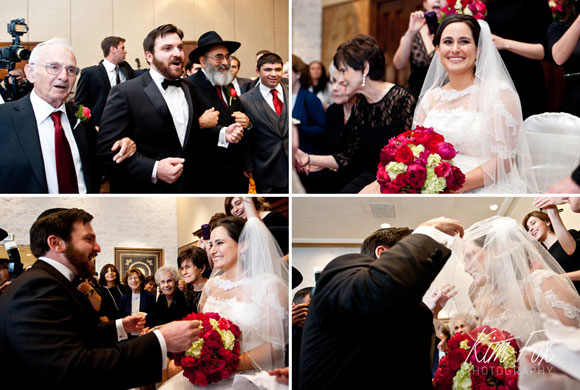
A traditional bride will spend time with the other women of the wedding before the chuppah ceremony. She receives her guests while sitting in her own kind of throne. As they celebrate her and sing to her, she relaxes in comfort in a large and ornate chair. Sometimes it’s even decorated with ribbons and flowers. This is a special way to acknowledge that the bride is the queen and that she is to stand out as such.

Kim Fox Photography

Kim Fox Photography

Meanwhile, in a man cave far, far away that I always picture to be laden with maroon leather-bound books and the smell of dark beer wafting in the air is a groom and his loyal subjects who treat him like a king. They sing and dance and cheer. They might even be reading Torah. They do really fancy, Jewishy things because — on this day, a wedding — everything is sacred.

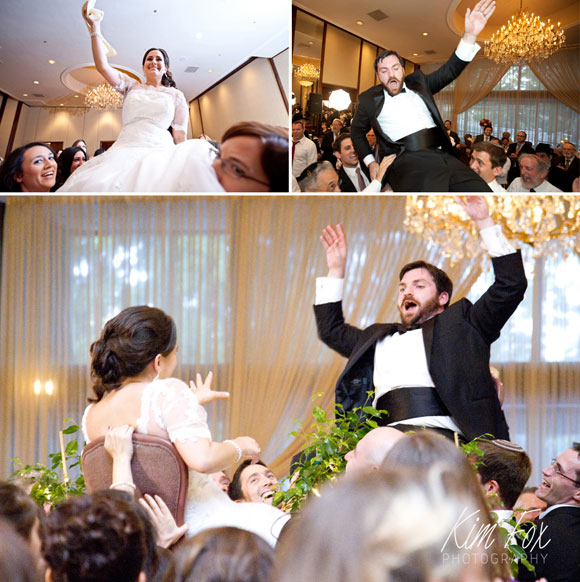
Later, at the reception, the finest food is served for the couple’s kingdom and the guests entertain and dance for them during merrymaking. It’s spirited. It’s rambunctious. It’s a par-tay! All the guests want to be sure that the newlyweds are having the time of their lives as they are the ones to be treated like royalty.

And those famous chairs that the newlyweds go up in? That’s no coinkidink. That’s not the doing of a wedding DJ who also likes skydiving. When the couple goes up in the chairs, their guests are raising joy. Literally. They are saying that the individuals who, moments before, united as one are royalty and no one can reach their level of joy. The guests are thrilled to look up at the faces of truly righteous people. It’s like they are sitting on pedestals made with pogo sticks, going up an down, above the crowd, all to the festive soundtrack of music and cheering.

Kim Fox Photography

Kim Fox Photography

So, Kings and Queens-to-be, you may feel like a slave to your wedding day as you work hard to make it all that you want it to be. But just remember, no matter how traditional or mainstream your Jewish wedding day is, YOU are the beautiful Queen and you must enjoy your reign!

Tales From The Veil: Chuppah Style

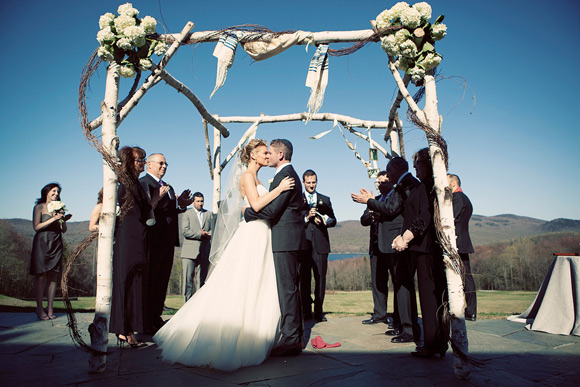
Excited to share Stefanie Syat’s wedding chuppah today as described by Miriam, blogger extraordinaire on the blog, Pre-Dame: A Beauty Guide for the Everyday Girl. Pre-Dame explores the beauty industry through the life of Stefanie Syat, Pre-Dame owner and professional makeup artist. Stefanie and Miriam answer beauty questions and provide solutions for blunders. Whether it’s through photos, videos, or in-depth explanations, Stefanie and Miriam teach you all you need to know to put your best face forward! And since Stefanie is now a recent bride, she has the wedding background to back up the bridal beauty analysis. Check out the Pre-Dame Facebook page for regular news and updates! Miriam narrates Stefanie’s vision for her chuppah in an excerpt from Pre-Dame below.

Vermont Jewish Wedding by Jami Saunders

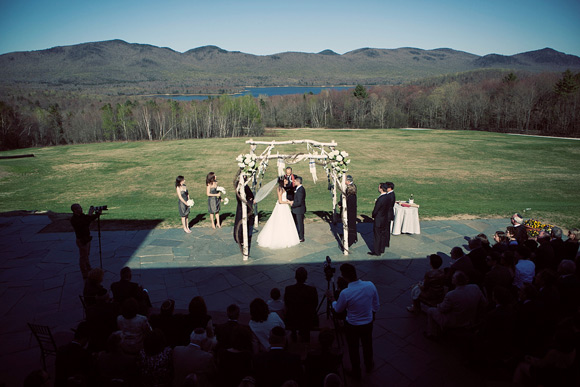
The hebrew word for “covering” is chuppah, and today we’re featuring the one-of-a-kind chuppah Stefanie and Jacob were married under. On its most basic level, a chuppah symbolizes the home the couple will build together. Different customs call for different protocol. Some couples don’t wear any kinds of knots or bows at the ceremony because at that moment they’re tying the ultimate knot and it’s said that there shouldn’t be anything else binding them. Others have a custom not to wear any jewelry beneath the chuppah so that they can truly and honestly assess the value they’ve found in each other. If you notice, the sides of Chupah are open and that symbolizes a commitment from the bride and groom to always have a home that’s open to guests.

It’s beautiful, all the thought and care that goes into this special day. I’ve learned that on the day of the wedding all of the blessings that the couple will merit in their lifetime sit on top of the chuppah during the ceremony. I mentioned this to Stefanie a little while back and sat down more recently to hear what the chuppah meant to her and Jacob.

Vermont Jewish Wedding by Jami Saunders

“I think of the chuppah as the centerpiece to the whole ceremony,” Stefanie said, “It’s what houses us as we make our commitment to spend the rest of our lives together and transition from an engaged couple to a married couple.

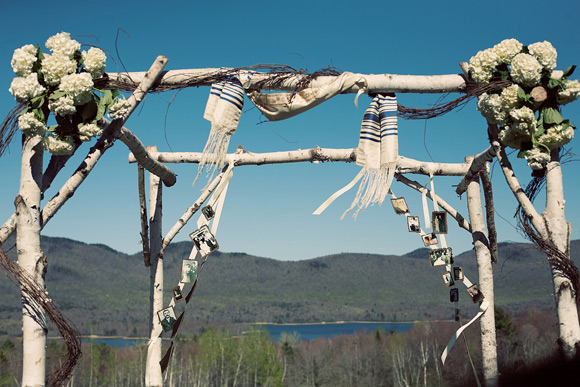
I wanted the chuppah to represent our style, not only for the wedding day, but in life too. We love nature, hence the reason we got married in the middle of Vermont on a mountain top, and we love the grand feeling of being surrounded by trees and nature in general. When you’re on the top of a mountain, you feel humbled by all of the gorgeous surroundings and realize what life is all about. We live in NYC with the constant hustle and lack of nature so getting out of the city to relax and take in the fresh air is key in our happiness. To us, the chuppah represented our new “home” together. We told the florist to make it as “tree-focused as possible with little to no flowers,” and he did it beautifully!

Vermont Jewish Wedding by Jami Saunders

The tallis represents past generations of those married under the Jewish law. That is a family tradition of mine that we wanted to continue. The photos represent all of our ancestors who lived lives that allowed us to be there on that special day. They helped shape our families and the people we are today and we look to them as witnesses to the new family that we will create together.”

I’ve also learned that on the day of the wedding a G-dly light shines from the faces of the couple. Kabbalah says that the family members of the couple that have passed away have a presence, too. For Stefanie and Jacob, the photos they included made sure of that.

Vermont Jewish Wedding by Jami Saunders

Photographer: Jami Saunders
Florist & Chuppah: Jasper & Prudence Floral

What Is A Mikvah and What Does It Have To Do With A Wedding?

For once, how would you like to get in the water and not have a care in the world about your hair getting wet or being self-conscious over your body? For once, how would you like a renewing experience that makes you feel alive, regenerated, and part of a tradition that spans from generations to generations? Mikvahs are not just for converted Jews. A bride may take a mikvah bath to ignite the start of her journey as a new, Jewish, married woman.

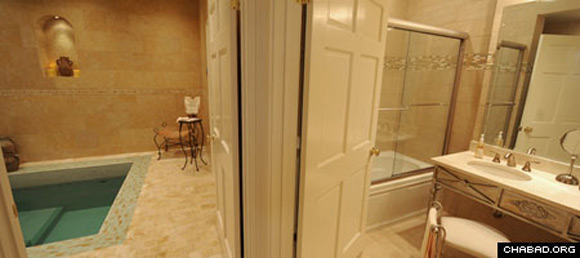
The mikvah, which is done as close to the wedding as possible, symbolizes a sort of rebirth or new life that the bride enters upon her upcoming marriage. The mikvah is a natural body of water, whether it’s a lake or a stream or a man-made pool that feeds from natural waters and resources, like rainwater or melted snow. Cool fact: There are 40 seah each (seah is a unit of measuremement; 40 seah equals about 200 gallons) of water in a mikvah and according to Sharon Shenker, founder and teacher at the Jewish Marriage Institute, the number 40 has significant relevance in Jewish history and culture.

“It is something that has linked the Jewish people together for thousands of thousand of years,” says Shenker. “Wherever you find a community, there is a mikvah there.”

Some interesting connections between the number 40 and rebirth: The rain fell for 40 days in the story of Noah and surrounded the world with water; The Hebrew people lived in the Sinai desert for 40 years and it is said that 40 years represents a period of time for a new generation to be born; Babies are in utero for 40 weeks and come out of the water at birth, purified and clean. There are hundreds of examples associations with the number 40, but perhaps the latter listed here is the most significant to the mikvah.

If you think about it, in Judaism, water is seen as a cleansing element, symbolizing revitalization in various forms of ceremonies and rituals. At Passover, we wash our hands at the seder; after a funeral, we wash our hands after leaving the cemetery and before entering a home; and of course, after a conversion, a new Jew will take a mikvah to mark his or her refreshed status as a Jewish person. So, it’s only fitting that prior to the simcha of a wedding, a bride may choose to mark her new life with a water purification and rebirth. After all, marriage brings change into a bride’s life, and this ritual acts as a preparation for that change. According to Shenker, “mikvah enables you to change your spiritual status.”

Many women may find mystery or awe in the mikvah experience, but it’s not eerie or something to fear. In fact, many modern mikvahs are creating a spa-like ambiance to appeal to current women. Typically, a modern mikvah has a changing room, a preparation room, the actual body of water itself, and a drying room. Some mikvahs even have specially-arranged bride hours! There can sometimes be a wait, but it’s a useful time to meditate, write, or enjoy the solitude and internal experience. We rarely get a break from our work and play lives to devote to just ourselves. Daydreaming about your future ahead and the plans you two have together is some of the most relaxing and rewarding type of meditation.

Before entering the mikvah, you will completely purify yourself. Think about a baby in the womb: nothing comes between a baby and the surrounding waters. It’s the only time in a human’s life that the baby will be absolutely free of any other substances and stimuli. A mikvah is your chance to seek that similar type of purity. So, preparing for your mikvah includes everything from a body rinse, hair detangling, total makeup and nail polish removal, and detaching any other unnatural elements from your body. This is a wonderful chance for you to get to know every inch and nook and cranny of your body. It’s beautiful, and every part has served a purpose for you and will continue to meet your needs as you hold your partner’s hand on your honeymoon or cradle your baby years from now. You can even pamper yourself! Use your favorite scrub or loofah to really get down to business on your parts. You are giving yourself the royal treatment because, girlfriend, you are the queen!

After your preparation bath, a mikvah attendant may go over all the steps to make sure you prepared properly. She’s looking out for your ultimate mikvah experience. Then, she’ll probably offer you a robe or gown to keep your body pure and honor your privacy as you head to the mikvah water.

Once at the mikvah water, you’ll walk down the steps to a full immersion as you dunk your body completely into the water, toes to head. This will make your mikvah kosher and the attendant will declare it so. One plunge satisfies the requirement, but three or seven immersions can be tradition as well, depending on your affiliation or family customs. If there are women in your family who have done mikvahs, ask them what they do. Or, of course, you can talk to your rabbi. If you’re a rookie, you can either take it upon yourself to follow the customs or create new ones for yourself. That’s the beauty of a mikvah. It’s about you.

“It’s one of the only things in Judaism you do with your whole body,” she says. The other two are sitting in a sukkah and walking through Israel.

After your mikvah, once you have finished your immersion, you may then recite to yourself:
Baruch Atah Ado-nai Elo-heinu Melech HaOlam Asher Kidishanu B’mitzvotav V’tzivanu Al Hatevilah.
We bless you, God, Our God, Ruler of the Universe who has made us holy by commanding the immersion.

You’ll leave the mikvah space to go to a room where you will put yourself back together. Most modern and updated mikvahs that provide a spa-like experience may even have hair dryers and toiletry goodies waiting for you! It’s like a holy country club!

After you leave the mikvah, Shenker says you are not to engage in sexual intercourse until the wedding night. You must preserve your newly cleaned body and mind for your soon-to-be husband. “Some people really have an emotional experience where they feel connected,” she says. “They feel like they’re doing the right thing.” And hey, when we do the right thing, we are in a good mood. And when we are in a good mood, well, you know where this is going. So save your good feelings and moods for the night you become a Mrs.

You can go to mikvah any day of the year except for Yom Kippur and Tisha B’av. Shabbat is a wonderful time to visit the mikvah. The mikvah is reserved for brides only during the day. All other mikvah goers must visit in the evenings. And, most importantly, you must be finished with your monthly cycle when going to the mikvah. So it is important to choose your wedding day in accordance with your cycle. If you’re not on the pill, you might have to do some math. This rule is extremely important, as you can’t visit the mikvah until seven days after the end of your period. Your period is considered to be at least five days (even if it’s shorter, you lucky girl, you), and then you must add on seven more days. So, consider these twelve days while you’re calendaring for your wedding date if you are to do a bridal mikvah within four days of the wedding.

So, overall, this general outline of a mikvah should help in piquing your interest or quelling any concerns you may have. I, personally, did not do a mikvah for my wedding because I didn’t really know about the custom, but have learned about this experience since. I think it’s a beautiful and unique event that I would have done for spiritual growth and development prior to my wedding. Of course, every woman’s experience is different, and between hair trials and dress fittings, it’s one more thing you can do for yourself that also provides a deep reflection and connection to a special Jewish tradition.

To learn more about mikvah practices or additional education about Jewish marriage and relationships, visit the Jewish Marriage Institute. Classes for couples or individuals are available as a wonderful resource for developing healthy and Jewish marriages.

Chuppah-ly Ever After by Beverly Harris

Besides reviewing beautiful wedding submissions on a daily basis and helping brides with tips that could help save them from breakdown on the best day of their lives, I also love meeting new friends in the wedding industry. Beverly Harris is as classy as it gets and she sure knows a thing or two about her town, and coincidentally, her name twin, Beverly Hills. She’s also a skilled wedding planner and adores the opportunity to work with on Jewish weddings. So between working high-end events in Beverly Hills and managing the behind-the-scenes of Jewish weddings, Beverly is well-versed in chuppah design and beauty. Today she shares with us a few words about her knowledge and love for the Jewish wedding canopy!

As a wedding planner, I’ve worked on lots of Jewish weddings. One of my favorite things about a Jewish wedding is to see the bride and groom standing under the chuppah. According to the Jewish view of marriage, the purpose of marriage is both companionship and procreation. The chuppah is a marriage canopy that symbolizes the couple’s first home together.

According to many authorities the chuppah is a metaphor for groom’s house, or at any rate an actual room or building other than the bride’s parental home. By entering it, the woman is declaring her official independence from her family and accepting the protection of her husband.

I believe the chuppah is the most distinctive feature of any Jewish wedding. It actually sets the tone to the beginning of a beautiful wedding. A chuppah can be made of any material. Silk or quilted chuppot are increasingly common, and can often be customized or personalized to suit the couple’s unique interests and occupations.

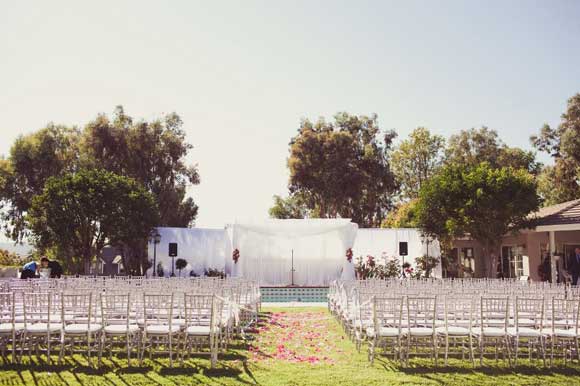
These days though, chuppah design is usually more flexible, from flowers to birch branches and natural vines an so much more. The decoration possibilities are endless. The important thing is to have four secure poles and a canopy overhead. The chuppah is open on all four sides so to symbolize the welcoming of family and friends to the couple’s new home and lives together.

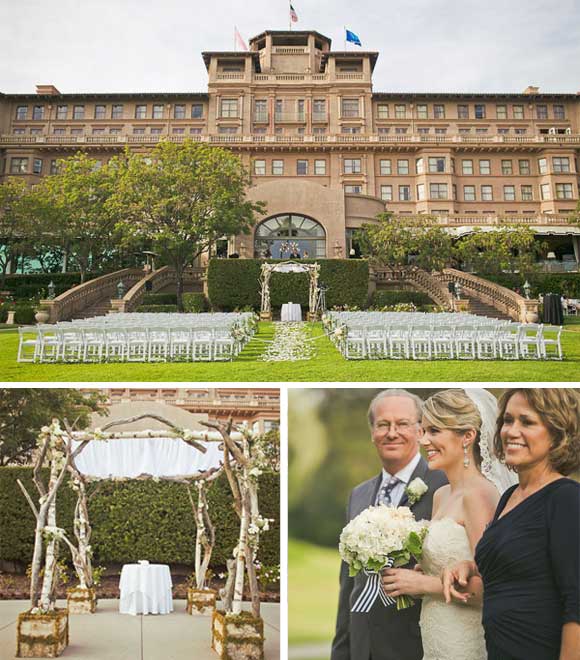
I’d like to share some photos of beautiful chuppahs that I think are super impressive. Happy chuppah-ing!

Wildflowers Photography

Wildflowers Photography

Orange Turtle Photography

Orange Turtle Photography

Norris Photo

Norris Photo

chuppah-norris-photo

Norris Photo

Guest Post by: Beverly Harris Weddings & Events