




******** THIS IS A STICKY POST THROUGH 2/29 ********
All of the MP Artworks ketubah couples are excited for your votes! We are one day closer to announcing our ketubah winners! Voting is open right now and goes through February 29 at 11:59 p.m. PST. The winning couple will be announced March 1. Find your ketubah couples here! Voting can take place on Twitter by mentioning your favorite couple and using hashtag #TWYGiveaway, The Wedding Yentas Facebook page, or the MP Artworks Facebook page, or the Ketubah Couples website page. Votes on any other page of The Wedding Yentas web site will not be counted.
********
For once, how would you like to get in the water and not have a care in the world about your hair getting wet or being self-conscious over your body? For once, how would you like a renewing experience that makes you feel alive, regenerated, and part of a tradition that spans from generations to generations? Mikvahs are not just for converted Jews. A bride may take a mikveh bath to ignite the start of her journey as a new, Jewish, married woman.
The mikvah, which is done as close to the wedding as possible, symbolizes a sort of rebirth or new life that the bride enters upon her upcoming marriage. The mikvah is a natural body of water, whether it’s a lake or a stream or a man-made pool that feeds from natural waters and resources, like rainwater or melted snow. Cool fact: There are 40 seah each (seah is a unit of measuremement; 40 seah equals about 200 gallons) of water in a mikvah and according to Sharon Shenker, founder and teacher at the Jewish Marriage Institute, the number 40 has significant relevance in Jewish history and culture.
“It is something that has linked the Jewish people together for thousands of thousand of years,” says Shenker. “Wherever you find a community, there is a mikvah there.”
Some interesting connections between the number 40 and rebirth: The rain fell for 40 days in the story of Noah and surrounded the world with water; The Hebrew people lived in the Sinai desert for 40 years and it is said that 40 years represents a period of time for a new generation to be born; Babies are in utero for 40 weeks and come out of the water at birth, purified and clean. There are hundreds of examples associations with the number 40, but perhaps the latter listed here is the most significant to the mikvah.
If you think about it, in Judaism, water is seen as a cleansing element, symbolizing revitalization in various forms of ceremonies and rituals. At Passover, we wash our hands at the seder; after a funeral, we wash our hands after leaving the cemetery and before entering a home; and of course, after a conversion, a new Jew will take a mikvah to mark his or her refreshed status as a Jewish person. So, it’s only fitting that prior to the simcha of a wedding, a bride may choose to mark her new life with a water purification and rebirth. After all, marriage brings change into a bride’s life, and this ritual acts as a preparation for that change. According to Shenker, “mikvah enables you to change your spiritual status.”
Many women may find mystery or awe in the mikvah experience, but it’s not eerie or something to fear. In fact, many modern mikvahs are creating a spa-like ambiance to appeal to current women. Typically, a modern mikvah has a changing room, a preparation room, the actual body of water itself, and a drying room. Some mikvahs even have specially-arranged bride hours! There can sometimes be a wait, but it’s a useful time to meditate, write, or enjoy the solitude and internal experience. We rarely get a break from our work and play lives to devote to just ourselves. Daydreaming about your future ahead and the plans you two have together is some of the most relaxing and rewarding type of meditation.
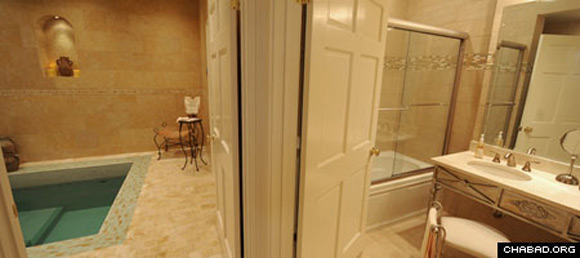
Before entering the mikvah, you will completely purify yourself. Think about a baby in the womb: nothing comes between a baby and the surrounding waters. It’s the only time in a human’s life that the baby will be absolutely free of any other substances and stimuli. A mikvah is your chance to seek that similar type of purity. So, preparing for your mikvah includes everything from a body rinse, hair detangling, total makeup and nail polish removal, and detaching any other unnatural elements from your body. This is a wonderful chance for you to get to know every inch and nook and cranny of your body. It’s beautiful, and every part has served a purpose for you and will continue to meet your needs as you hold your partner’s hand on your honeymoon or cradle your baby years from now. You can even pamper yourself! Use your favorite scrub or loofah to really get down to business on your parts. You are giving yourself the royal treatment because, girlfriend, you are the queen!
After your preparation bath, a mikvah attendant may go over all the steps to make sure you prepared properly. She’s looking out for your ultimate mikvah experience. Then, she’ll probably offer you a robe or gown to keep your body pure and honor your privacy as you head to the mikvah water.
Once at the mikvah water, you’ll walk down the steps to a full immersion as you dunk your body completely into the water, toes to head. This will make your mikvah kosher and the attendant will declare it so. One plunge satisfies the requirement, but three or seven immersions can be tradition as well, depending on your affiliation or family customs. If there are women in your family who have done mikvahs, ask them what they do. Or, of course, you can talk to your rabbi. If you’re a rookie, you can either take it upon yourself to follow the customs or create new ones for yourself. That’s the beauty of a mikvah. It’s about you.
“It’s one of the only things in Judaism you do with your whole body,” she says. The other two are sitting in a sukkah and walking through Israel.
After your mikvah, once you have finished your immersion, you may then recite to yourself:
Baruch Atah Ado-nai Elo-heinu Melech HaOlam Asher Kidishanu B’mitzvotav V’tzivanu Al Hatevilah.
We bless you, God, Our God, Ruler of the Universe who has made us holy by commanding the immersion.
You’ll leave the mikvah space to go to a room where you will put yourself back together. Most modern and updated mikvahs that provide a spa-like experience may even have hair dryers and toiletry goodies waiting for you! It’s like a holy country club!
After you leave the mikvah, Shenker says you are not to engage in sexual intercourse until the wedding night. You must preserve your newly cleaned body and mind for your soon-to-be husband. “Some people really have an emotional experience where they feel connected,” she says. “They feel like they’re doing the right thing.” And hey, when we do the right thing, we are in a good mood. And when we are in a good mood, well, you know where this is going. So save your good feelings and moods for the night you become a Mrs.
You can go to mikvah any day of the year except for Yom Kippur and Tisha B’av. Shabbat is a wonderful time to visit the mikvah. The mikvah is reserved for brides only during the day. All other mikvah goers must visit in the evenings. And, most importantly, you must be finished with your monthly cycle when going to the mikvah. So it is important to choose your wedding day in accordance with your cycle. If you’re not on the pill, you might have to do some math. This rule is extremely important, as you can’t visit the mikvah until seven days after the end of your period. Your period is considered to be at least five days (even if it’s shorter, you lucky girl, you), and then you must add on seven more days. So, consider these twelve days while you’re calendaring for your wedding date if you are to do a bridal mikvah within four days of the wedding.
So, overall, this general outline of a mikvah should help in piquing your interest or quelling any concerns you may have. I, personally, did not do a mikvah for my wedding because I didn’t really know about the custom, but have learned about this experience since. I think it’s a beautiful and unique event that I would have done for spiritual growth and development prior to my wedding. Of course, every woman’s experience is different, and between hair trials and dress fittings, it’s one more thing you can do for yourself that also provides a deep reflection and connection to a special Jewish tradition.
To learn more about mikvah practices or additional education about Jewish marriage and relationships, visit the Jewish Marriage Institute. Classes for couples or individuals are available as a wonderful resource for developing healthy and Jewish marriages.


