Category Archives: From the Expert

The Big Chair Lift

The Chair Scare: The feeling of butterflies about going up in a chair a handful of feet above the ground while holding onto a napkin, grinning with clenched teeth through the tight corset of the wedding dress during a series of bounces and hollers from the crowd.

Sound fun?

It doesn’t have to be scary. The tradition of going up in the chair is a festive and fun part of the reception’s Hora dance and some of you are a little fearful of going up and enjoying this custom.
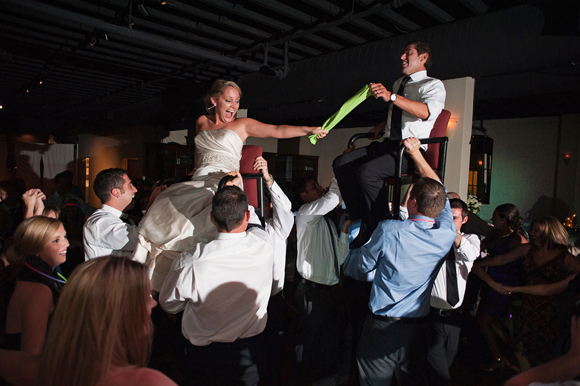
Photo by Solar Photographers

Your wedding is around the corner, and everyone tells you that the fun part is the reception where you and your soon-to-be husband will go up in the chair. Only problem is, you’re afraid of heights or you hate roller coasters or you’re worried about dropping the napkin. And, most importantly, What if you fall off the chair? Are you thinking of avoiding the chair lifts all together?

If you are feeling The Chair Scare, hopefully you’ll gain some peace of mind here.

This is supposed to be a fun tradition and definitely not something that causes you stress. First, make sure that your venue or wedding coordinator set aside two arm chairs for you. There should be two chairs with arms. Make sure the chairs have arms. You should use arm chairs. Is the point clear? This gives you something to hold on to and provides your body with boundaries as you become (lightly) jostled around.

Also, there are no rules! Just hop in the chair, hold on, and enjoy the ride. Someone will probably toss you a napkin to hold with your new partner and if you drop it through all the excitement – meh! – so what! The napkin isn’t a Torah; it’s okay if it falls. Many couples do and they lived happily ever after.

Before you plop down on the chair, remember to do a quick smooth-out on the tushie part of your dress. That way, if you have any beading or details on your dress, you won’t be uncomfortable from getting them lodged in nooks and crannies when you sit on them. The more comfortable you are, the more you can relax, and the less afraid you’ll be. See? It all comes full circle.

If you’re wearing a short dress or a tea length dress, cross your legs at the ankles. You are a married woman for goodness sake! You don’t want all those eligible bachelors to get a free show! Be a lady and make sure the tops of your feet touch each other.

You don’t have to stop eating for two weeks before the wedding. Give some strong men a heads up about the chair lift portion of the Hora and they’ll carry you like you’re Tinkerbell. Do not be afraid of being dropped. With four legs on the chair and at least one man per leg, it’ll be easy for the strong men to balance you. Perhaps in the days leading up to the wedding, call some of the men you’d like to be your chair lifters and give them advance warning that they’ll have this duty at your reception. That way, you can relax knowing that this very important task is handled and you don’t have to worry about it during your ketubah signing, aisle walk, circles, wine blessings, photos, and schmoozing that all take place during the Wedding Olympics.

Remember, the Hora is a joyous and happy part of the wedding reception. So as you are six feet off the ground and literally high on life, look at your husband who is up there with you and know that together you’re on top of the world. Then, look down, and enjoy all of your favorite people singing and clapping and loving you right back.
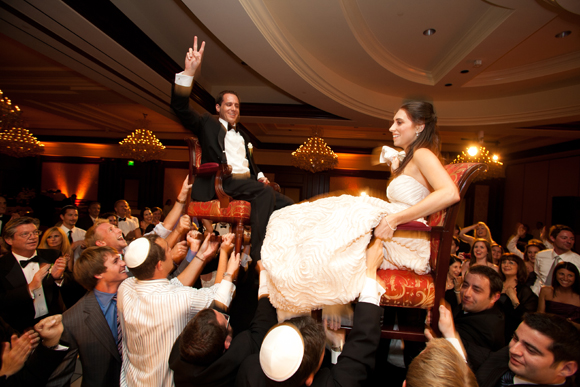
Photo by Mi Belle Photography

From the Expert: Combine Your Traditions To Create A Meaningful Interfaith Wedding

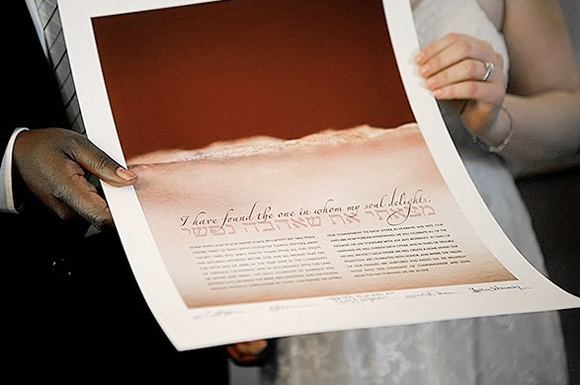
Daniel Sroka is the artist and owner of Modern Ketubah. He creates modern fine art wedding ketubahs from his abstract photographs of flowers and leaves for interfaith, Jewish, and multi-cultural couples. The first ketubah he ever made was for his own wedding. He and his then-fiance, Cara, wanted to make sure they loved the artwork to proudly hang it in their home, and they also wanted to be sure that the text and symbolism was meaningful, especially as an interfaith couple. They decided that his fine art photography would be the ideal style to express their marriage, as many other ketubahs they saw while shopping were adorned with Jewish symbols, and did not match their taste or represent them equally. Since then, Daniel has successfully built a ketubah business that honors individual style and spirituality.

Creating your interfaith wedding ceremony can feel like a huge challenge. Unlike couples from the same religion, you cannot just use a standard ceremony and be done with it. You need to create a new ceremony that is relevant to both of your traditions. While it can feel overwhelming, this challenge is really an opportunity to create something that truly symbolizes the unique personality of your love and marriage.

The simplest way to create an interfaith ceremony is to start with a basic wedding structure and embellish it with traditions you both hold most important. Both partners should write down everything they think should be in the wedding — every tradition that feels necessary. They should then go through their individual lists and explain the meaning of each item to each other. This is especially important for religious traditions that your partner may know little or nothing about. Try to explain why each tradition feels personally important to you, avoiding generalities like “it’s always been done this way,” or “I just like it”. The more you can explain, the better you will both understand each other, and the better your ceremony will become.

Ketubah by Daniel Sroka of Modern Ketubah

As you describe your ideal wedding to each other, you will begin to combine ideas, finding areas of agreement and disagreement. You will begin to learn what traditions are important to you as individuals, and as a couple. When my wife and I did this, we discovered that some traditions we originally considered essential really had no meaning to us once we tried to explain them, while other little-known traditions suddenly felt very important. So be ready to talk, compromise, and learn how to balance each others’ needs, concerns and ideas.

Eventually, you’ll begin to whittle down your long list of ideas into a workable ceremony. When my wife and I planned our wedding, we ended up combining different aspects of the Jewish and Catholic wedding traditions. We had two friends sing a modern version of the Seven Blessings. Another friend read a translation I wrote of the popular “Love is patient, love is kind” passage from Corinthians. We stood under a chuppah as my cousin, the priest, and our rabbi both gave their blessings. I fell in love with the Jewish tradition of the ketubah, and being an artist, decided to make one for us, which the rabbi then read to our families. We lit a unity candle, then stomped a glass. Some might find this kind of ceremony a little crazy or inauthentic, but we loved it and it fit us perfectly. It wasn’t a Jewish wedding or a Catholic wedding — it was our wedding.

Our crazy combined ceremony worked to bring our two families together in a beautiful and special way. Each side could relate to part of the ceremony, and also share the experience of something new. We explained the traditions throughout the ceremony, in simple terms, so that everyone could appreciate the parts they weren’t familiar with. And in the end, our families loved it as much as we did. It let us honor our religions and families while defining our own newly combined values, and began to establish what it would mean to live together as an interfaith couple.

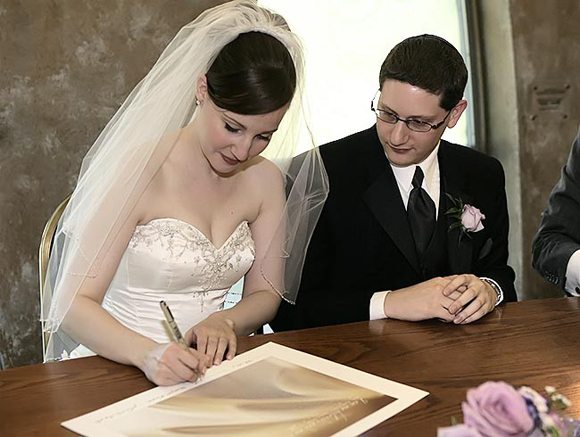
Ketubah by Daniel Sroka of Modern Ketubah

From the Expert: Honeymooning In Israel

Today, writer Marglit Silver shares her knowledge about a perfect destination that couples may want to consider after enjoying the wedding of their dreams: Israel! Named after her Israeli aunt, Margalit has always maintained strong emotional ties to Israel; first travelling there when she was fifteen-years-old, she had enjoyed touring sites the Western Wall, Dome of the Rock and Tombs of the Patriarch, but had also been amazed by the land’s rich beauty and lively, youthful culture. When she married newly-converted Tim 2008, she was ecstatic to take him on his first trip to the Holy Land during their honeymoon; what awaited them was an experience so amazing that they’re returning for their five-year anniversary in June, 2013.

There’s no doubt about it, Israel is fantastic for honeymooning couples. Yes, it is the Holy Land, but this isn’t news to you. However, you might be surprised by some of the other reasons Israel is a prime spot for romance. Multi-faceted culture, rich cuisine, beautiful natural surroundings, thrilling nightlife.. the region truly has it all!

Geographic Diversity
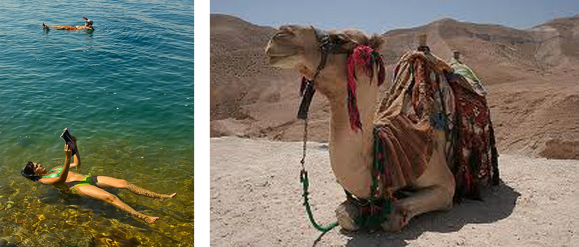
Though this country is only slightly larger than the state of New Jersey, it offers unbelievable environmental diversity. Snorkle in the laidback resort towns of Eilat and Ashod; float hand-in-hand on the waters of the salty Dead Sea; surf the waves of the beautiful Mediterranean; explore the breathtaking stretches of Negev Desert; hike the picturesque Mount Caramel; climb deep into the whimsical Red Canyon; and discover the country’s forty national parks. Additionally, there are plenty of local organizations that provide thrilling activities like archery, horseback riding, SCUBA diving, rock climbing, and even taking hot air balloon rides. Couples will find plenty of opportunities to get their hearts racing with excitement as well as stunning backdrops that are perfect for romantic kisses and memorable photographs. Plus, the country’s many offerings are all within driving distance of one another! For those vacationers who prefer public transportation, the generous network of trains is an easy alternative.

History and Culture
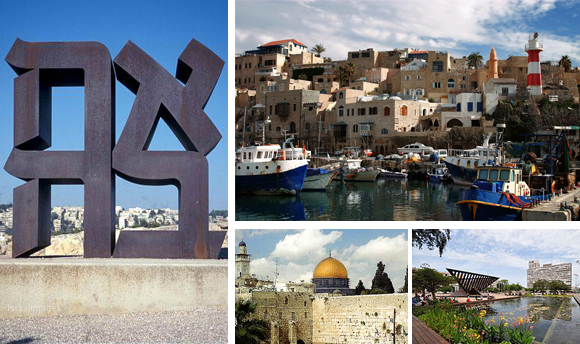
Many of Israel’s iconic historic destinations (The Western Wall, Rabin Square, the Port of Old Jaffa, Dome of the Rock, and Nazareth) date back thousands of years. However, Israel’s culture is hardly archaic. The country’s many art galleries feature modern pieces that reflect an ample assortment of experimental styles, and the world renowned The Israel Museum perfectly exemplifies the country’s harmonious blend of the ancient and contemporary. Also illustrating this reverence for their heritage and desire for reinvention is the country’s live music scene. There are a multitude of Israeli music festivals held year-round that celebrate the country’s individuality and its many influences. Honeymooners will also relish in the many shopping opportunities as they meander through the many lively markets to find homemade goods or pluck chic fashion straight from the runways.

Thrilling Nightlife
Jerusalem might be where the country goes to pray, but Tel Aviv is where the people go to party! Called “The City That Never Stops,” Tel Aviv’s nightclubs rarely open until past ten or eleven each night and often stay open well past sunrise. DJs travel internationally to spin at the city’s top venues, playing electronic, house, hip-hop, rock and more. This is the perfect locale for couples who want a night of festivities and seductive dancing to truly let loose after their elegant reception. Tel Aviv is lauded for its open-mindedness and is becoming a top hot spot for LGBT travelers and same-sex honeymooners. For newlyweds who aren’t looking to party from dusk to dawn, there are plenty of mellower alternatives. Israel is famous for its cozy hookah bars and intimate cafes that allow for pleasurable people watching and the chance to savor local flavors.

Incredible Food
The region’s cuisine is flavorful and much healthier than the average American diet, so brides can eat what they want and still look fantastic in their bikinis. Staples of the Israeli’s diet include falafel, hummus, and couscous as well as some of the finest, locally-grown citrus fruits you will ever taste. Couples will undoubtedly want to try the refreshing mint tea, the fresh olives and the delicious baklava sweetened with honey, as well as toast their love with some of the finest local wines in the world! However, the local cuisine continues to evolve as it increasingly incorporates international customs. Jerusalem and Tel Aviv feature some of the finest restaurants in Asia, offering worldly dishes like sushi, French delicacies, and plenty more.

Israel is an epicenter of beauty and culture. With many residents being only second or third generation citizens, international customs thrive and blend to form a youthful, forward-thinking society that pays respectful homage to the rich religious heritage in their backyard. For couples that want to honeymoon in a land of natural wonder, awe-inspiring history, youthful energy and artistic thrill, Israel is the perfect honeymoon destination.

Choosing Sides

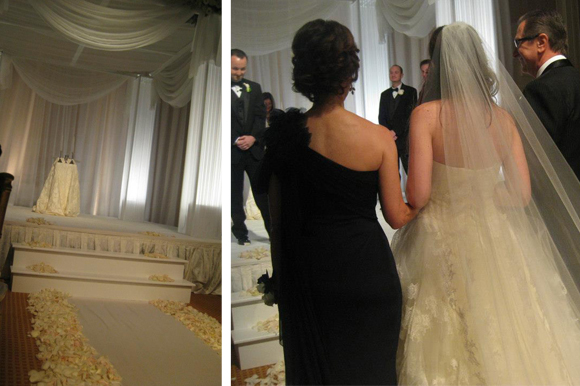
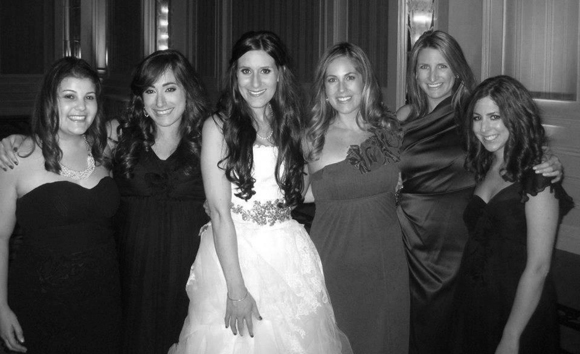
I recently went to the wedding of one of my best friends and it was absolutely perfect in every way. Not a detail was missed and my sorority sisters and I had the time of our lives celebrating our girl marrying her dream boy.

Our friend is Jewish and her husband is not. We knew that they weren’t going to have a religious ceremony for either religion, and we knew it would be a beautiful blend of their individual selves coming together as one. But still, even though we knew not to expect the Sheva Brachot (the seven wedding blessings) to be recited or a presentation of a ketubah, and we knew there’d be no religious clergy of any kind to marry them, our group walked into the gorgeous ceremony ballroom and had no idea on which side we should sit.

In a Jewish ceremony, our right side would have indicated the bride’s side. But, in a non-Jewish ceremony, the bride’s side would be to our left. We were some of the first to walk in (SOMEONE had to have the best seat in the house! What a Yenta!) and couldn’t even deduce based on the rest of the friends and family we knew.

So, we gambled (which was appropriate since the wedding was in Las Vegas, the bride’s hometown). We chose the left side, assuming the wedding wouldn’t be a traditional Jewish wedding, and continued to wonder if we’d made the right choice.

According to Rabbi Barry Tuchman of Weddings with Spirit, the Jewish people always maintained brides standing on the right and grooms on the left for no religious reason at all. It was just tradition. The Catholics and Christians also coordinated the same positioning for their weddings, but it wasn’t until the 1400s when it was decided that brides needed to be standing on the side opposite of the groom’s sword. Swords? In a wedding? Is The Princess Bride based on a true story?

Gather round the campfire, friends, and prepare to hear the wedding lore of long ago. Back in the day, like, hundreds of years ago when there were horses and swords and stuff, kidnappers would abscond with the bride so that they could get his paws on her dowry. These bad guys literally shoplifted the bride. Uncool. Because chivalry still existed, obviously the groom had to protect his woman so it was decided that the bride would stand opposite of his sword arm. And apparently, all men back then were right handed, so the sword hand was his right side and the bride would therefore stand on his left. This is the tradition that dictates where the bride and groom stand in mainstream/non-Jewish weddings. However, in Jewish ceremonies, the bride still stands on the right and the groom still stands on the left just as they always had.

Apparently nice Jewish boys don’t carry swords???

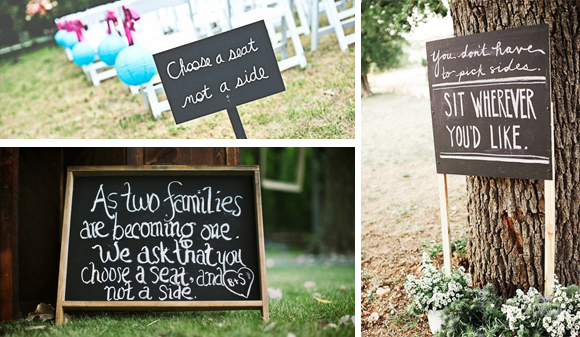
Nowadays, it’s becoming common for the couple’s guests to just pick a seat with no affiliation to the bride or groom’s “side.” Most couples share groups of friends and many are already living together and spending time with each others’ families, so the notion of a guest being at the ceremony in support of one of the two people getting married is becoming more and more dated. In fact, photos of signs are showing up instructing guests to sit where they’d like instead of on the side of either the bride or groom.

Top: Emmaline Bride; Right: Project Wedding; Bottom: Weddingbee

Meanwhile, back in Las Vegas…

While we waited for the processional to start at our friend’s wedding, we wondered which side each would stand on. We were on spilkes hoping we weren’t committing some terrible faux pas. All suspense was satisfied when the handsome groom stood on the left. Gasp! It was shaping up to be a Jew-ish ceremony after all. And it was! Some sips of wine. Some glass breaking. A hearty “mazel tov!” All surrounded by a beautiful chuppah. No Hebrew, no prayers. Just wonderful, deep-rooted traditions that make sense for any couple of any faith — whole or blended — and in love.

I decided that even though I’m a sap for tradition, I am also a big fan of not taking sides at a wedding. While in this particular case, I’ve known the bride longer and she has been a dear friend since I was a freshman in college, the groom had also become my friend. We’d traveled together as couples. He became friends with my husband. I’d met his family. All of us sorority sisters and our fellas who traveled to Las Vegas to attend the wedding were there for both the bride and groom. Also, another perk to sitting opposite of the bride: we could see her the whole time! Her back was never to us. We could gush over how beautiful she looked. We saw every giggle and tear that graced her face. It was not about having to pick a side. We’d picked her side long ago. The wedding was about them picking us to support them.

What do you think about bride and groom sides at a wedding? Will you tell your guests to sit where they please? Do you make sure to sit on a specific side when you attend as a guest?

Sponsored Post From The Expert: Jewish Wedding Ceremony Traditions and Explanations

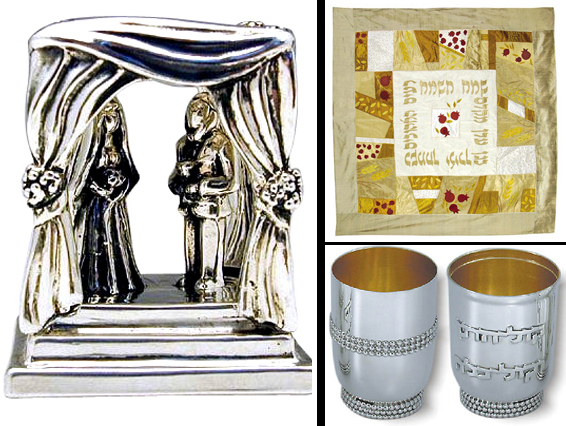
Sometimes, we need a play-by-play reminder of what the Jewish wedding traditions and ceremony are all about. If you’re new to Jewish weddings or you need to brush up on the whole event since your the marriage booth at your summer camp’s carnival, this post, sponsored by World of Judaica, will be a total lifesaver! Keep this post bookmarked so you can refer to it as you plan your wedding. Remember, though, that it’s a traditional guide and you should check with your officiant about how your wedding ceremony will be personalized and tailored to you since every couple is different and every Rabbi or Cantor is different! Mazel tov from World of Judaica!

**************************************

It’s true that many traditions may vary between the Ashkenazi and Sephardic communities, but no matter the affiliation and heritage, the wedding day is supposed to be the happiest and holiest day in one’s life. This day is considered a personal Yom Kippur for the bride (Kallah) and groom (Chatan).

It is customary for the bride and groom not to see each other for one week before the wedding. This is called the Kabbalat Panim, and is intended to increase anticipation and excitement for the wedding. When the couple first sees each other on the wedding day, the groom will perform the Badeken, veiling of the bride. The groom lowers a veil over the bride’s face because the tradition of veiling goes back to biblical times when Rebecca covered her face before marrying Isaac. (Many Sephardic communities do not perform the Badeken.)

Before the couple heads to the Chuppah (wedding canopy) for the ceremony, they must first sign the Ketubah. The Ketubah, or marriage contract, outlines the groom’s responsibilities and obligations to his wife. The Ketubah must be signed by two witnesses and has the standing of a legally binding agreement. After the Ketubah is signed the wedding ceremony may commence. The ceremony takes place under the Chuppah, which is a symbol of the home that the new couple will build together, and is open on all sides just as Abraham and Sarah’s tent was open on all sides to always welcome guests with unconditional hospitality.

The best man is first to walk down the aisle standing to the left under the Chuppah, the groom is escorted by both his parents down the aisle before he takes his place to the left of the best man. Next comes the bridesmaids walking single file and take their place to the right of the Chuppah. The maid of honor walks down the aisle alone and takes her place on the right side of the Chuppah. The bride is escorted down the aisle by both parents before entering the Chuppah and joining her groom.

Like many Jewish ceremonies, the wedding ceremony begins with a cup of wine. The Rabbi says a blessing over the cup of wine and a second over the marriage. Both the bride and the groom drink from the cup. This portion of the ceremony is called the Kiddushin. During the ring ceremony the wedding ring is placed on the bride’s right index finger, which is the finger most visible to the witnesses. Jewish wedding rings must be made of solid uninterrupted gold, silver, or platinum with no precious stones or holes breaking the circle. The continuousness of the ring represents the hope for an everlasting marriage. After the exchanging of the rings, the Ketubah is read aloud. Once the groom has handed the Ketubah to his bride, they are officially husband and wife.

The second half of the ceremony continues with the Nissuin. A second cup of wine is filled and the Sheva B’rachot, seven blessings in honor of the wedding, are recited. At the conclusion of the ceremony the groom smashes a glass with his foot and the guests then shout “Mazel Tov!” — congratulations and good luck.

For more information on Jewish wedding traditions, other Jewish traditions and Judaica items visit World of Judaica and their Jewish Learning Center today.