Category Archives: From The Yentas

Jewish Wedding Traditions Should Not Be Greek To Your Vendor Team

The Wedding Yentas was one of the inaugural editors of Two Bright Lights. For non-industry folks, Two Bright Lights is a fabulous site that connects photographers and their works with many different kinds of blogs, allowing for quick and easy transfers of photos and info. In fact, over half the weddings published on this here little blog have been matches made by Two Bright Lights, so it’s a system I’ve been loving since Day 1.

On Two Bright Lights, there’s a little profile for The Wedding Yentas — it explains that it’s a wedding blog for Jewish and interfaith weddings and then also includes info about what’s required for submissions. It’s pretty simple, but it’s no secret that it’s a Jewish wedding blog.

I love getting new submissions and it’s so exciting to pour over a batch of photos, getting to know a couple through the photographer’s point of view. Once in a blue moon, I’ll get a submission that’s a tease — a beautiful wedding, great details, wonderful vendor info… but it’s not a Jewish wedding. The wedding is usually submitted to 50 other blogs and you can tell that the photographer took no time to personalize the submission, pretty much just clicking a bunch of boxes to see what sticks. These photographers are lazy jerks.

But then I just decline the submission, click “Not a fit” and “Submitted to too many publications” and hope they understand what they did and learn a lesson.

Last week, I received a submission from a photographer and like all the other times for the past three years, I opened it up, excited to see what I might be able to share with all of you!

It was tagged as a Jewish wedding and it was only submitted to The Wedding Yentas. This was a good sign.

I looked at the names of the couple. Hmm… not exactly a Silverstein or a Goldenberg, but OK, Judasim and its affiliations can cross over many cultures, right?

I waited for the photos to load and while my MacBook gave me Pinwheel shpilkes, I looked at my editorial calendar to see when I had an opening to publish this wedding. Two weeks. Perfect.

Finally, I worked my way into the album. Good looking couple. Brunette. Very elaborate details. Gorgeous dress. Beaming family of women surrounding the bride as she got ready.

Indoor ceremony. Big crowd sitting in… pews? Hmmm. OK, they must be in a synagogue but the photographer didn’t list it as a venue. Must remember to follow up in an email about that for proper credit.

The decor inside had a stained glass window like so many synagogues have and then my eye skimmed down to a wall of gold plated murals of — record screech — Jesus?

Lots of Jesus and Jesus-like figures. Lots of crosses. Lots of not-a-Jewish-wedding symbols.

The wedding officiant was definitely not wearing a yarmulke and his version of a tallit had even more crosses on it. This was no rabbi.

It was then that I recognized the setting from a fabulous and funny movie that starred Aidan Shaw when he wasn’t Aidan (and yes, I was Team Aidan and not Team Big. Sue me). And it was confirmed when I saw the beautiful wreaths draped over the bride and groom’s head — the Greek Orthodox crowning ceremony.
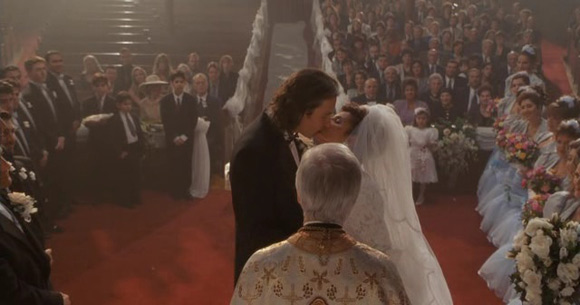
My Big Fat Greek Wedding

This was not a Jewish wedding. It was a beautiful wedding. It made me wish I was the publisher for a Greek wedding planning blog. It was a lot of things, but it was not a Jewish wedding.

But you know, ethnic rituals, big family, lots of celebrating… sure, why not intentionally submit to a Jewish wedding planning blog and even tag it as a Jewish wedding?

This is not OK.

And this is why I tell you: make sure your vendors — ESPECIALLY your photographer! — know you’re having a Jewish wedding. Or another kind of wedding. Or is clued into what you’re doing at your wedding if it includes any other wedding tradition than a kiss.

You are paying someone a lot of money to follow you throughout the day. This vendor will use you for marketing tools (which is fine) and will blog about you and put your face on social media pages. This vendor will spend time with you and get to know your likes, dislikes, quirks, and family (sometimes the former two can be redundant — ha ha). Do you really want to hire someone who isn’t even going to understand the values and traditions on which your marriage begins?

I don’t know if this photographer was trying to pull one over on me or if the photographer was actually just really ignorant about cultural differences among the many different wedding ceremonies that photographers have the privilege to document. I also feel badly for the couple, who was clearly not respected enough for the photographer to even know the uniqueness and traditions of their special day and their heritage that fueled it.

Most of us are required to practice cultural sensitivity in the workplace, whether it’s at school or a corporate environment. Shouldn’t it be the same for professionals in the wedding industry?

Luckily, this was the first time I’ve come across something like this in the life of The Wedding Yentas, so I suppose that track record is pretty good. But all it takes is one. So that’s why I beg all of you to not only get to know your vendors, but make sure your vendors get to know you! You deserve it.

Wedding Programs for Your Jewish or Interfaith Ceremony

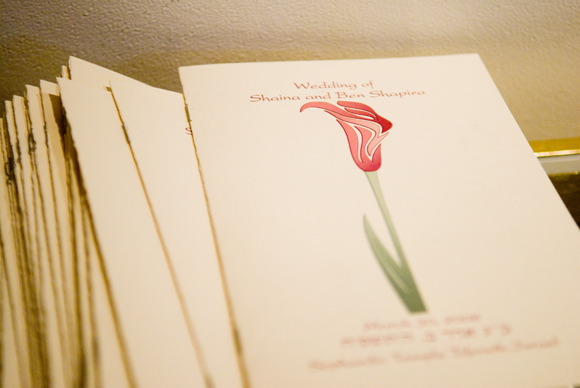
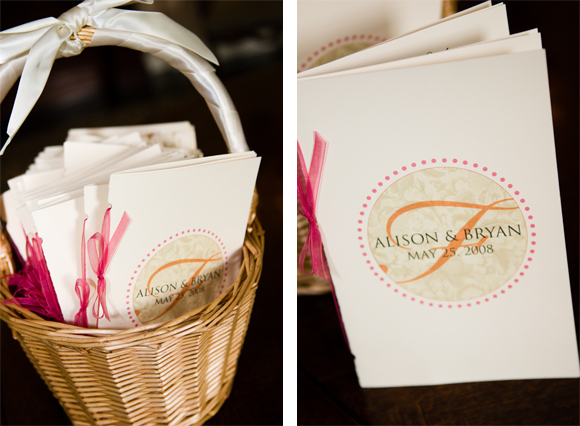
Are you providing programs for your guests? Programs are a great extra detail to create for your wedding ceremony. It’s a perfect place to welcome your friends and family, say thank you to those who made your wedding day possible, and even remember the loved ones who are no longer with you, but hold a special place in your heart and memory.

And, most importantly, it’s an ideal place to share some of the traditions your guests may see while you’re under the chuppah. Usually, a rabbi will lead the ceremony and describe what’s happening and why, but for those who want to take the program with them or if they missed the rabbi’s description, your friends and family can read about the beautiful traditions you’re including.

A typical wedding program will include the couple’s name, wedding date, and location on the cover. Inside, guests can usually find a welcome message from the couple, an ordered list of the people in the processional (officiant, parents, grandparents, bridal party, etc.), the order of the ceremony (this includes readings or songs and who will be performing them if it’s anyone other than the officiant), the traditions included throughout the day before, during, and after the ceremony, and an in memoriam-type of list.

This is a guide that has popular, mainstream Jewish traditions. If you are choosing to include other customs from another religion or culture, this would be a good place to add them. If your ceremony is more on the super reform side, you can tailor the wording and traditions listed below. And if you’re going ultra traditional, you’ll most likely need to add several more components. These selected traditions are from a modern, mainstream “conservaform” wedding and seem to follow the types of Jewish wedding ceremonies that visiting Yentas are designing. Feel free to “steal” what works for you and confirm with your officiant. It would be impossible to include every couple’s possible specific traditions and their “whys” and “hows” since all couples’ interpretation of Jewish weddings are different. So, I must reiterate, this is a skeleton, not a set-in-stone format.

Good luck! Email alison@theweddingyentas.com if you have additional questions!

Ketubah
The marriage contract (ketubah) specifies the couple’s commitment to each other. The ketubah was signed during a ceremony before the wedding service and contains the signatures of the bride and groom as well as two witnesses who are Jewish and not blood relatives. The rabbi has also signed and dated the ketubah to make it official.

Bedeken
The bedeken is the veiling ceremony during which the groom placed a veil over the bride. This ceremony took place privately and is considered one of the most moving elements of a traditional Jewish wedding. By covering his bride with a veil, the groom ascertained her identity, and confirmed that he is marrying the woman of his heart’s desire.

Chuppah
The chuppah is a canopy that symbolizes the home that the bride and groom will build together. The chuppah is open on all sides, also symbolizing that friends and family are always welcome in the newlyweds’ home.

Hakafot
The bride circles the groom (hakafot) seven times. Two interpretations of the significance: seven is the number of days of creation, and the wedding ceremony is the creation of a new household; seven is the number of times the phrase “when a man takes a wife” occurs in the Torah.

Wrapping the Tallit
During the final benediction, the couple is wrapped by a tallit (prayer shawl) around their shoulders. This wrapping symbolizes the private Jewish life the bride and groom will have together.

Breaking of the Glass
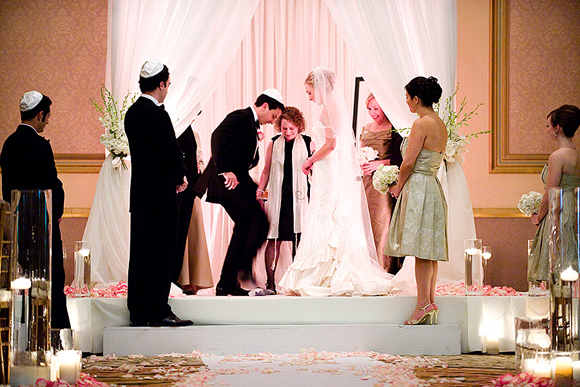
The wedding ceremony concludes with the groom breaking a glass under his foot. There are many significances behind this custom. One of them is that it is a reminder that relationships are as fragile as glass and must always be treated with care, love and respect. After the breaking of the glass, the guests yell, “Mazel Tov!” which means good luck.

Yichud
After the chuppah ceremony, the couple is escorted to a private room and left alone for a few minutes. These moments of seclusion signify their new status of living together as husband and wife.

Your Jewish Wedding Is Over! Now What? Oh Yeah, Changing Your Name

All of you spring and summer brides are now good and married, so your next step is to make it official. Well, after you make it Facebook-official, of course.

Making it official means dealing with the government. Shudder. DMV… Social Security… You’re just so excited to deal with these fine institutions, aren’t you? It’s exactly how you want to spend your lunch break, right? Eye roll.

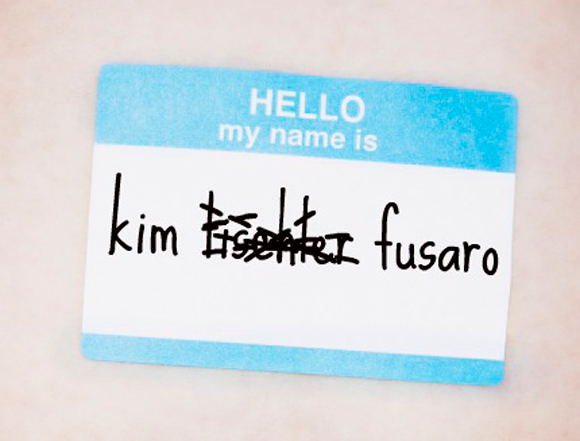
If only your name could magically change as soon as the first “mazel tov!” is cheered if that’s on your agendas (not everyone changes their name, and that’s fine!). Interacting with the cast of characters in this name-change process may sound tedious and even a bit overwhelming.

But really, it’s not that bad if you just break down all the steps. Yes, steps. Unfortunately, going to the Edit box and typing it in on your Facebook profile doesn’t make it a done-deal across the board of all your other important credentials (what?! Facebook doesn’t hold the reigns of official information?!). But still, a lot of women get overwhelmed with the idea of going through the name change. If you’re planning on taking on your new spouse’s last name, just know that it’s not so difficult after all, and The Wedding Yentas makes it easy for you with a how-to, step-by-step name change guide!

You can always access this helpful tool on the Planning Tools tab of the web site. But, in case you haven’t seen it, here it is in blog form:

Dealing with bureaucratic agencies to change your name after the wedding sounds about as fun as shoving bamboo shoots up your finger nails. And while it’s not exactly as pleasurable as inhaling a hot fudge sundae, it’s really not as difficult as you may think.

Here we’ll walk you through the steps of what you need to go from a Miss to a Mrs.

1. Order at least 4 copies of your marriage certificate from the county clerk’s office.

2. Download the form from the Social Security office and fill out the form before you go to the office in person. Bring the completed form, your identification, and an original copy of your marriage certificate to the Social Security office near you.

3. Next you’ll change your name on your driver license. Another official copy of your marriage certificate should help you in this process when you arrive at the DMV. You’ll also need to bring a form of identification like your driver license, passport, or birth certificate. Sometimes, certain DMVs in certain states also require you bring your new Social Security card, which means you may have to wait until it arrives. Check with your local DMV first. Also, make an appointment in advance if your DMV offers this convenient feature!

4. Don’t forget to change your name on your credit cards, insurance companies, your employer, banks, 401k and retirement plans, doctors, frequent flyer memberships, utilities companies (gas, phone, electricity, garbage, HOA, etc.). Usually, a simple phone call will do the trick or a quick log-in to their online portals.

5. Go buy new monogrammed towels to celebrate! Mazel tov!

Wedding Reception Sweetheart Tables

You know how you have, like, 23897921 things to decide for your wedding? How’d you like one more?

“Where will you two be seated during your wedding reception?”

That question will lead you to consider a sweetheart table, a family table, a wedding party table, a periodic table of elements… Ok, hopefully not that last one (ew, I don’t do science). I don’t think there’s really a WRONG choice because I think all of the options have tons of pros and zero cons. But if you held up a box of fresh Scotchmallows in exchange for a decision on this subject, I would have to say that out of all of the options, I am a fan of the sweetheart table.

Why am I in favor of sweetheart tables?

Three reasons:

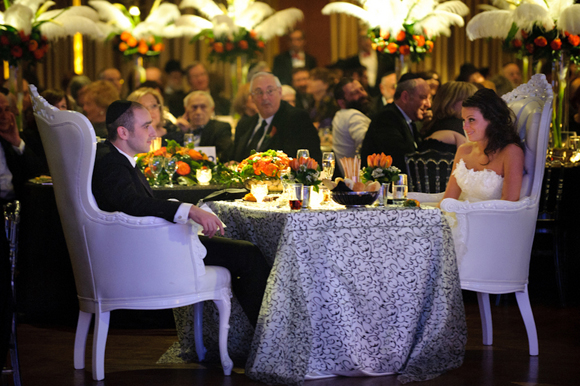
  • You have your own personal home base. You won’t be sitting much anyway, but when you are, it’ll be nice to have a little turf you can call your own. Your guests who want to offer you mazels and hugs know where to find you to have an intimate chat sometime between the salad and the entree. This takes some of the pressure off of you to have to get up and make the rounds in a small amount of time. People can come to you and they won’t mind.
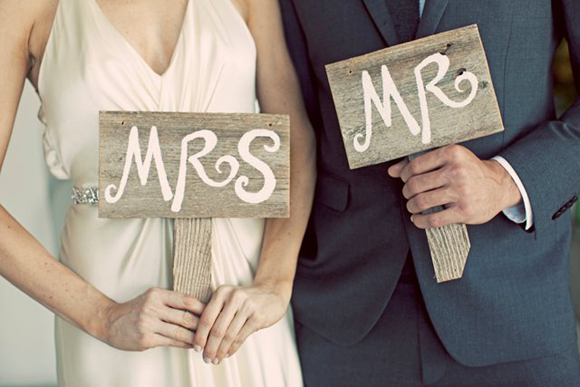
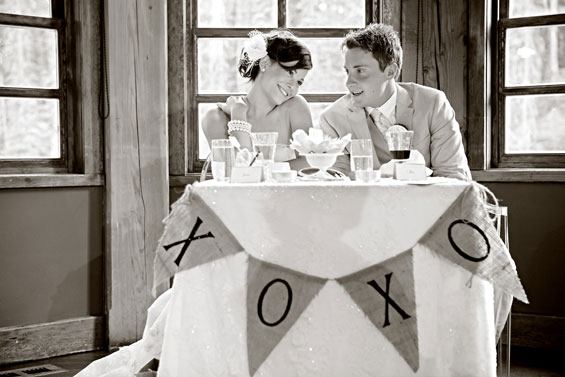
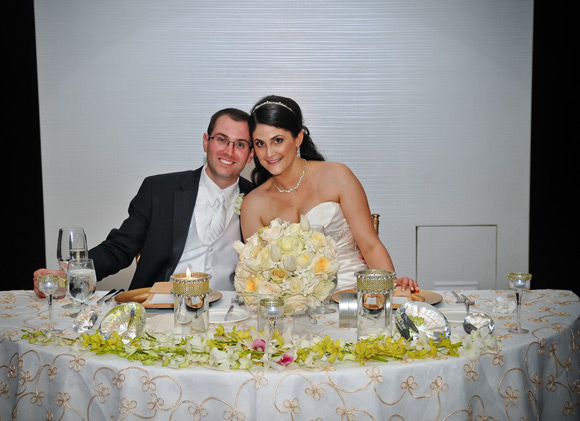
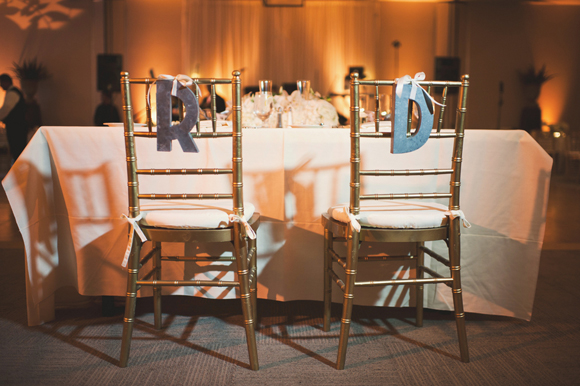
  • You’ll have another opportunity to extend your style. Props like “Mr.” & “Mrs.” signs, decked out chairs, or flower arrangements can furnish your sweetheart table, thereby making it a vehicle to tie in your theme, color scheme, or any additional design concepts.
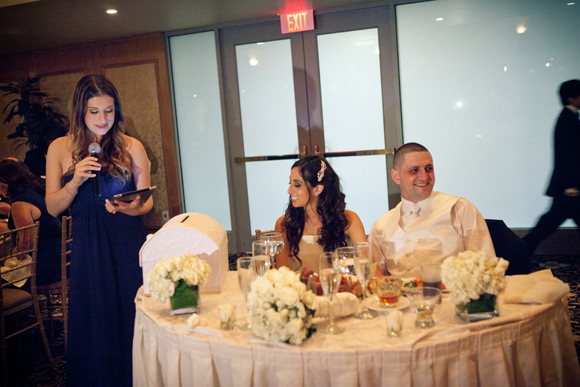
  • You get the best seat in the house! Normally, sweetheart tables are placed in front of the dance floor and in a position where you can look out and see all your guests surrounding you. If you are at a long banquet table with your bridal party, the placement of the table is not as flexible as a small, intimate table for two. Having the best seat in the reception hall is ideal during speeches, watching special dances, and generally taking it all in. You’ll be the focus of the reception area and why shouldn’t you be?

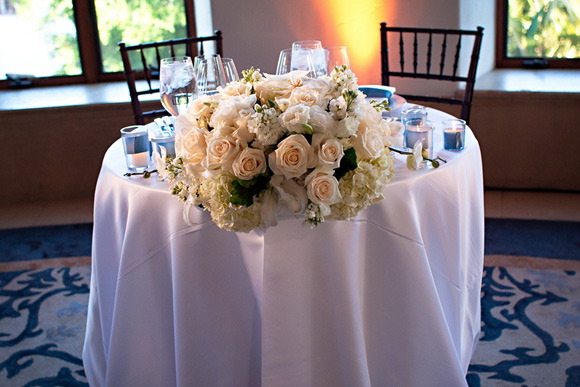
Photo by Orange Girl Photographs

However, it is important to make your sweetheart table tasteful. Setting it apart from the rest of the tables is fine; those few, subtle touches that declare the table special and unique to the bride and groom is totally acceptable. On the flip side, decking it out in gaudy drapery or an over abundance of flowers that make you look like Tarzan and Jane in the jungle is not the way to go.

Bottomline: The sweetheart table should complement the main tables, not appear to be out of place or swallow you up in the general world of your wedding reception ambiance.

Okay, I’m just going to leave it at that.

Moving on…

While it’s nice to have the home base of a sweetheart table, that also doesn’t take you off the hook of doing the right thing and making the rounds to see your guests. At a time that feels right for you (this is usually at some point during the salad or entree), you should really make sure you visit the tables to say hello and thanks to your guests. They will think you are both a lovely couple: a gracious bride and a mensch of a groom. The concept of you home base is to give you a semi-private place to enjoy each other’s company as newlyweds, but you should definitely not ignore your guests altogether.

Needs ideas for sweetheart table design? Look below for some sweet eye candy!

Stacy & Drew by Rosie Hernandez Photography

Desiree & Richard by Heidi Ryder Photography

Jackie & Danny by Photography by Verdi

Erica & Adi by Duke Photography

Jaynee & Sean by Mi Belle Photography

Serene & Mike by Ashleigh Taylor Photography

Naomi & Andrew by Phototerra

Wedding Photos Checklist

No doubt, you’re so excited for your wedding day and since you’re obviously reading wedding blogs like this one, you’re also organized and prepared for the big day.

Here’s another list to add to your collection: the must-have wedding photos list. The day rushes by so fast, it’s easy to forget about key images that you’ve likely dreamt up in your head during your planning process. Trust yourself that you’ve hired a fabulous photographer, but also know that your photographer has a routine set of images that he or she usually captures and it’s possible that the ones you’re thinking aren’t in his or her usual repertoire, especially if they’re uniquely specific.

Just be proactive and confirm with your photographer that you’d like to make sure you must-have photo list is in line with theirs.

Here are some snapshots you will enjoy:

Pre Ceremony

  • A shot of the rings! Get that bling on camera before they lose their shine!
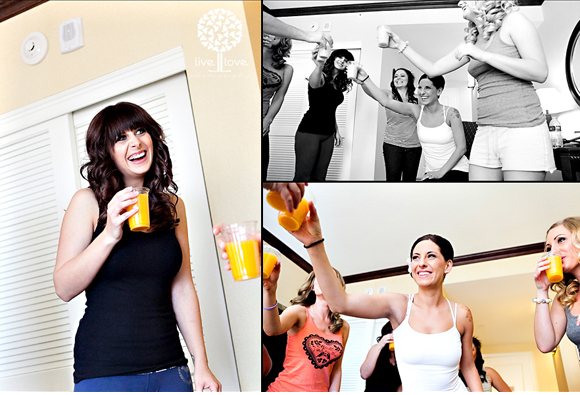
  • Pour that champagne! Getting ready with the bridesmaids.
  • The groom getting ready with his guys. Here’s our chance to be jealous that it takes 32 seconds for men to get fancy.
  • A still of the wedding dress and shoes — together and separately! Because they’re both fabulous!
  • The groom waiting… and waiting… and waiting… to see his bride! If you’re doing a first look, photos of the groom waiting are so cute.
  • Girl time with the bridesmaids for formal shots.
  • Bride with all the guys for some groomsmen bonding.
  • The ceremony scene like the chuppah, guestbooks, seating arrangements, and other details.

During The Ceremony

  • Both the bride’s and groom’s entrances as they walk down the aisle
  • The guests’ reaction to seeing the beautiful bride appearing.
  • The rings being placed on the fingers.
  • Jewish traditions like the presentation of the ketubah, drinking wine from the kiddush cup, the rabbi wrapping the bride and groom a tallit, and of course, the groom stepping on the glass.
  • The bride and groom leaving the chuppah — such a joyous moment!

At The Reception

  • The whole room with set tables and different angles of centerpieces. These types of photos will help future planning brides.
  • The grand entrance! It’s fun to see the newlyweds enter their party!
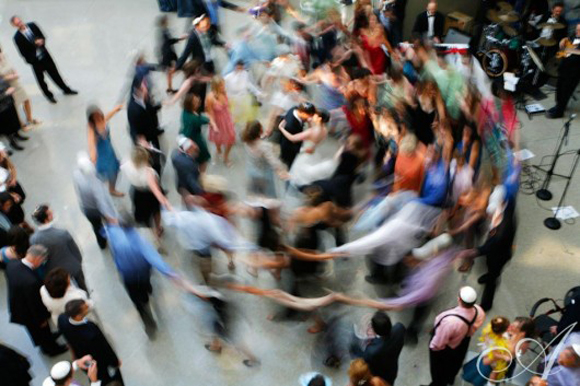
  • The horah! You can almost HEAR the joy in the photos when a photographer captures a group spiraling around the bride and groom.
  • What’s a horah photo without the chair lifts? From all angles, you should be able to see the bride and groom up in chairs. Photographers might stand on a chair to get directly in line with their faces.
  • Cake cutting and any shenanigans that happen there! To smash or not to smash?

Obviously, you may have additional photos in mind that you must include, so be your own advocate and make sure you write them down. Again, most likely, your photographer already knows and has this list on the agenda as well, but it can’t hurt to check.

Don’t forget: Smile! And enjoy!! Photos of a happy couple should be your number one priority and that, my friends, is totally in your control!