Category Archives: Inside Scoop

Honoring Friends & Family With Wedding Day Duties

This is a very good problem: You have childhood pals you’ve known since nursery school and you have sorority sisters from your time away at college. You have a cousin who’s like your clone and you have high school friends who you are still in close touch with. And then you and your partner both have siblings and they’re also in your inner circle. Poor you! You are loved by too many people and you can’t possibly have them all in your bridal party. Well, you could, but not only would your processional be longer than your ceremony, but your photographer might kill you. (Am I right, photographers?)

First, pick your bridal party. This may be difficult because you really have to narrow down your fan club, but check out this post that may help you feel better about it. After you’ve secured a reasonable amount of bridesmaids and groomsmen, then think about who else you’d like to honor with VIP status.

Is one of your favorite people a good singer, speechmaker, or musician? Ask them to “perform” at some point during your wedding weekend. You may ask someone close to you to give a speech or sing a song at your rehearsal dinner. There might be a point in the ceremony that someone could recite your favorite poem, or sing as you walk down the aisle. Someone special could also do the motzi over the challah or the Birkat HaMazon, the blessing after meals, thanking God for the food and His support in general. You’ll want to limit the amount of speeches during your reception (too many makes it a snoozer!), but think of other special times during your wedding events that can include putting your favorite people in the spotlight.

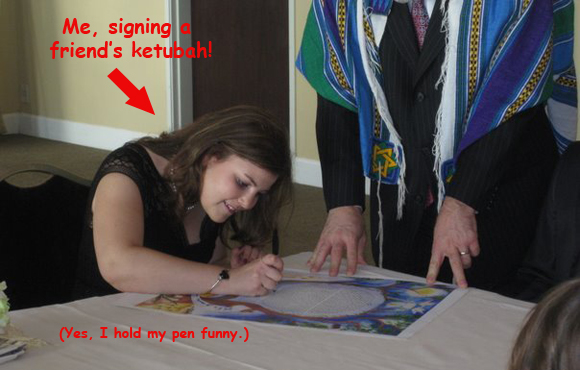
Pick your ketubah signers! Typically, there are two of them, and this is a huge honor. Their signatures will be on your beautiful ketubah forever and if you choose to hang it in your home, you will be reminded of these people whenever you look at it. They are invited into the room where you sign the ketubah and this is usually a private event before the chuppah ceremony. I’ve personally signed the ketubah twice for my two best friends and it was a joy to be part of the official Jewish marriage portion of the day. Remember, the ketubah signers must be Jewish and not be blood relatives. Your ketubah signers should be able to tell your rabbi or cantor their Hebrew names, and can receive help on the wedding day if the ketubah calls for writing their name in Hebrew.
Choose your marriage license witnesses. These can be the same people as your ketubah signers or you can extend the honors to two separate people. These people don’t have to be Jewish and are there to sign the marriage license that you must have with you on the day of your wedding. Your officiant should mail it in for you, and after the wedding, you should receive the certificate of marriage, but you’ll need two witnesses. This is also a really big deal for the signers since the document makes the marriage official in “the system.”

For fellas who are close to the bride or groom, there is a job for them that makes them some of the most popular men at the party. Designate some hefty dudes to hold you two up in the chair during the Hora. This doesn’t always have to be an invitation-only ritual, but it might be a fun way to honor some men who didn’t make it into the wedding party. Plus, they’ll be in all the fun photos of the chair lifts!

There are always the more job-like honors: ceremony ushers, guestbook facilitators, and escort cards host. These really are more like tasks, though, so think long and hard if it’s more of an honor or a chore for the people you ask to do this. Depending on the size of the wedding, and the style and locale, you may or may not want to ask people to do this. Sometimes it’s not necessary, but you know your wedding and your friends best, so make the decision based on the facts. These are just last-ditch ideas.

Think outside the box, too! Perhaps there are fun and unique details you’re choosing to include in your wedding day. Ask yourself how you might weave in your favorite people to honor them and then create an exciting way to ask them. Hopefully, this solves your terribly unfortunate problem of having so many wonderful people in your life!

Choosing Sides

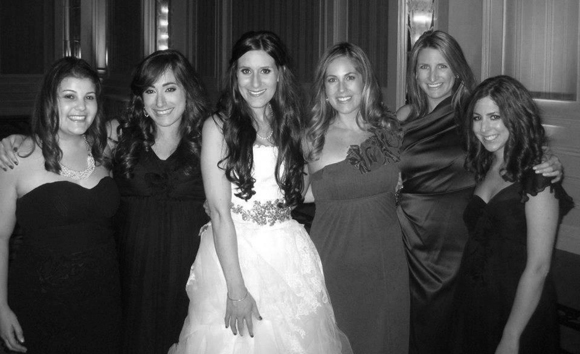
I recently went to the wedding of one of my best friends and it was absolutely perfect in every way. Not a detail was missed and my sorority sisters and I had the time of our lives celebrating our girl marrying her dream boy.

Our friend is Jewish and her husband is not. We knew that they weren’t going to have a religious ceremony for either religion, and we knew it would be a beautiful blend of their individual selves coming together as one. But still, even though we knew not to expect the Sheva Brachot (the seven wedding blessings) to be recited or a presentation of a ketubah, and we knew there’d be no religious clergy of any kind to marry them, our group walked into the gorgeous ceremony ballroom and had no idea on which side we should sit.

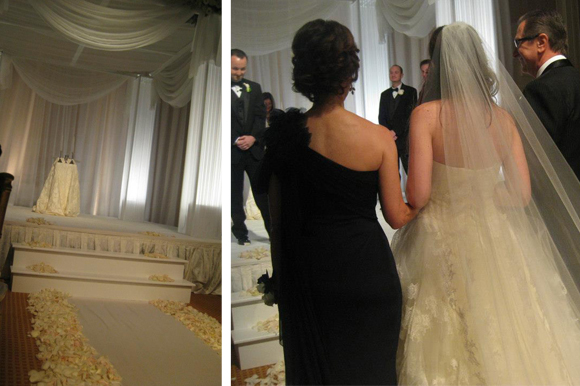
In a Jewish ceremony, our right side would have indicated the bride’s side. But, in a non-Jewish ceremony, the bride’s side would be to our left. We were some of the first to walk in (SOMEONE had to have the best seat in the house! What a Yenta!) and couldn’t even deduce based on the rest of the friends and family we knew.

So, we gambled (which was appropriate since the wedding was in Las Vegas, the bride’s hometown). We chose the left side, assuming the wedding wouldn’t be a traditional Jewish wedding, and continued to wonder if we’d made the right choice.

According to Rabbi Barry Tuchman of Weddings with Spirit, the Jewish people always maintained brides standing on the right and grooms on the left for no religious reason at all. It was just tradition. The Catholics and Christians also coordinated the same positioning for their weddings, but it wasn’t until the 1400s when it was decided that brides needed to be standing on the side opposite of the groom’s sword. Swords? In a wedding? Is The Princess Bride based on a true story?

Gather round the campfire, friends, and prepare to hear the wedding lore of long ago. Back in the day, like, hundreds of years ago when there were horses and swords and stuff, kidnappers would abscond with the bride so that they could get his paws on her dowry. These bad guys literally shoplifted the bride. Uncool. Because chivalry still existed, obviously the groom had to protect his woman so it was decided that the bride would stand opposite of his sword arm. And apparently, all men back then were right handed, so the sword hand was his right side and the bride would therefore stand on his left. This is the tradition that dictates where the bride and groom stand in mainstream/non-Jewish weddings. However, in Jewish ceremonies, the bride still stands on the right and the groom still stands on the left just as they always had.

Apparently nice Jewish boys don’t carry swords???

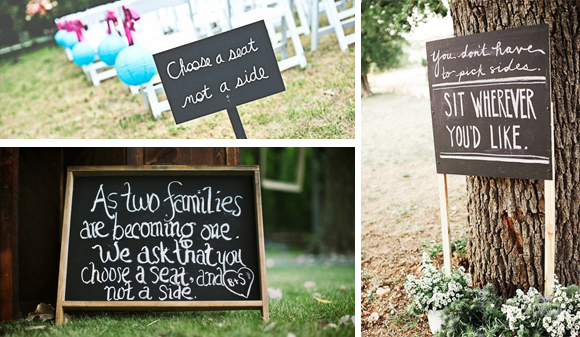
Nowadays, it’s becoming common for the couple’s guests to just pick a seat with no affiliation to the bride or groom’s “side.” Most couples share groups of friends and many are already living together and spending time with each others’ families, so the notion of a guest being at the ceremony in support of one of the two people getting married is becoming more and more dated. In fact, photos of signs are showing up instructing guests to sit where they’d like instead of on the side of either the bride or groom.

Top: Emmaline Bride; Right: Project Wedding; Bottom: Weddingbee

Meanwhile, back in Las Vegas…

While we waited for the processional to start at our friend’s wedding, we wondered which side each would stand on. We were on spilkes hoping we weren’t committing some terrible faux pas. All suspense was satisfied when the handsome groom stood on the left. Gasp! It was shaping up to be a Jew-ish ceremony after all. And it was! Some sips of wine. Some glass breaking. A hearty “mazel tov!” All surrounded by a beautiful chuppah. No Hebrew, no prayers. Just wonderful, deep-rooted traditions that make sense for any couple of any faith — whole or blended — and in love.

I decided that even though I’m a sap for tradition, I am also a big fan of not taking sides at a wedding. While in this particular case, I’ve known the bride longer and she has been a dear friend since I was a freshman in college, the groom had also become my friend. We’d traveled together as couples. He became friends with my husband. I’d met his family. All of us sorority sisters and our fellas who traveled to Las Vegas to attend the wedding were there for both the bride and groom. Also, another perk to sitting opposite of the bride: we could see her the whole time! Her back was never to us. We could gush over how beautiful she looked. We saw every giggle and tear that graced her face. It was not about having to pick a side. We’d picked her side long ago. The wedding was about them picking us to support them.

What do you think about bride and groom sides at a wedding? Will you tell your guests to sit where they please? Do you make sure to sit on a specific side when you attend as a guest?

Escort Cards vs. Place Cards

Are you ready to have your mind blown?

Those little cards you pick up at the beginning of a wedding reception with your name on them that have a table number assigned? Yeah. What are they called?

{listening for your response}

You answered “place card” didn’t you?

Eeeeehhhhhhhhhhhh (that’s the “wrong” buzzer).

Those little cards that you pick up at the beginning of a wedding reception with your name on them that have a table number assigned are NOT called place cards. They are called escort cards. And you are now going to sound really freakin’ smart at the next wedding you attend. You’rewelcomeverymuch.

So what are place cards?

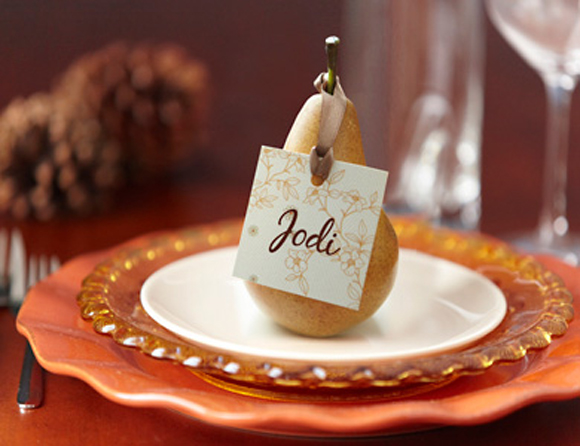
Place cards are not very common actually. Usually, only very formal or black tie events provide place cards and they literally dictate the place you will be sitting. The hosts have taken it upon themselves to place you at a seat at your assigned table. The place cards are set in advance to receive you as you find your assigned table.

You’ll do a little mosey around the table to find your name at a place setting. That’s your seat. All for you. Your own little piece of wedding reception real estate.

Easy way to remember: PLACE card puts you in your PLACE.

Alexan Events

Ann Hamilton Photography

Homemade Simple

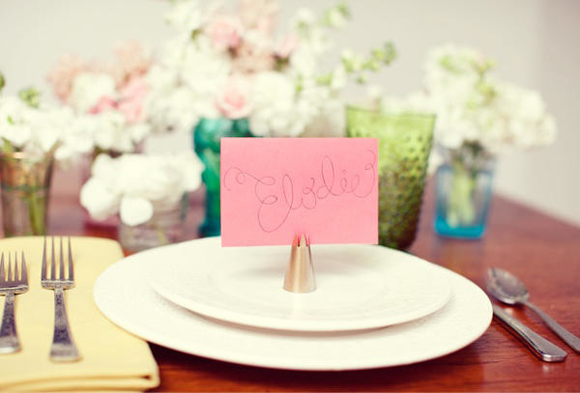
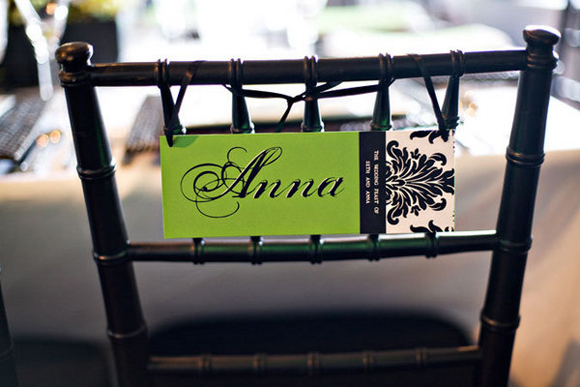
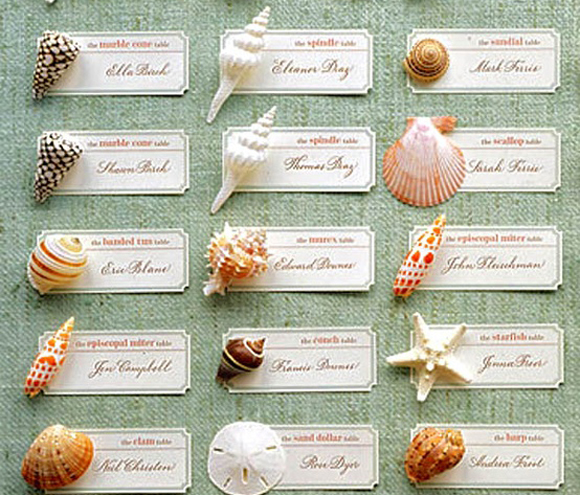
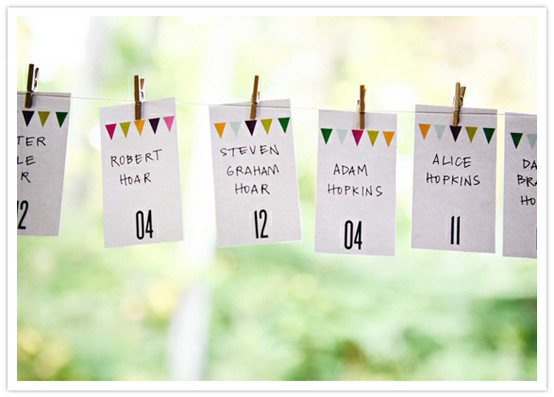
And now that I’ve put you in your place, let me explain escort cards. Escort cards identify the table at which you’ll be sitting. The people frolic into your reception, all giddy and stoked about the glass you just broke and the mazels they just yelled. Then they pass a table with beautifully displayed cards or other items that say their names and table numbers. Then — this part is important — they pick up the card, read it, and walk away, taking it with them. Keyword: Walk away.

The card escorts them to their table. It’s almost as if the card is their friend and whispers in their ear, “Pssst! You! Yes, you! You are sitting at Table 6. It’s near the open bar. Score!”

And that’s how you remember escort cards: they escort you to your table.

Evoke Photography

Martha Stewart Weddings

Christa Kimble Photography

Some weddings may not assign any tables or seats to anyone. Free for all. Grab a seat at any table you like. These weddings will not have escort cards or place cards.

Most weddings will assign you a table. You’ll pick up your escort card, find your table, and choose a seat there.

The most formal weddings will assign you a table and a place card. After you find your table listed on your escort card, you’ll then find your place at the table that’s been preselected.

So next time you’re at a wedding, flex your knowledge and tell your friends, “Let’s go find our escort cards to see what table we’re sitting at!”

Except… your grammar-correcting friend is going to correct you, the wedding term-correcting friend, and say, “No. Let’s go find our escort card to see at which table we’ll be sitting.”

Sponsored Post: Choosing Your Wedding Rings

Today The Wedding Yentas is happy to welcome Zoara as an expert in all things wedding jewelry! Zoara is the culmination of over 50 years of combined professional expertise in the diamond and jewelry industries. For decades the company’s founders and management have been offering high-end jewelry and diamonds to the public in retail stores and online at Zoara.com.

*****************************

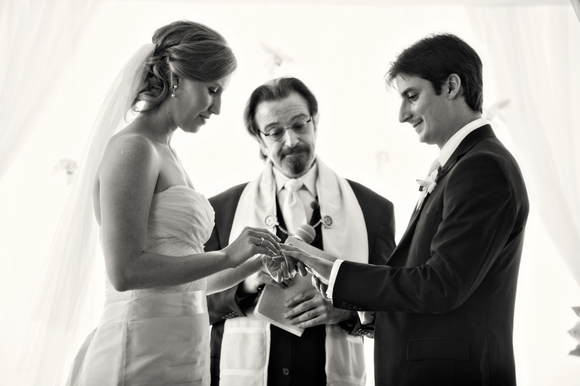
Rabbi Barry Tuchman performs a Jewish wedding ceremony and ring exchange. Photo by B&G Photography.

Choosing such a personal item like a wedding ring is going to take some time and looking around. One of the biggest mistakes you can make is thinking this will be a simple task. Even if you just want a simple band, there are a lot of decisions to make: Curved or flat? Polished or matte? Narrow or wide? The list is long.

Traditionally kosher Jewish wedding bands are plain and without stones set into them. This came from a tradition where the bride should be able to easily find out its value and was needed because its worth, not the actual ring, that mattered. Nowadays, this is much more relaxed among modern Jewish couples, although most brides and grooms opt for plain rings anyway. According to Jewish tradition, it is not necessary for the bride to give the groom a ring, but most husbands and wives both choose to wear rings for equality.

Here are a few features to consider when choosing your wedding rings:

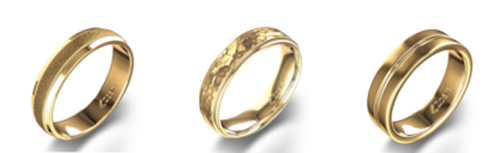
Textured Wedding Rings
Women’s and men’s wedding rings come in loads of different textures. This is a great way to add some detail to the ring while still meeting kosher requirements. There are many textures available and it is easy to choose matching rings for bride and groom. A texture is not a design, but rather a finish or combination of finishes.

Ring on the Left
Ring in the Middle
Ring on the Right

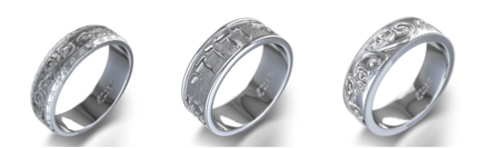
Patterned Wedding Rings
These wedding rings have a pattern engraved in them. They have limitless possibilities of what can be engraved or embossed. A popular choice for wedding bands is “Ani L’dodi” rings. This is taken from Song of Solomon and means “I am my Beloved’s.” Other patterns can include floral designs, geometric shapes, and just about anything you can think of.

Ring on the Left
Ring in the Middle
Ring on the Right

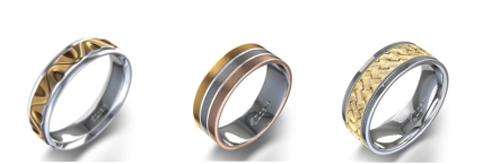
Two Toned Wedding Rings
This is one of the latest trends, especially for men. Multiple tones of gold are used to give added dimension and interest. These rings are especially beautiful and they have that element of uniqueness. The various colors can be intricately incorporated with designs or simply just bands of color. Two toned rings present an opportunity for you to explore the artistic and creative side of jewelry.

Ring on the Left
Ring in the Middle
Ring on the Right

If you are having trouble finding jewelry that you like for affordable prices, you might try shopping online. It is a great option because prices are very competitive which means you get a great deal. Zoara is an online jewelry store with a huge range of wedding rings and Jewish jewelry available. You are certain to find the perfect wedding rings that you will treasure for the rest of your lives.

What kinds of rings do you like?

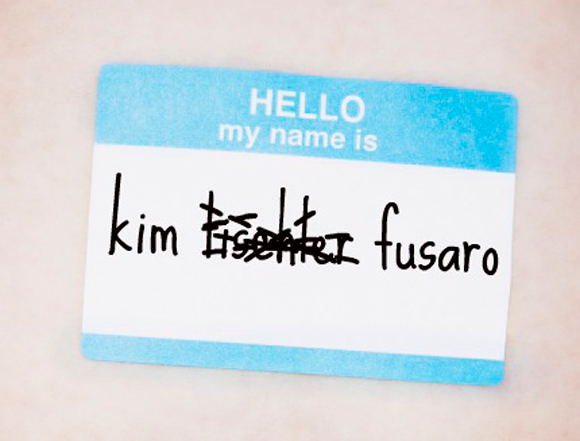
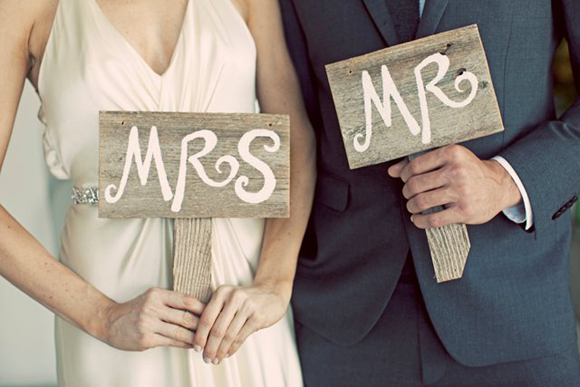
Changing Your Name from Miss to Mrs.

It’s not that scary. And unfortunately, going to the Edit box and typing it in on your Facebook profile doesn’t make it a done-deal across the board of all your other important credentials (what?! Facebook doesn’t hold the reigns of official information?!). But still, a lot of women get overwhelmed with the idea of going through the change. The name change. If you’re planning on taking on your new spouse’s last name, just know that it’s not so difficult after all, and The Wedding Yentas makes it easy for you with a how-to, step-by-step name change guide!

You can always access this helpful tool on the Planning Tools tab of the web site. But, in case you haven’t seen it, here it is in blog form:

Dealing with bureaucratic agencies to change your name after the wedding sounds about as fun as shoving bamboo shoots up your finger nails. And while it’s not exactly as pleasurable as inhaling a hot fudge sundae, it’s really not as difficult as you may think.

Here we’ll walk you through the steps of what you need to go from a Miss to a Mrs.

1. Order at least 4 copies of your marriage certificate from the county clerk’s office.

2. Download the form from the Social Security office and fill out the form before you go to the office in person. Bring the completed form, your identification, and an original copy of your marriage certificate to the Social Security office near you.

3. Next you’ll change your name on your driver license. Another official copy of your marriage certificate should help you in this process when you arrive at the DMV. You’ll also need to bring a form of identification like your driver license, passport, or birth certificate. Sometimes, certain DMVs in certain states also require you bring your new Social Security card, which means you may have to wait until it arrives. Check with your local DMV first. Also, make an appointment in advance if your DMV offers this convenient feature!

4. Don’t forget to change your name on your credit cards, insurance companies, your employer, banks, 401k and retirement plans, doctors, frequent flyer memberships, utilities companies (gas, phone, electricity, garbage, HOA, etc.). Usually, a simple phone call will do the trick or a quick log-in to their online portals.

5. Go buy new monogrammed towels to celebrate! Mazel tov!