Category Archives: Jewish Traditions

From the Vault: Can’t Get Enough of the Aufruf

This week, The Wedding Yentas will feature some of the oldies-but-goodies that newer readers may not have seen! These posts will explain some of the most important or popular traditions, showcase some favorite photos, and give you a little stroll down Yenta Memory Lane. Today it’s all about the Aufruf. Maybe you’ve heard of it. Maybe you haven’t. But now’s your chance to learn all about yet another honor you can enjoy as your wedding day nears. Happy times!

You and your groom have been planning for months and months, probably. Every conversation involves the word “wedding” and every time you see white, you get excited. The wedding planning process consumes a big chunk of your life, but the wedding festivities don’t really begin until about a week before the special day.
On the Shabbat prior to the wedding, the couple goes to synagogue and experiences the Jewish custom called the Aufruf. In modern congregations, the bride and groom experience this together, but traditionally, the Aufruf is when the groom is called to the bimah for an aliyah and recite a blessing over the Torah. Judaism honors children and the gifts they bring to the world. Creating children means continued faith and Torah study for the Jewish people. Therefore, it is no surprise that the groom’s aliyah includes reading the letters of the Torah, which contain the ten utterances of creation.

When the Aufruf takes place in relation to the wedding day varies depending on the family of Jewish people to which the bride and groom belong. Ashkenazi Jews enjoy the Aufruf ceremony on the Shabbat before the wedding. The Aufruf is held for Sephardic Jews on the Shabbat after the wedding. So, to recap: Ashkenazi, before; Sephardic, after. It’s even in alphabetical order and everything. Add that to the catchy methods to learn things like PEMDAS for math or Every Good Boy Does Fine for memorizing lines on a treble clef staff. But I digress…

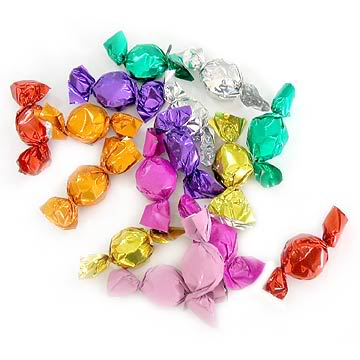
Here’s the best part of the Aufruf. The congregation throws candy at you!!! CANDY. Thrown. In your direction. It’s like Halloween for almost-married grown ups. Like everything in Judaism, it’s symbolic. The candy symbolizes a sweet and fruitful marriage blessed with many children.

After the Aufruf, the family hosts a Kiddush for the congregation. Clearly it is an unspoken Jewish law to eat after any sort of milestone, so Aufruf joins the company of such life cycle occasions.

Our Aufruf was fun and special. Just being up on the bimah together, holding hands, reciting an aliyah, and receiving the rabbi’s blessings reminded us that the wedding day was near where we would again be brought together under the chuppah to become husband and wife. If your rabbi offers an opportunity for an Aufruf, I highly recommend taking part in this custom because it’s a wonderful stepping stone on your path to the ultimate wedding experience.
From the Vault: Think Ink

This week, The Wedding Yentas will feature some of the oldies-but-goodies that newer readers may not have seen! These posts will explain some of the most important or popular traditions, showcase some favorite photos, and give you a little stroll down Yenta Memory Lane. Today, it’s important to remind all brides and grooms that the ink on the ketubah matters!! Read ahead so you don’t make the mistake and use a Papermate pen. It is not your ketubah’s mate… at all.

Before your public wedding ceremony, you’ll gather with your officiant and immediate family for the ketubah signing. I’ll talk about this in detail in future blogs, but this traditional ceremony essentially makes the bride and groom officially married. You’re signing the Jewish version of a marriage contract, so it’s important to be sure that your ink will last all the years to come.

So how do you choose a pen that embalms your Judah Hancock into foreverness?

Avoid pens that feather or bleed. You also want to be certain that your ink won’t fade over time, even if your ketubah soaks up sunlight and UV light. Waterproof pens are also a good idea because someone in your family will be crying tears of joy (I have my money down on a mom). Therefore, you should make sure to use an archival pigment ink pen, which you can find at any framing or art store.

Brands we recommend:

As you sign your ketubah, be sure the ink has dried before wrapping or rolling it up. You’d hate to smear your document!

And never, ever use a felt tip pen like a Sharpie because it will bleed into the paper and potentially damage any art on your ketubah. Leave any damages to the appropriate glass portion of the ceremony!

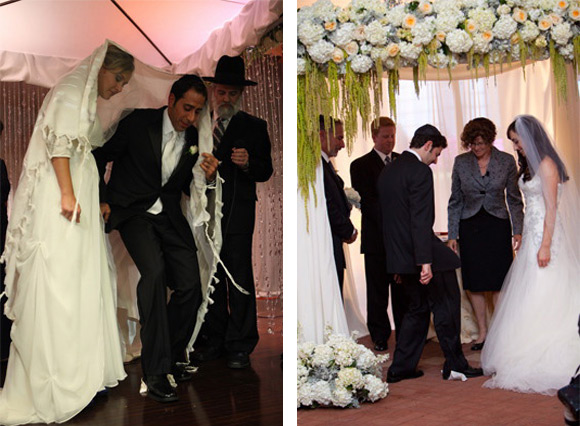
jewish-wedding-ketubah-signing

Images courtesy of Eight20 Photography. Ketubah designed by Rachel Deitsch.

FROM THE VAULT: Kiss My Glass

This week, The Wedding Yentas will feature some of the oldies-but-goodies that newer readers may not have seen! These posts will explain some of the most important or popular traditions, showcase some favorite photos, and give you a little stroll down Yenta Memory Lane.

On the big day, wedding guests “oooo” and “aaaahh” while bride walks down the aisle in a beautiful white dress. The bride enjoys a shower with important women in her life where gifts come tornadoing into her lap. The bride receives an engagement ring that she proudly wears and presents to all those who gush over the exciting news. But what does a groom get? The groom gets perhaps the most exciting part of the Jewish wedding experience: He gets to break the glass!

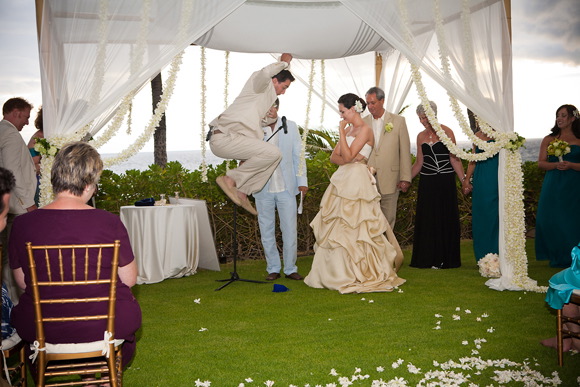
At the end of the ceremony, a glass is placed under the groom’s foot and he stomps on it. Word to the wise that our own wedding coordinator reminded my husband: Use your heel!! You’ll get a louder crunch and you’ll prevent any accidents.

Photos by Photography by Benny and Jay Kelly Photography

There are many ideas and reasons behind this loud and “mazel tov!”-inducing ritual, and it’s interesting to learn some of the most popular. It’s always good to be equipped with a few of these reasons because a) you never know who you may impress at a cocktail party and b) every Jewish individual has heard at least one of these reasons so you’ll be well versed in this tradition.

  • Some rabbis say that this act serves as an expression of sadness at the destruction of the Temple in Jerusalem. Why do we want to think of such a sad event on a happy day? Apparently, this links the bride and groom, the new unit, to the spiritual and national destiny of the Jewish people.  Jews are supposed to  be thoughtful to “set Jerusalem above my highest joy,” even during one of the most joyous occasions.
  • For a less somber interpretation of this tradition, other rabbis who also serve as comedians the rest of the week (don’t forget to tip your waitress!) have joked that it’s the last time the groom gets to “put his foot down.” Ha. Ha. Ha.
  • More superstitious rabbis might say that the loud noise the glass makes when it meets the foot is helpful to ward off evil spirits. Ghosts of girlfriends past, perhaps?
  • For the rabbi that serves as a gynecologist on the side, the breaking of the glass symbolizes the breaking of the hymen and the consummation of marriage. Yeah.  Don’t share that one at the cocktail wiener station of a party buffet.
  • The breaking of the glass also reminds us that the world we live in is not whole. It’s a reminder that the bride and groom came together to be a single unit, but the rest of the world is broken and needs mending. Just don’t try to mend the glass in an attempt to fix the world. You’ll end up with cuts and that’s no good.
  • The rabbis already have offspring in mind! The tradition promotes happiness as plentiful as the shards of glass and children as bountiful as the shards of glass. Depending on how many kids you want, make sure to tell your groom to stomp softly or forcefully.
  • The last example is probably my personal favorite. The glass symbolizes that, like love, it is fragile, so the relationship should be cared for and unbroken.  It goes beyond making sure the “glass” has enough Jimmy Choos to fill a closet and a dozen pink roses upon the evening’s arrival. It’s about making sure the “glass” enjoys the last bite of her favorite cookie. Or that the “glass” takes a break from the dishes a couple nights a week. Or that the “glass” feels like he has an ear when he needs to vent. It’s the little things that make us feel cared for and special. Because eventually, the chuppah will be taken down and the hora will stop playing, and at the end of the night, you have an empty reception hall and a lifetime ahead of you.  The wedding day is just the beginning of all your special days.

It’s important to always remember this as you start your marriage off with a bang!

Photo by Callaway Gable

Who Holds Your Wedding Rings?

Sometimes it’s helpful to be a Facebook addict. Yesterday, I noticed that Lauren, who was a recent contributor to Tales from the Veil, posted a status that said she was unsure who should hold the rings during the wedding. Good question! Got me thinking that this question is a common one (I remember asking it while planning my own wedding) and it would be helpful to address it here on The Wedding Yentas. So don’t put yourself through the ringer and stress about the official ring holders! Here’s some food for thought.


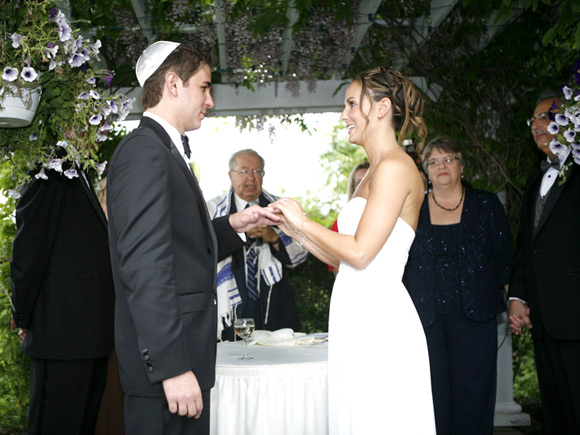
(Photo by Beth Kesier Photography)

Pockets. It’s all about pockets. You may have cute little ring bearers, but don’t kid yourself that some kid is going to take ownership of the actual (and, ahem, expensive) rings. So who’s another candidate for possessing the rings? Pick a groomsman; most likely one will have pockets. And hopefully at least one will not be too hungover from the rehearsal dinner the night before. So, pick a responsible groomsman with pockets!

Does this designated groomsman only hold the groom’s ring? Well, unless an equally-responsible bridesmaid also has pockets, both bride and groom rings should probably go to the groomsman. If you are keeping Jewish tradition and accepting a ring that’s not adorned and solid all the way around for the ceremony, don’t forget to give this ring to the Heroic Groomsman as well. Essentially, he’ll be carrying three rings! Yes, so make sure his pockets are deep. And responsible.

After you’ve exchanged your traditional rings, you may want to put on your non-traditional wedding band after the ceremony. That’s what I did and it worked like a charm. I couldn’t wait to skip away from the chuppah and finally wear the diamond band our best man had in his pocket. Like a moth to the flame went my ring to my finger. Ah yes, that’s it. Right there. Hits the spot.


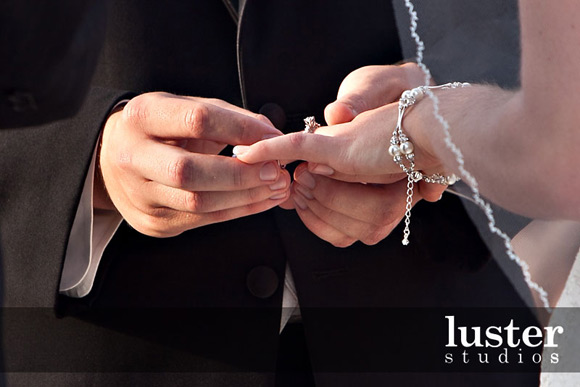
(Photo by Luster Studios)

Once the pretty “every day ring” met its two new neighbors — the engagement ring and my finger — I removed the solid gold band that was used for symbolic purposes during the ceremony and gave it to the best man. So, make sure the groomsman you choose remains responsible (if just for a short while!) after the ceremony so that he can put the traditional ring somewhere safe that was agreed upon prior to the day’s hoopla. Once that open bar is ready for action, no groomsman — no matter how responsible! — can be trusted. So, the traditional ring needs to make it back to a secure home (bridal room, a purse under a chair, the wedding coordinator, etc.).

Bottomline: Just find someone you can count on, will be near the chuppah during the ceremony, and who has the ability to store and transport your bling. Groomsman or grandpa, it doesn’t really matter. Just make sure that in the midst of planning your centerpiece decor and must-have music playlist, you consider this easily-forgotten detail and put a plan in motion. Once you know how to handle the rings, you’re one step closer to ringing in your new, married life!

Say Yes to Seder

Passover starts next week and it’s time to take inventory of your tableware and home decor to make sure you have what you need to welcome your family over to eat… and Elijah to drink.

Even if you’re not hosting a seder, it’s always a good idea to make sure you’re equipped with the traditional props for this springtime interactive dinner. Think about registering for these items so that when it’s your turn to carry on Grandma Ruth’s tradition, you have your own pieces that reflect your personal style.

ModernTribe Jewish Gifts is the go-to place for beautiful, quality, and funky Jewish home and personal goods. Their Passover shop is well stocked and ready to take your last minute orders.

If you’re going to a friend’s or relative’s house for seder, don’t forget to bring a gift to show your thanks. You’re sure to find what you need in a style you want.

There’s something about getting married or being married that ignites a desire to own traditional Jewish symbols that can be used in the company of your future generations.

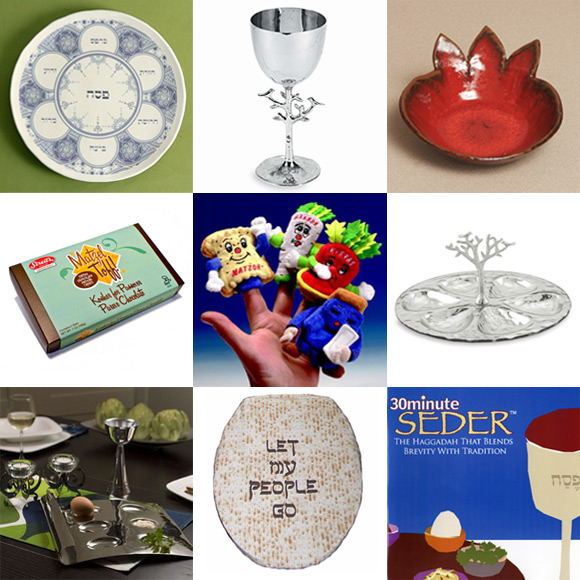
Delft Inspired Seder Plate
A classic blue and white seder plate makes a perfect piece in any home. It’s traditional and beautiful, boasting everything that represents the holiday of Passover.

Michael Aram Tree of Life Cup
Elijah will want to drink from this cup more than enough times! A beautiful cup to display is the icing on the (unleavened) cake of your holiday table.

Red Pomegranate Ceramic Serving Dish
It’s a sassy server! The stylish pomegranate dish that’s painted red will make your table pop with color. This makes a perfect piece for serving side dishes.

Matzel Toff
Yum! Bring these for everyone at the seder for some chocolatey dessert… or snacking between the four questions.

The Four Questions Finger Puppets
The kids at your seder will love these, but who says adults can’t have a little fun with the four questions, too? We see some good laughs coming your way with the company of these cute lil guys at your table.

Michael Aram Tree of Life Seder Plate
The timelessness of this seder plate makes it a great piece to have in your Judaica collection. The design is modern, but the tree of life brings us back to our natural and symbolic roots. Love.

Scroll Seder Plate by Liz Ross
Slick and sleek. That’s what we have to say about this seder plate. What an interesting and modern take on this traditional Passover symbol! The circular compartments for the seder components perfectly complement the smooth, rounded edge of the plate. Fancy!

Toilet Seat Cover
Add a little potty humor to the potty, er, party. Yes, our people were slaves, yada yada, but they were probably having #2 woes, as well. And so we ask the toilet powers that be to please, please, oh puh-lease, let my people… “go.”

30 Minute Seder Haggadah
Hit your marks and get right to the food! In this Haggadah, everyone gets their nuggets of wisdom and history, but won’t have to wait to eat until next year… in Jerusalem.