Category Archives: Jewish Traditions

Hamsa Haven

A current trend that’s not only popping up in Jewish communities, but also in the secular world, has a great deal of symbolism and beauty: The Hamsa. Have you seen it? Looks like a hand. So what’s the big deal? One way a Hamsa has been described:

In using the Hamsa, an energy of peace prevails in all beings simply because the power of the hand radiates the cosmic connection between the hand of action and the heart of peace, which is a muchly needed positive force in the world right now. Many people place the Hamsa above their doorways, wear the symbol on chains, or draw it on their possessions. The sacred nature of this symbol is that is sends a message of love and protection to all beings.
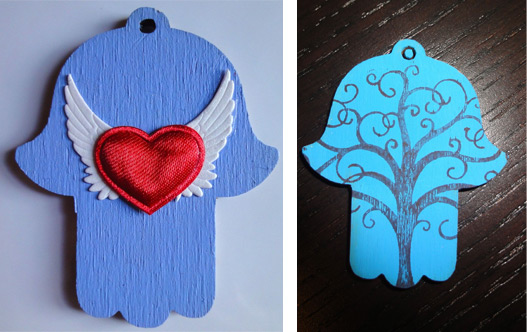
Love and protection, huh? Can’t go wrong there, especially when it comes to marriage. And in a wedding, since all things are beautiful, artistic Hamsas could be an appropriate addition to round out the theme of your day.

Cue Lea Joelle Handmade, the artist behind beautifully decorated Hamsas that can take on the role of wall hanging, key chain, and even cell phone tag! Yes, Hamsas can be everywhere, and Jenni Goodman, Hamsa decorator extraordinaire, creates whimsical pieces that are hand crafted and made with love.
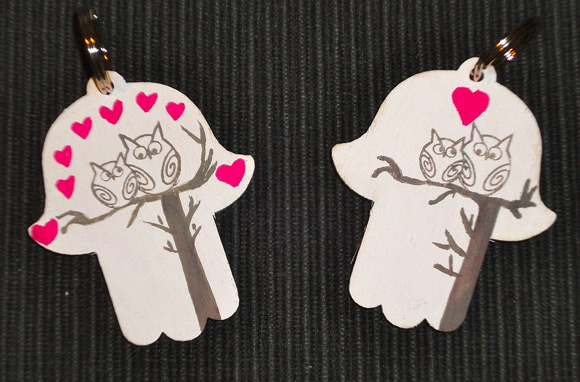
Lea Joelle Handmade was started in 2010 by Jenni, a crafty bride-to-be with too many ideas and a love for Judaica! She specializes in personalized and customized Judaica for weddings, bar and mitzvahs and other special occasions. Her goal is to make your event unique by creating favors, gifts and decor you can’t find anywhere else! The artsy Brooklynite ensures that her clients are satisfied with her Hamsas that can be custom-made, using the finest materials and colors.

Hamsas by Lea Joelle Handmade would be fabulous wedding favors! One of the hardest decisions to make is settling on a wedding favor that is unique (because, well, you are!), inexpensive (because everyone gets one!), and nicer than a tzchochke (because no one wants their favors to end up in the kitchen clutter drawer). These Hamsas fit the bill for a desirable favor, and because there is so much flexibility, you, the bride, are in charge of how it looks in the end!

Plus, who doesn’t like a double whammy? Wedding favors like Hamsa key chains can also be used as “escort cards” for reception tables. Carry out the theme and save money? Yes, please and l’chaim to that!
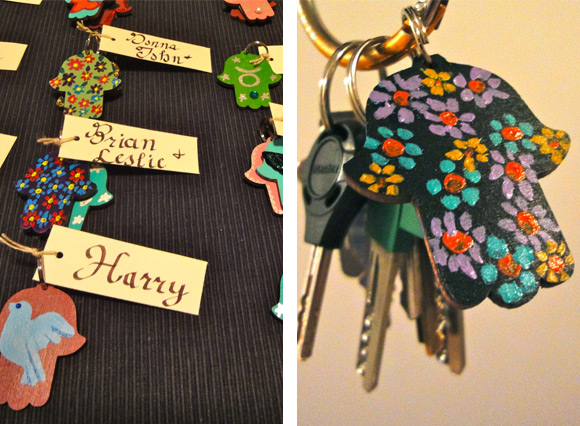
There are many styles and designs to choose from, but the most important thing is to create the design you want for your special occasion! She incorporates your wedding colors and themes to make your favors just the way you want them. Each Hamsa can be personalized on the back with the couple’s name and wedding date. Her Hamsa favors are her true love because it is a way for the host of each party to give their guests a gift that is a meaningful symbol of good luck, protection, and love.

Make sure to visit Jenni’s magical world of Hamsas on her etsy page and “like” Lea Joelle Handmade on Facebook! And definitely check back tomorrow because Thursday Thrills is going to thrill you with an awesome giveaway opportunity from Lea Joelle Handmade!

Behind The Scenes of a Ketubah Artist

An artistic ketubah has a whole life of development and creation prior to its use on your wedding day. You’ve picked out the right one that’s easy on the eyes and meaningful to your marriage, but there was a whole lot of planning by the artist who made it prior to your purchase.

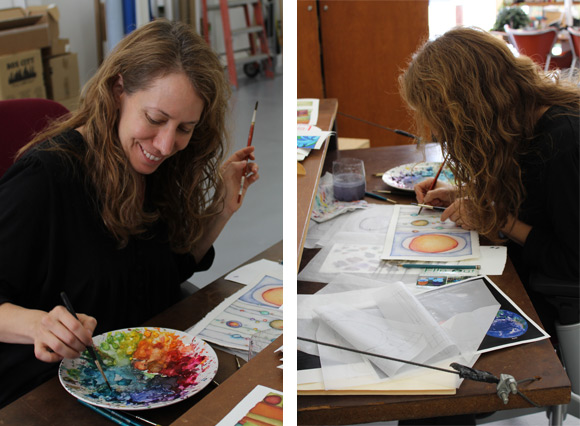
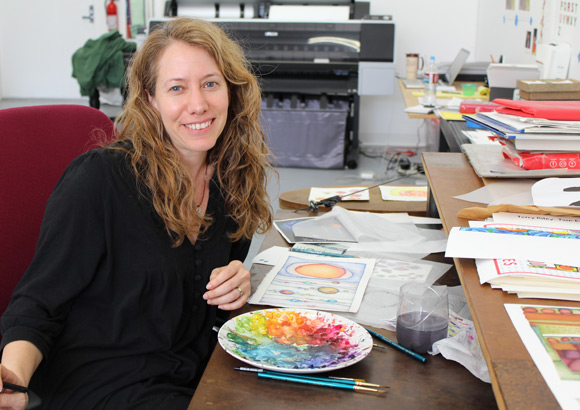
I had the pleasure of meeting with Rachel Deitsch of New World Wedding and touring her studio where all the magic happens. It was especially interesting for me on a personal level because Deitsch designed my wedding ketubah, which now hangs beautifully on my bedroom wall.

Deitsch, a Los Angeles based artist, has a background in illustration. While living in Israel for two years, she painted for pleasure and from there emerged a new style. She used opaque watercolor and print-making paper and liked the end result. Deitsch began designing ketubahs for friends and family. She gained popularity and now has a ketubah business that has taken off in many exciting directions.

“What I love about the ketubah business,” she says, “is that everything I make will have a home.”

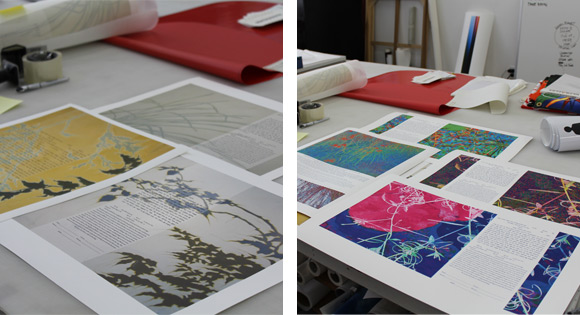
Deitsch invited other local artists to New World Wedding to provide couples with a variety of ketubah prints. Guest artists like Tamara Jones and Jill Sykes provide their distinct art pieces and Deitsch reworks them for ketubah purposes. For example, with Sykes’s work, Deitsch receives the oil painting, converts it to a digital format, and adds the ketubah text.

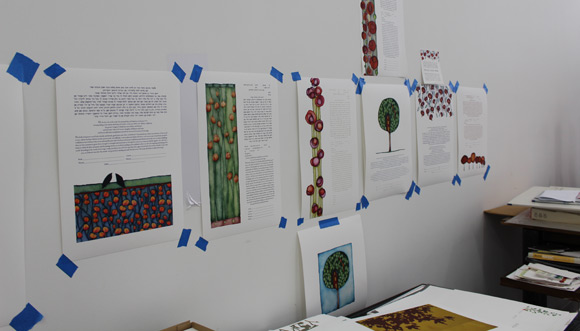
Deitsch has also just recently debuted a line of ketubahs she calls 2nd Generation. She created this line for the couple that cannot pay the regular price of her full scale ketubahs, but would still like to purchase a piece from her line.

She takes elements from existing designs in order to meet the needs of people who want a beautiful ketubah, but don’t have the budget. Many of her whimsical, signature elements are included in 2nd Generation ketubahs, like swirly green trees, jeweled flower buds, and silhouettes of lovebirds, all paying homage to their original cheery and colorful palettes, but are reworked for a smaller print and minimal elaboration.

Deitsch has everything she needs in her extensive studio. Stocked counters, cutting-edge technology, all the watercolors she needs, and her pride and joy: the professional printer. “It allows me to indulge the perfectionist monster in me,” she says. The printing used to be outsourced, but it slowed down the process and caused more stress in the long run. Purchasing the printer and utilizing it in-house allows Deitsch to nit-pick and check each piece that goes out to clients.

“This guy right here gives me an endless sense of possibility.”

And endless possibility, indeed! Deitsch is constantly dreaming up new ideas like wedding invitations that can match a couple’s ketubah. And, first comes love, then comes marriage, and you definitely know what comes next. So does Deitsch. For the “baby carriage” stage of life, Deitsch is also in the midst of designing and expanding a children’s art line.

Deitsch has also partnered with yours truly, The Wedding Yentas! She designs free wedding website templates that are available for customization on mywedding.com. Wedding websites are great for keeping your guests up-to-date on all your wedding plans and festivities. You can include photos, a guestbook, registry information, and of course the details for the big day. They’re free, too! And if you really want a seamless design around your wedding-planning, you can also purchase invitations to match your free wedding website so that your guests can enjoy a theme. High 5 to mywedding.com and Rachel Deitsch for marrying a great concept and beautiful art.

Visit Deitsch’s site and Facebook page for more information about her different lines and to place orders. She provides fabulous customer service, answering questions you may have about ketubah texts and individual art pieces.

Glass For Your Wedding Day

By now, you know all about the crowd-favorite tradition of breaking the glass, but do you know what your groom is actually breaking? Yes, he needs glass, but what kind and where do you get it and can you do anything with it after it’s broken?

Yentas readers, you asked for it and now you’re getting it: Today you’ll learn about what glass to use, where to get it, and how you can use it to commemorate your wedding day!

So, a lot of people say that you should use a wine glass. Sure, you can, but they’re not that easy to break. In fact, how many times have you, um, enjoyed a little too much wine from your glass, acquired a case of butter fingers, and dropped the glass? Hopefully it’s not a regular occurrence, but you might find that a fallen wine glass that reaches the floor may not even break, and if it does, the stem will probably just snap off the bulb. But that crunchety-crunch of glass will not emit from the fall, so a stomp probably won’t accomplish it either. Look, I’m no physicist — ha! Far from it! Please, I’m a nerdy Jewish writer! — but something tells me that a wine glass is just not the item you want to place under your groom’s foot. Plus, a wine glass is big, it can roll away, and it’s a wine glass!!! Surely, you have better things to do with it… like drink from it.

Well then, what can you use? You can purchase glass that’s hollowed out and sized perfectly for the hyped-up stomp. Many Judaica stores sell these blown-out glass pieces intended for this tradition. ModernTribe, BFFs of The Wedding Yentas, sells this variety of glass and it’s a great way to go! Plus, they’re pretty!

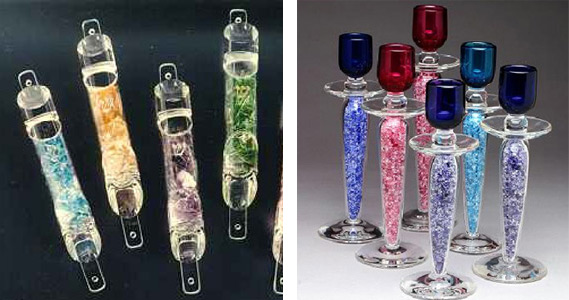
Pick the color of glass you want your groom to smash and make sure your coordinator or venue manager picks it up for you to take home for after your wedding. You can use the smashed glass to include in your home or Jewish custom items. For example, you can insert your smashed glass shards into a mezuzah or Shabbat candlestick holders. What a beautiful way to bring some of your wedding day love back into your home and serve a reminder for why we smash the glass in the first place (one of the reasons: love is fragile; treat it with care).

For some extra crunch, take sandwich baggie and stick a used lightbulb in there and shove it in the bag that has the decorative glass. It’ll give your groom’s stomp an extra crunch. You could probably use a lightbulb or two alone, but then if you had lifelong dreams to include your smash glass in your Judaica, then that won’t work because there’s really nothing that pretty about a dead, smashed lightbulb. So supplementing your colorful glass with a lightbulb gives you some enhanced noise for additional ruach (spirit), making for a heartier “mazel tov” that your guests will enjoy shouting!

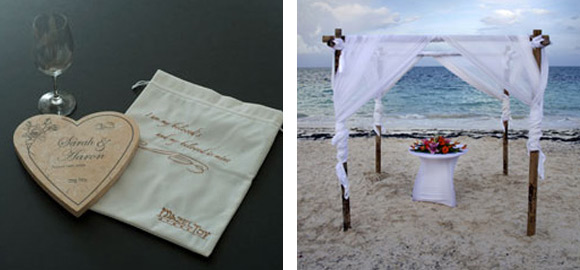
Take it a step further and include a Mazel Tov Stone in your glass smashing! A Mazel Tov Stone is a beautiful piece to add to this rich tradition. The artists work with you to completely customize your slab of Jerusalem limestone that can have your names, wedding date, and other details inscribed. Placing a Mazel Tov Stone under the glass guarantees the glass will break (ohmygosh, how embarrassing if it doesn’t, right?) no matter where you two are standing. Beach wedding on the sand? Garden wedding in the grass? Mazel Tov Stone saves your day… and your stomp.

You and your groom should now be equipped to purchase decorative glass, select a piece of Judaica in which to keep the glass, and include a personalized element that can assist his stomp that you two can keep as a memento from your wedding day. Get smashed with your wine glass on game night with friends, and instead, on your wedding day, smash glass that will evoke the prettiest and loudest “mazel tov!” from all of your friends and family!

Jewish Wedding Traditions Rapid Fire

It’s so easy to get caught up in the details of the reception and the expectations you may have for the big day, that it’s common for modern Jewish brides to forget some of the details and customs of a Jewish wedding.

We all know the big ones: we can identify the chuppah, the bride and groom sign a ketubah, there’s the whole stepping-on-the-glass thing, and when it’s time to party, people toss us around in chairs. Yes, those big moments are just par for the Jewish course.

But there are other rituals and facts you may not know about. The Wedding Yentas isn’t going to go into immense detail on each one, but it might be important for you to graze on this information and take in this food for thought (yes, I am a Jewish girl and I use a lot of food metaphors in my writing) as you mull over the kinds of traditions you may want to include in your Jewish wedding.

So here, a little buffet (there I go again) of tid bits that you may or may not know about:

  • During the week before the wedding, it is customary for the groom and bride not to see each other, even during the day.
  • From a few days prior, until a week after the wedding, the couple are considered royalty and are, therefore, not to be seen in public without a personal escort.
  • Since on the day of one’s wedding G-d forgives the bride and groom of all their previous transgressions, it is seen as a private Yom Kippur for the couple.
  • Jewish weddings may be held anywhere – there are no religious limitations on the location of the wedding ceremony.
  • Traditionally, a bride will go to the mikvah, a purifying bath, on the evening before her wedding in order to begin her married life in a purified state.
  • It is a custom that the groom wears a kittel (white garment) under the chuppah. Therefore, he does not wear a kittel on the Yom Kippur following his marriage. On the following Yom Kippur he begins wearing a kittel.
  • Knots on the groom’s garments (e.g. tie, shoelaces, etc.) are to be untied.
  • The groom should not have money, silver articles, gold, precious stones, etc. in his pockets at the time of marriage.
  • Two sisters may have their weddings in the same week, but not on the same day.
  • Mothers of the bride and groom break a plate! Breaking a plate symbolizes the seriousness of the couples’ intentions towards one another. A smashed plate cannot easily be made whole again; just so, an engaged couple cannot easily renege on their promise to be married.
  • In recent times, friends of relatives of the bride will often decorate a plate for this ceremony, knowing full well it will soon be broken into little pieces. The shards are distributed to the bride’s single friends as good-luck pieces.

What traditions do you think you’ll include in your ceremony? Are you observing customs prior to the actual wedding day? Is there anything you’d like to know more about? Share below or visit The Wedding Yentas on Facebook to get the dialogue going.

Anniversary Traditions: An Epiphany

Today, May 25th, is my wedding anniversary and the traditional gift for a third wedding anniversary is leather.

Hmmm. Well, I Googled ideas for leather-themed gifts and my search turned out to be pretty unfruitful. A new leather wallet? Nah, he already has one that’s fine. A leather belt? Not very exciting. A leather bound journal? Please, I didn’t marry Shakespeare. Thanks a lot, Google.

So then I tried to think outside the box. For a split second, my mind did go to some cute-and-sexy leather outfit, but I’m 8 months pregnant and that’s never a good idea even when I’m unpregnant. Then I gave myself a chuckle and thought, well, darn, I’ll just go big and buy him a cow. That’s kind of leather, right? No, no, I was getting silly.

Then I thought to myself, why do I need to follow this tradition at all? Why stick to a rule or follow a guideline when the outcome wouldn’t be personal or sincere? I then thought about all of the traditions we did follow on our wedding day, and felt proud to be Jewish, knowing our wedding day was filled with traditions that were meaningful to us and our marriage ahead.

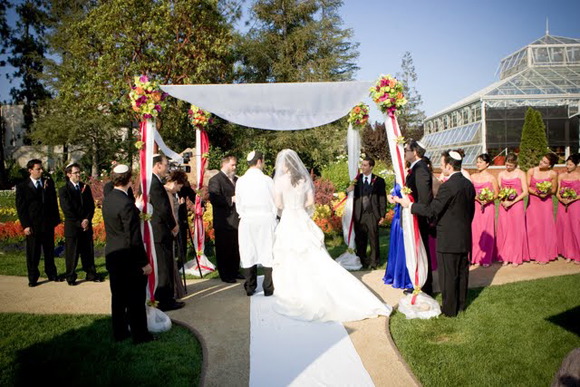
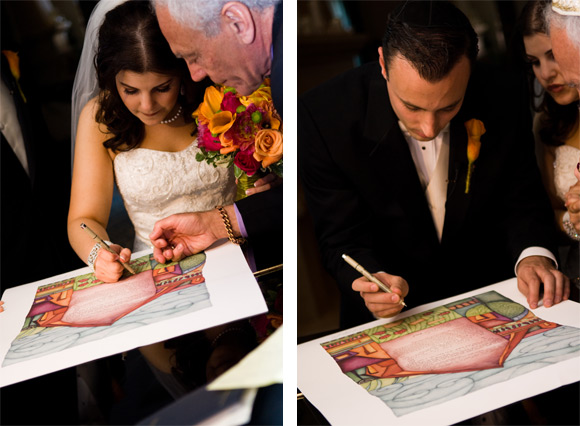
Prior to the chuppah ceremony, we signed the ketubah with our rabbi, in the presence of our immediate families and witnesses.
jewish-wedding-traditions

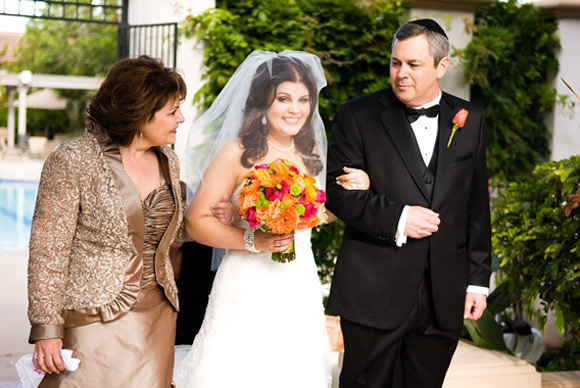
During the processional, Bryan and I were escorted by both of our parents as we walked down the aisle.
jewish-wedding-traditions

jewish-wedding-traditions

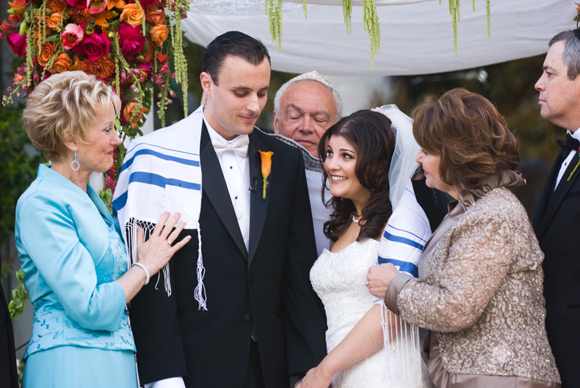
We stood under the chuppah with both sets of parents, and the mothers wrapped us in Bryan’s tallit, which symbolically brings the bride and groom together. This was one of my favorite moments.
jewish-wedding-traditions

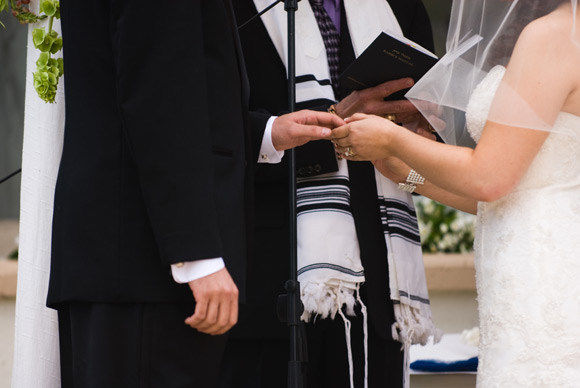
We exchanged rings! We updated the tradition and I gave him a ring (which isn’t mandatory), and he placed my grandma’s solid gold band on my pointer finger per the original custom.
jewish-wedding-traditions

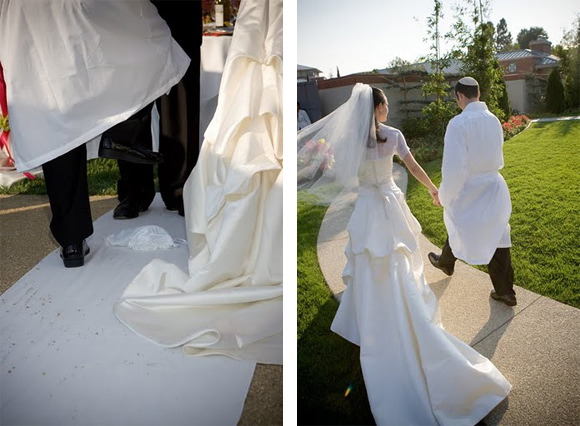
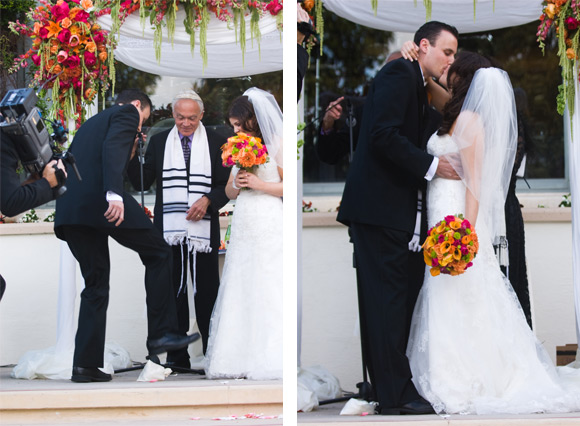
With a hearty stomp, Bryan stepped on the glass as the guests shouted out a spirited “mazel tov!” This is always a crowd favorite when it comes to following Jewish wedding traditions!
jewish-wedding-traditions

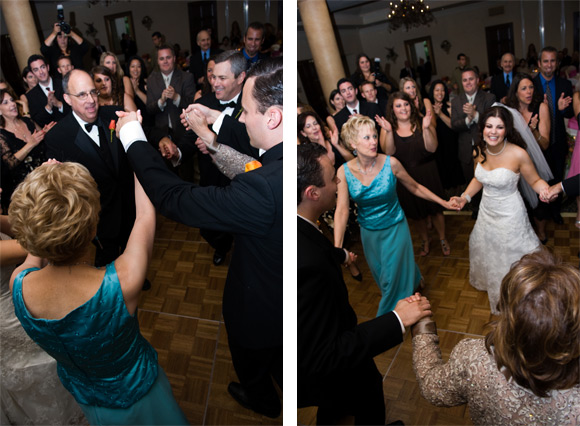
When we entered the room for the reception, the guests jumped onto the dance floor and a loud, rambunctious, festive hora took place with family and friends joining hands in dance!
jewish-wedding-traditions

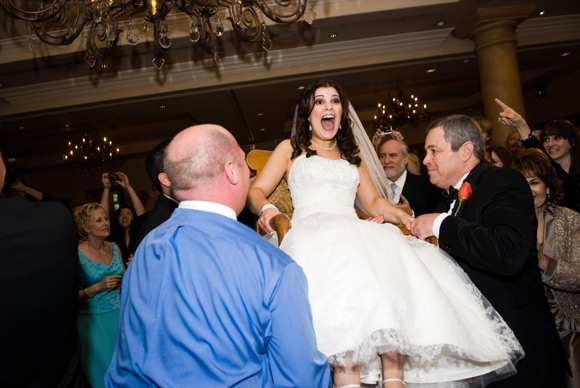
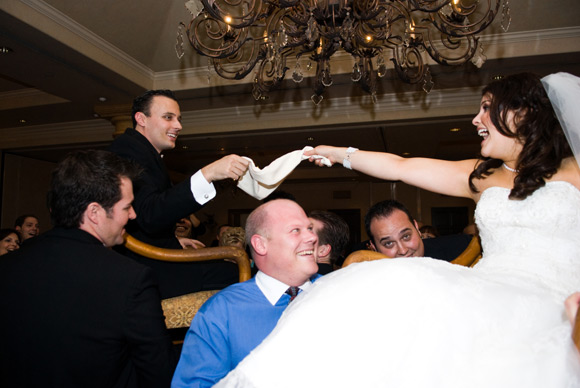
And then we were vaulted into armchairs and lifted by strong men who bounced us around as we laughed and enjoyed the moment. It was so fun to look out and see all of our favorite people.
jewish-wedding-traditions

jewish-wedding-traditions

Before dinner, my grandpa came up to our 10-foot long challah and recited the blessing, the Ha-motzi. As the oldest member of my family, it was touching to have him as part of our series of wedding day traditions.
jewish-wedding-traditions

Taking a walk down wedding memory lane has become its own tradition. Bryan and I relive our big day each year by revisiting our photos and watching our video, and I realize we’ve made our own annual tradition. Sure, many couples probably do this, but I’m not looking to be unique. I’m also not trying to create a mold. We just do what works for us and we know that’s how we’ll live happily ever after. And that’s what I suggest to all brides and grooms: do what works for you as individuals who are becoming a team and focus on what’s actually important to you.

Bryan, I love you. Thank you for allowing me the privilege to be your wife for the past three years. Our wedding day was the most perfect day I’ve had because, yes the flowers were gorgeous, we cleaned up nicely, the weather turned out to be beautiful, the music was jammin’, and the food was delicious, but really, it’s because you were at the other end of the chuppah. And having you at the other end of my life journey is no different — it’s perfection.

Happy 3rd anniversary to you, my love. May we grow old and, well, leathery, together.

*All photos by eight20 photography.