Category Archives: Jewish Traditions

Interfaith Ketubah Shopping 101

We’re happy to host another knowledgeable guest blogger, Mindy Parker, who represents MP Artworks, the online ketubah design store that has unique and artistic prints for all couples’ tastes and styles. Today, we focus on selecting a ketubah for interfaith weddings. If only one of you is Jewish, are there additional rules that must be listed on your ketubah? What if your partner doesn’t want a very religious ketubah but accepts your Jewish roots? What if you’re a non-Jewish bride who knows nothing about planning a Jewish wedding, but you want your partner and partner’s family to feel included by incorporating their Jewish traditions? Mindy has all the answers for you here, so read on and know you have options!

mp-artworks-ketubah-studio

Interfaith weddings can provide wonderful, yet challenging, opportunities to incorporate each other’s traditions into the celebration. Some things, such as the ketubah – one of the traditions (in fact, requirements) of a Jewish wedding – happens to translate very nicely to an interfaith setting. And because it’s often the one thing that you will hang on your wall and see day after day, long after you say “I do,” it’s well worth considering. So let me quickly demystify what an “interfaith ketubah” is and then tell you what to look for to get you started.

The first question is usually, “What exactly is an interfaith ketubah anyway?” This one is easy. There is no “standard” or “official” interfaith ketubah. There’s just no such thing. The term simply means a ketubah (or, traditionally, a Jewish marriage contract) in which the design and the text are geared toward an interfaith couple. These days there are plenty of options available for interfaith couples, so let me give you some quick pointers.

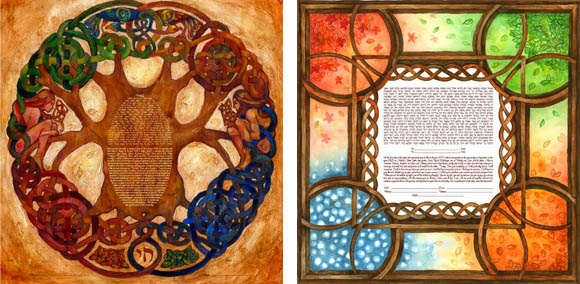
I’ll start with the “interfaith” design. As a Jewish tradition, you will find that many ketubahs have Jewish symbolism, which you may want to avoid. For example, many designs incorporate the Star of David or Jewish scripture. But worry not – there are many, many ketubahs that are simply beautiful works of art with no religious symbolism whatsoever. In fact, this is the fun part! Designs range from traditional to funky, simple to elaborate, impressionistic to pop art, in every color scheme possible. There are many designs that even incorporate other cultures’ symbolism or art, which is a great way to “represent” the non-Jewish party in this tradition. Remember, this is a work of art that you will probably be staring at for the next 50 (at least) years on your wall so you want to choose a design that you both truly love.

mp-artworks-ketubah-studio

Next, you will want to choose an “interfaith” text. The only “standard” ketubah text is the original Aramaic text, still used today with little change by the Orthodox and Conservative movements. Beyond that, most other texts are simply written by the ketubah artist who almost always offers one or more “interfaith” texts. They are not legal contracts but simply modern, egalitarian statements of your vows to each other. But you will find that an “interfaith” text will also exclude any religious or cultural language that could be offensive to the non-Jewish party, such as references to Moses, Sarah, Israel or such Jewish-oriented phrases as “home built on Torah” or “traditional Jewish spirit.” An interfaith ketubah text, like most ketubah texts in America, typically contains two portions: one in English and one in Hebrew. The Hebrew is a direct translation of the English and gives the Jewish party an opportunity to recognize their Jewish background. But if you prefer, you can choose to have an English-only ketubah, or you may want to write your own custom text to reflect exactly what’s important to you.

If a rabbi or cantor will be officiating at your ceremony, it is a good idea to have him or her approve the text. Although an interfaith ketubah is not a legal document according to Jewish law, some officiants still have strict policies about what kind of text they will (or will not) allow on an interfaith ketubah. Remember that all officiants are different, and since your officiant is the final authority on what is permitted at your wedding, you definitely want to know ahead of time if your text selection will be permitted.

Perhaps the most confusion comes when you need to personalize your interfaith text – i.e., provide the information to fill in the blanks with your names, dates, location, etc. But it’s actually quite simple. If the Jewish partner has a given Hebrew name, it is customary to use it on the ketubah, in conjunction with the parents’ Hebrew names. Then comes the tricky part. The single most often-asked interfaith ketubah text question: “My fiance is not Jewish; how do we handle the Hebrew names on that side?” There are two possible answers to this question: (1) You can omit the non-Jewish people from the text or, (2) My personal preference, allow the non-Jewish names to be transliterated. Relax, no one is getting a “Hebrew” name here. Instead, the names are simply spelled out, phonetically, in Hebrew characters (like spelling an Israeli name in English letters). This process ensures that all people within both texts have been included, resulting in a “balanced” ketubah.
mp-artworks-ketubah-studio
There may be some “extras” you might want depending on your circumstance and what your ketubah artist offers. For example, if the non-Jewish partner is Irish, you might want to add a third language and have your ketubah text in English, Hebrew and Gaelic. Or if you are having your ceremony performed jointly by a rabbi and a minister, you may want to alter the ketubah’s signature lines to add one for the minister. Be sure to talk to your ketubah artist or the shop where you get your ketubah to see what other options might be right for you.

That’s basically it! Choose your favorite design, select the text that works best for you, then personalize it. That’s all you need to do to have an interfaith ketubah that will incorporate the Jewish tradition yet serve as a beautiful memento of your special day.

Mindy K. Parker is the co-founder of Ketubah Studio by MP Artworks – “The Ketubah People.” She works on the business side of the company with fine artists exclusively represented by Ketubah Studio, and serves as inspiration for her co-founder husband, Micah, the principal artist and creative visionary. Together, they love working with couples of all ages, backgrounds and religions to provide them with unique designs that show off their style. When she’s not working, she’s likely covered in pet hair from their artistic cats (Monet, Matisse, Pollock and Seuss) and musical pit bull (Redbone) or other animals that she volunteers with at local shelters.

Yarmulke, o’ yarmulke!

Many of your non-Jewish guests may ask you about those little hats that men wear on their heads in temple. The Yentas offer you some answers that you can share.

  • The little hat is a yarmulke, also known as a kippah, which is a Yiddish word derived from the Polish word for “cap.” A yarmulke is worn during the time of prayer. So, that’s your very basic definition. But what does it have to do with weddings?
  • A yarmulke is one Jewish detail that you can tie in to your wedding color theme while providing the men who are attending your ceremony a wonderful take-home memento from your special day. Plus, we all know every household has a stash of collected yarmulkes ranging from special occasions like Joseph Abramovitz’s Bar Mitzvah (adorned with a printed pattern of baseballs and gloves), The Wedding of Beth and Aaron Cohen, and the plain white yarmulke your father-in-law accidentally wore home from the temple’s Rosh Hashanah morning service. This collection of yarmulkes you have in your china closet may just come in handy the next time you have Passover dinner at your house or your husband hosts a minyan.

But, we’re getting off track. Back to weddings, of course, and ideas that’ll make your guests want to keep your kippah.

image-courtesy-of-weddingblogbythebreakers.com

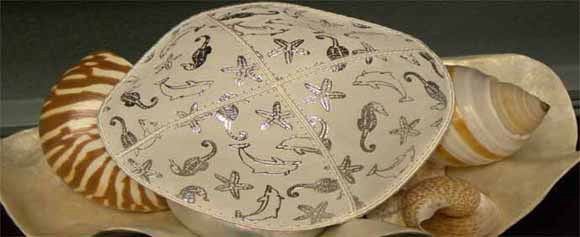
Yarmulkes come in all different colors and materials. We’ve seen yarmulkes made of satin, velvet, leather, suede, and yarn that’s knitted or crocheted. They can have a sports theme, an animal print, even your wedding logo. There is no yarmulke too sparkly or adorned! They can also be featured in your photos depending on their displays. Details on your wedding day are key, so let your yarmulke have a place in your album! Your bald Uncle Moshe will also be appreciative when his head doesn’t get burned during your beautiful outdoor ceremony! Who needs SPF 40 when you have a yarmulke?

yankees-vs.-mets-yarmulkes

Providing yarmulkes at your wedding does not – we repeat, does not – have to be an additional stressful item. You can design and order online in a matter of minutes. A few of our favorite websites provide yarmulkes of every shape and color. Ordering online is an easy way to mix and match, buy in bulk, and get great deals on yarmulkes for your wedding!

  • Yussel’s Place: Ever heard of an eco-friendly yarmulke? Yussel’s Place carries them! Made of recycled cardboard, this is, without a doubt, the perfect addition to any green or eco-friendly wedding! They have a great variety of other yarmulkes as well that can all be ordered in bulk!
  • Yarmulkes.com: These guys have been in business for over 50 years. They can accommodate rush orders and have an amazing variety. Their prices are pretty good too!
  • Mazeltops.com: Not only does this site have a great name, their selection is outstanding! They have embossed foil yarmulkes with a paisley pattern (yup, paisley). How could you go wrong? For the creative, unique and maybe even wacky wedding theme, this is a site you would be silly not to check out.

Displaying your yarmulkes at your wedding can also be a creative project and detail element.

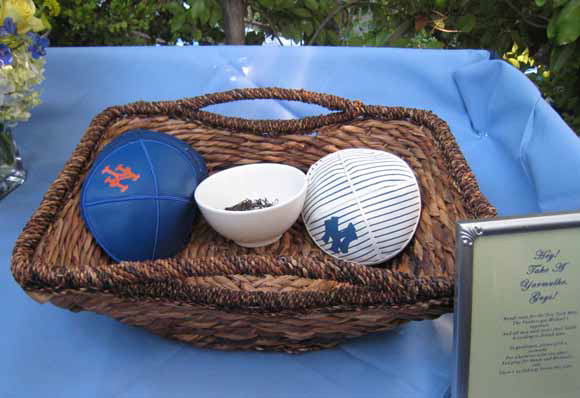
  • Find a cute chest, basket, or box to put the yarmulkes in, and as guests enter your ceremony area they can pick them up.
  • Line the card or gift table with yarmulkes.
  • Appoint someone to pass them out as guests are seated prior to your ceremony. A yarmulke and a program – what a deal! Better than popcorn and peanuts at a ballgame.

There are lots of ways to incorporate yarmulkes on your wedding day!

color-themed-yarmulkes

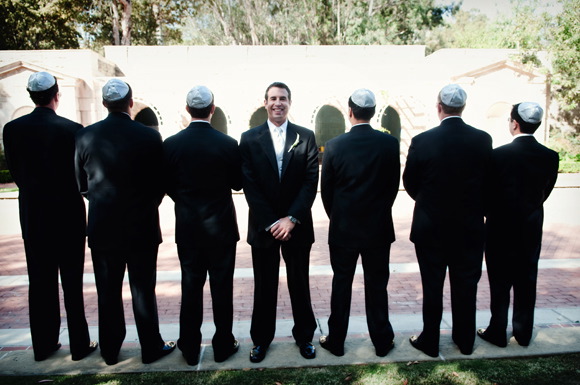
Don’t forget…your groom can sport his own special yarmulke and give his groomsmen fun ones to wear. Can we say groomsmen gift? It’s just so simple!

image-courtesy-of-eight20-photography

Ask The Yentas: Edition #2 – The Chair Scare

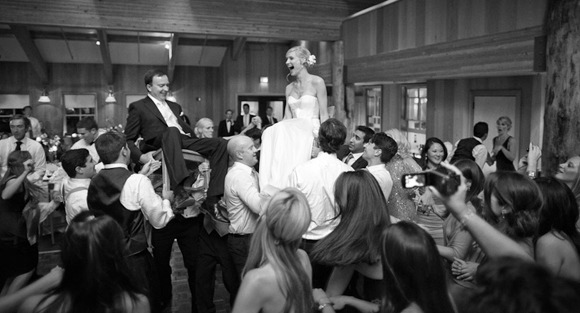
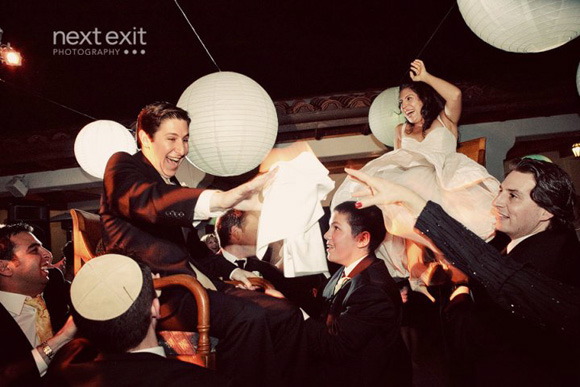
The Chair Scare: The feeling of butterflies about going up in a chair a handful of feet above the ground while holding onto a napkin, grinning with clenched teeth through the tight corset of the wedding dress during a series of bounces and hollers from the crowd.

Sound fun?

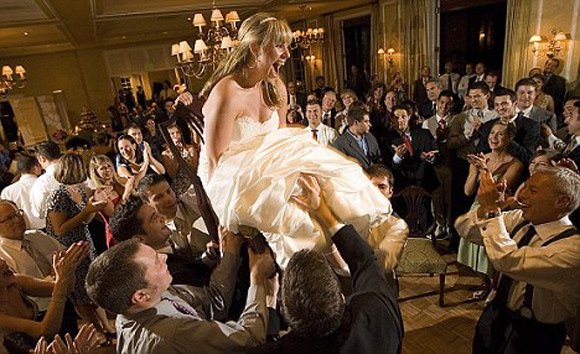
It doesn’t have to be scary. The tradition of going up in the chair is a festive and fun part of the reception’s Hora dance and we’ve received questions about how to get over the fear of this custom.

Dear Yentas,
My wedding is around the corner, and everyone tells me that the fun part is the reception where my soon-to-be husband and I will go up in the chair. I’m afraid of heights. I hate roller coasters. What if I drop the napkin? What if I fall off the chair? I don’t want to break any rules, and I’d like to get over my fear, but maybe I can just avoid it altogether. What do you think?
Thanks,
Elise
Tampa, Florida

Elise, and all others who are feeling under the weather with The Chair Scare,
This is supposed to be a fun tradition and definitely not something that causes you stress. First, make sure that your venue or wedding coordinator set aside two arm chairs for you. There should be two chairs with arms. Make sure the chairs have arms. You should use arm chairs. Is the point clear? This gives you something to hold on to and provides your body with boundaries as you become (lightly) jostled around.

the-hora-chair-lift

Also, there are no rules! Just hop in the chair, hold on, and enjoy the ride. Someone will probably toss you a napkin to hold with your new partner and if you drop it through all the excitement – meh! – so what! The napkin isn’t a Torah; it’s okay if it falls. Many couples do and they lived happily ever after.

Before you plop down on the chair, remember to do a quick smooth-out on the tushie part of your dress. That way, if you have any beading or details on your dress, you won’t be uncomfortable from getting them lodged in nooks and crannies when you sit on them. The more comfortable you are, the more you can relax, and the less afraid you’ll be. See? It all comes full circle.

If you’re wearing a short dress or a tea length dress, cross your legs at the ankles. You are a married woman for goodness sake! You don’t want all those eligible bachelors to get a free show! Be a lady and make sure the tops of your feet touch each other.

image-courtesy-of-michael-tallman

You don’t have to stop eating for 2 weeks before the wedding. Give some strong men a heads up about the chair lift portion of the Hora and they’ll carry you like you’re Tinkerbell. Do not be afraid of being dropped. With four legs on the chair and at least one man per leg, it’ll be easily for the strong men to balance you. Perhaps in the days leading up to the wedding, call some of the men you’d like to be your chair lifters and give them advance warning that they’ll have this duty at your reception. That way, you can relax knowing that this very important task is handled and you don’t have to worry about it during your ketubah signing, aisle walk, circles, wine blessings, photos, and shmoozing that all take place during the Wedding Olympics.

Remember, the Hora is a joyous and happy part of the wedding reception. So as you are six feet off the ground and literally high on life, look at your husband who is up there with you and know that together you’re on top of the world. Then, look down, and enjoy all of your favorite people singing and clapping and loving you right back.

Love,
Alison & Nicky
The Wedding Yentas

the-hora-chair-lift

Friday Favorites | Sex and the Sukkah

The harvest holiday of Sukkot began Wednesday evening and this opens up a new opportunity to celebrate. Celebrate what? The harvest season, acts of kindness, and the meaning of home. If you’re not too familiar with Sukkot, the Cliffstein Notes version is this: For 40 years, our people wandered and wandered (no deals at Costco on a Magellan or Garmin??) and “miraculous clouds of glory” protected them for the harsh elements of the desert. Since then, we give a little shout out of thanks to G-d for making sure we’re okay and for powerful kindness.

It’s also an opportunity to salute human personalities and community. Sukkot is the time we bond together as a people so that each other’s unique personalities come together and are shared within the group. The message is that we all have something to give and, therefore, it is okay to take concurrently; that if we all contribute to the pot, we come out stronger and more inspired as a people. After all, Jewish togetherness and unity are central themes of the holiday of Sukkot. The four kinds of symbols — palm branch (lulav), two willows (aravot), a minimum of three myrtles (haddasim), and one citron (etrog) — represent four types of Jews with various levels of knowledge and observance. Bringing all these symbols together in blessing represents the unity of the Jewish people and nation. Those who celebrate Sukkot build a sukkah, which is a 3-walled temporary home, topped with branches and other organic materials to represent the autumnal harvest with spaces between to still be able to see the sky and its natural wonders. Jewish law tells its people to enjoy all sleeping and eating inside the sukkah as it is also a mitzvah.

Those observing Sukkot will take the etrog in one hand and all of the other items in the other hand and wave them in a prescribed set of directions while blessing the sukkah and giving thanks for the season. Of course, the directions and blessings have deep significance, but you may casually hear about “waving” or “shaking your lulav” during this time of year. For more detailed information, check out My Jewish Learning‘s site, which describes the ritual.

While the sukkah itself has ancient significance, as a modern Jew, you can enjoy your sukkah even though you’re not currently wandering the desert (if you are and you’re reading this, mazel tov on your awesome wi-fi conenction!). Invite your girlfriends over and have ladies night in the sukkah. Bring in some cushions and throw pillows, make cups of tea or pour some wine, and dish about the latest news with your inner circle of Carries, Charlottes, Samanthas, and Mirandas. A night “out” with the girls takes on a whole new meaning when you’re literally out — outside, under the great big sky. Lulavs and Louboutins: doesn’t get much girlier than that!

A sukkah can be a romantic place to be with your b’shert as well. With the stars peeking through the roof made of branches and leaves and cool breezes forcing you to cuddle to keep warm, you could enjoy a lovely night without the distractions of the TV, Facebook, and cell phones. Go back to the basics. Get back in touch with the foundation of your great romance. Snuggle together. Exchange kisses. Know that you and your partner are outside, in the nature, and carrying on a tradition that has been with our people for thousands of years. Love doesn’t get much sweeter than that.

And for today’s Friday Favorites, we leave you with our new favorite video that pays modern tribute to Sukkot and one of its famous symbols. We think you’ll lu-LOVE the good laughs you get when you watch! Happy Sukkot!

Jewish Wedding: Cantor vs. Rabbi

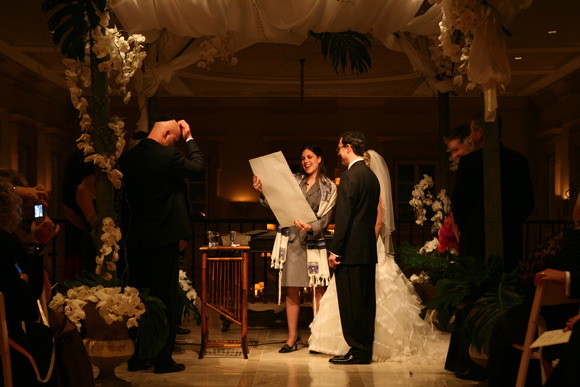
Did you know that a Jewish wedding ceremony does not require a rabbi or a cantor? Yes, we’re serious! Despite common belief, you and your betrothed can still exchange, stomp, and kiss without a member of Jewish clergy present. Jewish tradition says that a member of clergy does not marry the bride and groom; they marry each other.

By Jewish law, all that’s required to make a marriage official is a ketubah and a couple of witnesses. A Jewishly knowledgeable person who steers the wedding rituals can “officiate” the chuppah ceremony and oversee the ketubah ceremony. Also according to Jewish law, you need two kosher witnesses, who, depending on your Jewish affiliation, can be either men or women, related or not to the bride and groom, and varying degrees of Jewish observance including the laws of kashrut (eating and keeping kosher). If you have a family rabbi, this would be something to clarify before the wedding day to make sure you’re following correct laws and traditions. As long as your ceremony officiant is ordained by your state, he or she can guide the ceremony for it to count Jewishly and civilly. The ceremony, if it is religious-based, simply requires a license that is filed with the secular authorities (your state) and it ends up fulfilling both secular and Jewish law.

Some couples choose to have a friend officiate the ceremony, but rabbinical student, Aderet Okon Drucker, stresses that it is important for a couple that is getting married within the “Conservative Jewish,” “Reconstructionist Jewish,” “Renewal Jewish,” “Reform Jewish,” or any other movement of traditions run their plans for the ceremony with a rabbi they trust. “There are some things that are required for a wedding to be considered ‘kosher’ and if a couple is going through all of the trouble of getting the day to be perfect, they should do the same for their ceremony,” she says. “so they feel the integrity of the ceremony and don’t need to worry about anything.”

But what if you do want an official member of Jewish clergy to perform your wedding ceremony? You have some options. You can decide if you’d like to hire a rabbi, cantor, or both!

image-courtesy-of-todd-rafalovich title=

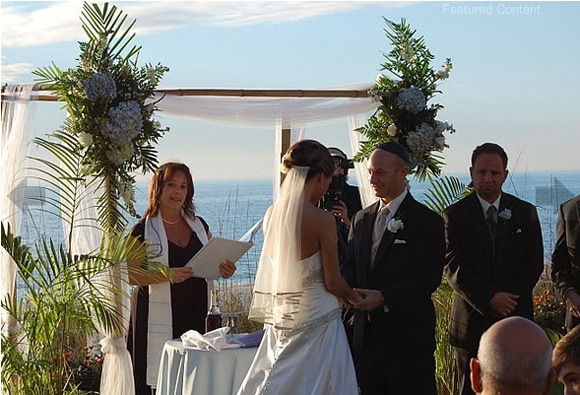
According to Drucker, depending on the person, their training, and the movement, a rabbi and a cantor can have similar roles in a Jewish wedding. “I am a rabbinical student who enjoys singing,” she said. “When I did Dana and Mark’s wedding [above], I chanted all of the blessings and spoke under the chuppah. Rabbis [in the conservative movement] are trained to recite the blessings with the traditional melodies.”

You may luck out with a rabbi who can carry a tune, and while that’s awesome, you can’t start asking Randy, Paula, and Simon (or whoever their replacements are these days) to join you at Rabbi Idol auditions. So if you happen to know that your rabbi sings, you could probably stop there. Rabbis may chant blessings regardless of their singing talents. Just because a rabbi chants doesn’t mean they are ready for a Vegas lounge. Upholding the integrity and tradition of the chants is any rabbi’s first priority. A rabbi can still officiate your wedding even if he or she can’t sing. If it’s important to you to include music beyond the regular chants in your ceremony, you may want to hire a cantor as an addition to your rabbi. Or, the cantor can gig the wedding alone.

According to Cantor Debbi Ballard of My Personal Cantor, “a rabbi and a cantor are equally qualified under civil law and religious law to perform weddings.” So while cantors can absolutely perform weddings by themselves, they can also definitely sing. That is, by nature, a cantor’s job. If there’s a Jewish song that’s meaningful to you and your betrothed, you could have your cantor sing it. Or, if you’d just like a level of musicality included in the regular wedding ceremony blessings, a cantor would be a good choice.

Cantor Debbi reminds couples, “You are publicly stating your commitment to each other, and you want someone who will capture the essence of your union as a couple, and share it with your family and guests.”

my-personal-cantor-debbie-ballard

So remember, for your marriage to be considered official among the members of the tribe, you don’t need a member of clergy. But for your marriage to be recognized by the state, you do. It does not have to be a rabbi or a cantor; this clergy member can be a justice of the peace of a friend or a father or a sister, as long as they become ordained through the state as a secular clergy member. If you do want an official Jewish presence under the chuppah, you can choose to have a rabbi, a cantor, or both! One is not more official than the other. Both autographs make your ketubah valid and consider you to be married. It’s up to you and your personal and religious preference, and we wish you a hearty mazel tov for whatever it is you choose.

The Wedding Yentas is looking for in-house rabbi and cantor friends. If you would like more information about being featured with The Wedding Yentas, please send us an email at: info@theweddingyentas.com — we would be honored to have you join our mispucha that’s full of ruach!
For wedding officiating and consulting, you can contact Aderet Okon Drucker at aderetokondrucker@gmail.com
If you are looking for a cantor for a traditional, at-home, destination, or interfaith wedding, contact Cantor Debbi on her website.