Category Archives: Inside Scoop

Dating a Wedding Date

Every Yenta (not just us) will ask you, “So? When’s the date?” You take another bite of brisket and swallow hard. You’re not sure how to answer. You haven’t picked a date yet.

Every member of your mother’s temple sisterhood is hounding you for the date and you haven’t figured it out, but you’re feeling pressured, and you still need to do more research because once the date is locked in, it’s a done deal, so you reach and reach for an answer to give her but she’s still staring at you, expecting an answer so even though you’re picturing yourself in a strapless, flirty tea-length wedding dress standing under a chuppah adorned with pink and cream peonies, you’re not sure when those flowers are in season, so it really depends on the date you get married, and oh gosh, she’s still waiting and she has a chunk of mascara dangling from her left eyelash and now that’s all you can think about so you just blurt out: “We don’t know yet.”

There it is. That look of disapproval. HOW CAN YOU NOT KNOW YET?

There are tons of reasons!

Early on in the site’s young life, we provided you a list of holiday weekends for Sunday night weddings over the next 3 years. But what if you have questions that span outside the no-weddings-on-Shabbat rule? What if there are other holidays or mourning periods that come up while you’re trying to plan your wedding and set a date? Jewish marriages are not to be performed during points throughout a year, and we are here to help explain these calendar crossovers.

RELIGIOUS RESTRICTIONS
There are no weddings on:
The Sabbath (Friday to Saturday 30 minutes after sundown).

The major holidays; you know, the usuals: Rosh Hashanah, Yom Kippur, Passover, Shavuot, and Sukkot (sundown to sundown). Basically, every holiday you probably celebrated or heavily discussed at Hebrew school (though you may not remember because you were distracted with the happy possibility of being invited to Seth Silverstein’s Bar Mitzvah where you may be able to play Pepsi-7up and sit on his knee).

Orthodox and conservative congregations also don’t permit weddings during The “Three Weeks” (which are the 17th of Tammuz to the 9th of Av, which usually fall in July and August) and the Sefirah period (these are the 7 weeks between Passover and Shavuot, except for the holiday of Lag b’Omer, which is usually in April and May).
These times are actually considered national mourning periods due to historical tragedies such as the destruction of the Temple and a plague that forced its way through the greatest and noblest scholars of the time.

And, this brings us to the reason why June is the most popular time of year for a not-too-hot, not-too-cold wedding.

PERSONAL MOURNING PERIODS
If you and your husband-to-be are in mourning, then you can’t secure a wedding date during the 30 days of mourning that are typically reserved for a brother or sister. Additionally, you can’t plan a wedding date during the 11 months observed for a mother or father. Reform practitioners usually go with the 30 day rule for any kind of mourning period. If you’re unsure, the usual Wedding Yentas disclaimer applies: Ask your rabbi.

However, if the date has already been set, you may not postpone a wedding even if there is a death (pooh pooh) in the family. Rabbis say that a marriage is the highest of mitzvot and even mourning is not allowed to interfere with such a wonderful occasion. The wedding should go on as scheduled, but personal decisions may be made about scaling down the festive atmosphere. Again, can I get a giant bubbie-style “pooh pooh” and 3 spits please? Thank you.

PERSONAL PONDERINGS
Here’s the part where you check your own calendar to make sure you don’t make a big uh-oh on top of the Jewish practices. What kinds of flowers do you want? If you want harvest symbols or chrysanthemums, you might like to be a Fall bride. Tulips and dahlias make you a perfect picture of a Spring bride. Do you have a special date like your dating anniversary or honoring a relative’s wedding date? Do you need to make sure other occasions aren’t close to your wedding date because of your sister’s graduation or your brother-in-law’s leave from the military? Is there another family wedding that might conflict with your ideal date?

Remember this bit of important wedding advice: You won’t be able to please everybody. Follow the Jewish laws as you see fit and steer clear of personal conflicts. As long as your most favorite people are there to witness you and your groom get married, your special day will still be the happiest.

Steam Up the Boudoir

Today, we are thrilled to have Kimberly Bayer, a Southern California wedding, lifestyle, and boudoir photographer who provides some key information about boudoir photo sessions! It’s important to remember that boudoir can reflect you and your style, but perhaps you’re a little nervous about scheduling a session. Kimberly has seen it all, and can help assuage any fears or concerns you have. After all, Valentine’s Day is right around the corner, and it’s time to think about what you can do for a last minute gift or prepare for a wedding day present that will pleasantly surprise your love!

steam-up-the-boudoir

As a photographer, I love to capture stolen and forgotten moments. I also love to capture an individual’s inner beauty and create good memories. As a boudoir photographer, I am able to do this on a daily basis for my beautiful and amazing clients! Every session and woman is unique. There are many reasons a woman may want to treat herself to a boudoir session: A gift for that special someone for an upcoming birthday, a commemorative shoot for an anniversary, or one of my favorite reasons, a good old fashioned dose of self love and worth! A good portion of my clients are also giving boudoir albums to the groom on the day of their wedding. Boudoir parties are also fun bachelorette party ideas! No matter the reason, a woman who schedules a boudoir session feels fabulous during the entire process!

It’s my goal to make sure that you are comfortable from the get-go. Posing for boudoir photos can be a very intimate experience and I make sure that I do everything I can to make you comfortable and let you be yourself. The experience I give is a total luxurious package of pampering, and for one day you get to feel like the sexy rockstar that you are! But even for those who want to do them, there are always questions and concerns about participating in a boudoir session.

steam-up-the-boudoir

What do I wear?
Depending on your style and taste, the options are limitless! It’s an individualized process and I work closely with my clients to determine what they want out of their shoot and we brainstorm ideas from there. Some clients have very specific ideas that we bring to life and I welcome this with open arms. If the gift is for their man, I also pay extra close attention to details from a man’s perspective such as incorporating something that he may be into or makes him crazy: is he tushie man or a bust man? Does he love you in nothing but heels, boots or skivvies? I have a lot of women incorporate sports teams, sports their men play, and have even shot on a Harley! Remember, it’s all about you! Outfits can range from lingerie, boy shorts, panties, corsets, dresses, fully clothed, or partially nude. In the process I determine with each individual client what she is comfortable with throughout the actual session. Pick things that make you feel sexy and at your best. Rest assured if you are doing this for your man that he will love them no matter what! Typically, you’ll want to bring three options for outfits so you have a consistent look book of styles.

“I’m not skinny enough!” “Once I loose the weight I will…” “I have 10 pounds to lose first!”

I really can’t stress this enough: No one is perfect! The ladies I work with all are ages, shapes and sizes! It’s all about making you comfortable and utilizing camera tricks like lighting and angles. Trust me, you do not have to lose weight to do a boudoir session!

How will I know how to pose for the camera? I’m so nervous!
I will instruct you every step of the way. I know that the average woman does not know how to pose or position themselves because I know you’re most likely not a professional model. I show you where to place your body, tell you exactly where to look, and what to do during the entire session. Every single woman I have ever worked with starts off nervous and by the time we are done, we have had so much fun she can’t believe it’s already over! I always walk away seeing a bit of a glow and confidence that makes me smile. Again it is my job to make you feel comfortable, so I will take care of you and let that inner bombshell shine through!

What do I do with my hair an makeup?
You are treating yourself to this session, so why not take the extra time and step to have your nails, hair and makeup done so you can look and feel your best? Some photographers have different packages that can include hair and makeup. Ask about these options so you have an idea of what to expect. You could also visit a makeup counter, ask a friend to do your application, or do it yourself. If you are going to do a spray tan, please be mindful of overdoing it, and preventing stains on your hands and feet as they will be in most of the photographs.

steam-up-the-boudoir

Do you retouch the photos?
Absolutely, I retouch every single photo that you get and most photographers who are experience boudoir photographers will do the same. Raw images that you select will be edited in some way because no one is perfect! Although we all wish to have perfect skin, no cellulite, and flat stomachs, that’s just now the way we’re made! Retouching is important, but it is extremely important that women never look fake. It should still look like you in the photos; just the best version of you!

Where do you do your shoots? How many people will be there?
This varies. I typically do boudoir sessions at the client’s home. You may also choose to shoot at a friend’s house, private outside location, or a hotel. If there’s a location that’s important to you and your partner, maybe you can arrange to set up the shoot there. If you need moral support, see if you can bring your best girlfriend along.

When it comes to taking boudoir photos, not only will you feel like a bombshell, but you will have classy, tasteful, smokin’ hot photos to cherish for years to come! You can always look back on them and say “Wow, I looked goooood!” and if you are doing this for your man, he will not forget any time soon why he is oh-so attracted to you!

steam-up-the-boudoir

Information Copyrighted by the Boudoir Bombshell by Kimberly Bayer Photography. Copying this information for any purpose is illegal.

Tick Tock to the Simcha: Part II

On Monday, we brought you Part I of the time line we suggest you follow while planning your wedding. Today, we continue where we left off and hope that the complete time line brings you peace of mind and excitement to the wedding planning process!

2 Months Before

  • It’s time to order your yarmulkes. To personalize them, complete the order with your names and wedding date so guests have a memento of your day. This can be your Hebrew names and Hebrew date or your daily names and modern date. Consider the fabrics you’d like (shiny, suede, etc.) and color (black, white, blue, etc.) Something to think about when it comes to yarmulkes: in photos from the back of the ceremony, white or beige yarmulkes can make it appear as though all your male guests are bald. If you’re not married to a specific color, perhaps you might order blue, brown, or black yarmulkes since they are dark and will match most men’s hair.
  • If you chose to book an aurfruf, start learning the Hebrew blessings. This could be anything from simple blessings before and after the Torah reading or more elaborate prayers. Check with your temple and rabbi.
  • Order programs and benchers (prayer booklets) for your ceremony if you are including them for your guests. We believe that it is helpful to have programs available during your ceremony so that non-Jewish guests have the opportunity to understand the beautiful rituals and symbols of the Jewish wedding. You can order these premade, or you can design your own. We recommend designing and printing your own because it can be a fun project for you and your fiance to complete together!

jewish-wedding-program

6 Weeks Before

  • If you are choosing to visit a mikvah (ritual bath), you should make arrangements for this event now. Also, you may plan a small party to follow the mikvah. This is a very traditional and beautiful Jewish event for a bride. Depending on your movement of Judaism, you may or may not plan to do this.
  • Finalize any last minute vendors. Perhaps you decided after all to hire a videographer or to rent chair covers. This is probably the last chance you’ll have before you’re out of luck. Make sure to assess your vendor list and check off finished business.
  • Make sure you’ve had a food tasting by now with your venue or caterer. This fun wedding-planning moment will give you an idea of what to expect on your wedding day. Giving your venue or caterer enough time to plan the menu for your day is key.
  • Practice makes…pretty! Now is the time to meet with your hair stylist and make up artist – either together or separately – to have a trial of your wedding day look. Your hair should be grown out to the approximate wedding-day length by now and you should have an idea of what you want your makeup to look like. Bring magazine photos, hair accessories, and a clean face.

3 to 4 Weeks Before

  • Meet with your officiant one last time to go over the ceremony.
  • Make sure that those who are participating in the ceremony understand what is involved (this is especially true if you are not having a rehearsal).

1 to 2 Weeks Before

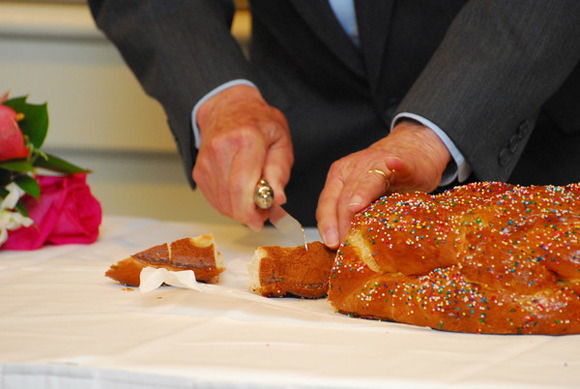
  • Remind your caterer to order ritual foods like the challah, wine, and any other needed items. If you’re not ordering from your caterer, make sure to secure these items on your own or through other vendors. Challahs need to be special ordered for a party the size of an average wedding and you want to make sure you’ve selected your Kosher wine.
  • Provide your wedding party with a breakdown of the wedding day and a time line of the wedding weekend so that everyone is on the same page about the times and locations of the festivities.

1 Day Before

  • Hand over the important and valuable items to someone reliable who will also be near you and your partner the day of the wedding. This person, usually the Best Man, will have the rings, papers with vows, and any other items necessary for the ceremony.
  • Depending on your venue’s contract, you may be able to “move in” the day before your wedding. On this day, bring all items you’ll need for your ceremony (ketubah, easel, pens, glass, wine, etc.) and for your reception (candles, table numbers, favors, escort cards, etc). Obviously you and your venue must be in agreement about this, but we suggest you pack ceremony things and reception things into boxes for ultimate organization and an easy “move in” day.

There you have it: A basic time line for a Jewish wedding. Now, there are zillions of other things you need to check off your list as the time tick-tocks away, and we’ll cover more specific items in the future. Use this as a reference to make sure you’re on the right track. Specific vendors and couples require slightly different variations of this time line, but we hope to get your mind jogging and headed toward the right direction: happy, wedded bliss!

Tick Tock to the Simcha: Part I

A lovely whirlwind of excitement and love follows a proposal. Once the ring starts sparkling on the finger, the bride begins to execute all of her wedding daydreams and turn them into realities. It all sounds fun and girltastic, but when it comes down to the nitty gritty, the panic starts to set in.

“When do I choose a rabbi?”
“What bridesmaids dresses can I get that fit the girls and the temple’s requirements?”
“When does the timer go off on my wedding gown shopping?”

These are all rational and normal questions and a little timeline goes a long way. Here’s a guide that should help you stay on target and keep your anxiety at bay. Feel free to plug in trips to your therapist on an as-needed basis.

12+ Months Before

  • Start imagining your ceremony. Do you want it long and traditional? Short and sweet? Are you planning to include every single ritual or are you leaning toward an abridged version?
  • Choose some preferred wedding dates. There are times of the year that Jewish weddings are off limits. Check out this previous Yentas post for those details.
  • Choose your location. Do you want the ceremony in synagogue? If you belong to one already, that should be easy. Or, you’ll have to search for local synagogues. You can also have your chuppah in a secular location. Think of a favorite place outdoors or get in touch with a paradise-like country club or hotel.
  • Start your search for vendors (photographer, caterer, and reception entertainment as a start) and meet with them to discuss their work. Matching your personalities with theirs is important with musicians and photographers because you spend your whole day with them. This is also when you decide if you want a kosher or kosher-style meal. When you meet with a band or DJ, make sure they can play “Hava Nagila” and are familiar with Jewish traditions.
  • Start researching and narrowing down ideas for an officiant who suits you and your partner. Whether it’s a rabbi, a cantor, a rabbi and a [insert other religion’s clergy here], a justice of the peace, or a friend, you need to know who will be facing you under the chuppah.

9 to 11 Months Before

  • By now you should have an officiant, so meet with him or her to discuss the ceremony requirements. Discuss the different traditions of Jewish weddings and decide which ones you’d like to include on your wedding day.
  • Confirm with your officiant or synagogue if there are requirements for clothing for men and women. Make sure to ask if there is a rule about covering one’s shoulders or if the groom must wear a kittel (ceremonial robe).
  • Coordinate with your temple if you plan to have an aufruf, the honor of blessing and being blessed before the Torah reading on the Shabbat leading up to your wedding.

closter-nj-real-jewish-wedding

6 to 8 Months Before

  • Decide what type of ketubah you and your partner want. Start your search for a ketubah artist if you’d like one custom made for you. Select your text or ask your officiant to assist you in writing your own. For more on the ketubah-shopping process, see our guest-blog feature by artist Rachel Deitsch.

find-a-ketubah---ketubah-studio

3 to 4 Months Before

  • Get in touch with people who you’d love to be honored at your wedding with certain readings or songs. This is also when you should decide who will sign the ketubah. If your chuppah is hand-held, who will hold the chuppah? Is there a family member who you’d like to make the blessing over the challah or wine?
  • Make more purchases! This time, shop for and buy your wedding bands. Remember, according to Jewish law, you must use a simple band without separations or stones. For more details, see the Yentas post on ring requirements. Also remember that this requirement is for the ceremony, and you may still purchase and wear a more ornamental ring after the wedding if you wish.

la-diamond-factory

  • Think about what type of chuppah you want. Does your synagogue offer them if you get married on-site? Do you need to arrange this with your florist? Is there a chuppah rental company near you? Do you want a simple tallit to be your canopy or do you want something more elaborate?
  • Book a rehearsal dinner site and make note of the final invited guest list. Also, secure your wedding rehearsal date and time with your venue and VIPs. Also, FYI, most rabbis will not participate in a ceremony rehearsal because they believe that the chuppah ceremony is sacred and should only be experienced once, therefore, they urge couples to save the experience for the wedding date. Not every rabbi or officiant believe this, but this is something to confirm. However, you can still have a celebratory dinner with friends and family the night or two before the big day as a welcome and get-ready-to-party party!

…To be continued…

Check back on Wednesday for the rest of the timeline so you’re on track to your big day!

Peek-A-Bouquet!

Cake flavors. Stylish but comfy shoes. Seating arrangements. There are so many decisions a bride has to make when planning a wedding. Add to the list: bouquets.

Flowers are the leading carrier of your colors and theme and your bouquet is an expression of you. We’ve always loved the classic white bouquet that the bride carries while her bridal party carries colorful arrangements with complementing flowers. You can never go wrong with white. It’s beautiful and simple and… bridal!

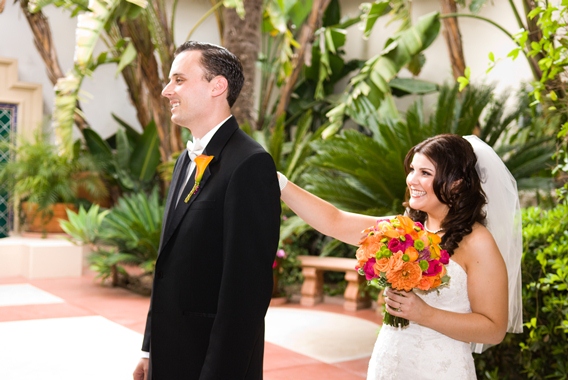
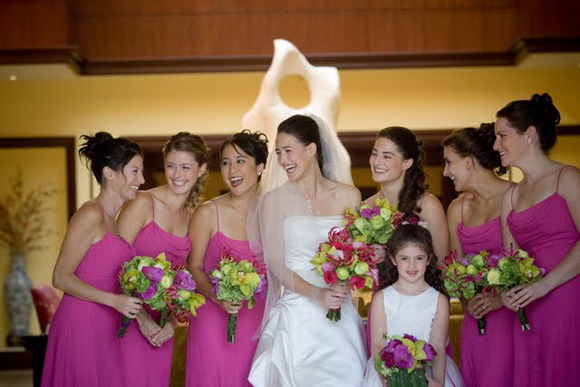
However, considering a colorful bride’s bouquet is a photographic dream! Paying the money and taking the time to design a bouquet means that the arrangement should have a life of its own and draw some “Oooo”s and “Aaahhh”s, dontcha think? When the wedding is over and you’re officially a Mrs., your photos are your ticket back to remembering the most special day and you want to make sure you can really see the flowers against the dresses and tuxes that will usually serve as its background. A splash of color definitely guarantees that your bouquet won’t be lost in a sea of white.

So, today, we pay tribute to colorful bridal bouquets that have a life of their own and smile for photos.