Category Archives: Jewish Traditions

Take A Walk On The Aisle-d Side

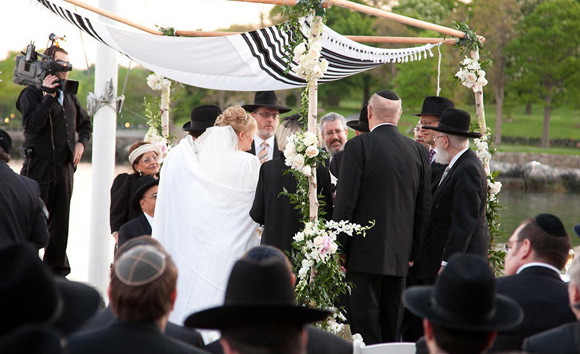
Ever wonder about coordinating the order for the wedding processional? Getting ready to stroll down the aisle doesn’t have to be Broadway choreography. We have the traditional Jewish wedding processional for you right here, so you don’t need to worry about who goes where and when.

First to walk down is the rabbi. If you choose to have a cantor, too, the cantor will walk with the rabbi to his right. They set up shop under the chuppah where there should be a microphone stand and a table with all of the wedding accessories (kiddush cup, bottle of wine [go with the white!], and signed ketubah).

Second to mosey are the bride’s grandparents followed by the groom’s grandparents. If there is a scenario where there is a single grandparent, consider having a cousin or father walk the single grandparent down the aisle. After the walk-down, the grandparents should sit in the first row of chairs, closest to the chuppah. Bubbie’s gotta hear, ya know?

Next, the groom’s attendants, followed by the best man, take a hike down the aisle to clear the path in support of the groom.

Then, the groom walks down the aisle with his parents. The father is to the left and the mother is to the right. Their son is obviously in the middle. It’s a groom sandwich! The groom’s parents should go take their places under the chuppah on the left side (if you’re looking at the chuppah).

While the groomsmen line up to the left of the chuppah (if you’re looking at it), the groom stands at the foot of the chuppah, waiting for his bride to join him.

But first he watches as the bridesmaids and the maid of honor make their way down the aisle and settle to the right of the chuppah (if you’re looking at it).

This next slot would be for any flower girls or ring bearers if you choose to have them.

Finally, the big reveal: the bride walks down the aisle with her parents. The father is on her left and the mother is on her right. The brides parents will then make their way under the chuppah on the right side, joining the new machatunim (yiddish for “in-laws,” also known as, the groom’s parents or the bride’s parents, depending on who’s speaking. Used in a sentence: “We’re going to the machatunim’s house for Passover tonight. Our daughter Esther’s mother-in-law makes a very good gefelte fish, no?”).

What happens next is determined by the rabbi and the couple. This varies from rabbi to rabbi. But eventually, the bride and groom will join their parents and the rabbi under the chuppah to begin the ceremony.

The recessional isn’t much different than the processional. As we learned in 4th grade English, “re” means again, so it’s really just the “-cessional” again. After the glass is broken and there are lots of kisses and exclamations of “mazal tov!”, the couple turns around and faces the guests and leads the way down the aisle. The parents should go next, then the members of the wedding party.

You may choose to have your wedding party paired up in couples. We’ve seen this at many Jewish weddings, so it seems to be okay. If you opt to couple up your bridal party, they can process between the bride and groom and recess after the parents.

As always, we must remind you to consult your rabbi or cantor about this topic before setting anything in stone. We write what we know, but we’re not clergy.

Let us remind you, dear brides, to take a deep breath, open your eyes, and smile! Walking down the aisle and seeing your friends and family surrounding you is an overwhelming and beautiful experience. Take it all in and enjoy!

*Photo courtesy of Eight20 Photography

Friday Favorites | Souperman To The Rescue

It’s a bird!
It’s a plane!
No!
It’s SOUPERMAN!

Souperman is here to fight off its most banal enemy. The cloudiest criminal. The foggiest foe. The saboteur of the skies:

June Gloom.

There’s a silver lining to those foggy, misty, cloud-cover days in June that haunt our supposed summer and it’s called matzo ball soup! Who says you need to have a sore throat and tonsils the size of tennis balls (like I currently have) just to eat matzo ball soup? Passover’s not the only day to take in this stupendous soup. Woman, get in the kitchen: it’s time to get cookin’!

Now, you can absolutely use a mix and dump a can of chicken broth onto the stove. You think I always create from scratch every single time? Hell to the no! But for those special times you want to really be one with your food, here’s a recipe that we love… like Friday Favorites Love.

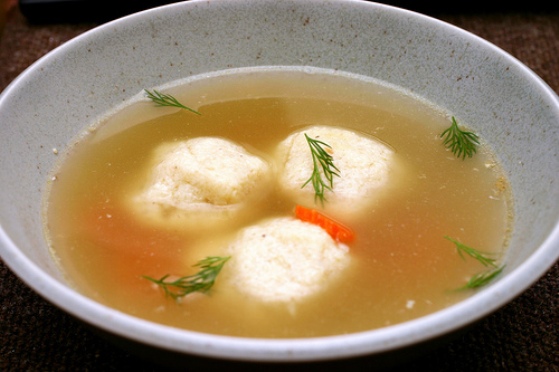
This recipe is from the Smitten Kitchen, an online recipe haven that we use when we’re hungry and pumped to prepare good food. The photos are also courtesy of Smitten Kitchen. Looks delicious, huh? Oh and for the record, the Yentas are all about light and fluffy matzo balls. Poor Nicky lives in a split household; her husband, Eric, prefers them hard. We’re going to be mature adults and refrain from making jokes about that sentence.

Chicken Stock
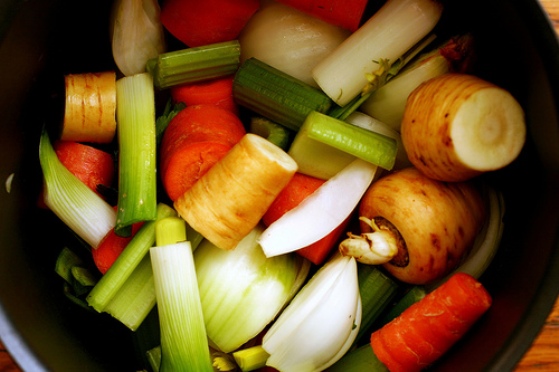
The single most helpful thing you can keep on-hand if you wish to make your own soups and stocks is a stock bag, a concept I picked up from Sara Moulton way back when. This is a bag you keep in your freezer with ingredients you’re saving to flavor a soup base. It’s especially awesome for those of us who hate throwing things away–you never have to. Chopping leeks tonight? Throw the tough green ends in your stock bag. Discarding mushroom stems? Add them too. Only using half that onion? Don’t let it grow old and forgotten in your fridge.

This works for chicken as well. When you go to buy chicken for a dish, grab a whole one and ask the guy behind the counter to chop it for you. It costs a lot less and you can then save the back and wings (because who eats wings?) in a separate stock bag, so they’ll be ready when you are.

Yield: Approximately 3.5 quarts

3 1/2 to 4 1/2 pounds chicken necks, backs and wings
3 celery ribs, cut into big chunks
3 carrots, scrubbed and cut into big chunks
2 parsnips, scrubbed and cut into big chunks
2 onions, unpeeled and quartered
1 head garlic, cut horizontally in half
1 Turkish or 1/2 California bay leaf
1 tablespoon black peppercorns
1 tablespoon Kosher salt
4 quarts cold water
–and/or–
Any vegetables you have stashed in your Stock Bag (described above)

Bring all ingredients to a boil in an 8- to 10-quart heavy pot. Skim froth. Reduce heat and gently simmer, uncovered for 3 hours.

Pour stock through a fine-mesh sieve into a large bowl and discard solids. If using stock right away, skim off and discard any fat. If not, cool stock completely, uncovered, before skimming fat, then chill, covered. Reserve a few tablespoons of the skimmed fat if you wish to use them in matzo balls (below).

Stock can be chilled 3 days in the refrigerator or frozen 1 month.

Matzo Ball Soup

There are two matzo ball camps: those that like them heavy and leaden at the bottom of a bowl and those that like them light and fluffy–these are the latter, and in my mind, the better ones.

If you can’t find matzo meal, pulse a few pieces of matzo in your food processor until it is a coarse powder. If you can’t find matzo, well, you obviously do not live in New York City.

Makes 8 to 12 matzo balls

Matzo Balls
1/2 cup matzo meal
2 eggs, lightly beaten
2 tablespoons reserved chicken fat or vegetable oil
1 teaspoon salt
1/4 teaspoon black pepper
2 tablespoons chicken stock or seltzer (which both of our mothers swear by for making the balls extra light)

For soup
2 to 3 quarts prepared chicken stock (recipe above)
1 carrot, thinly sliced
A few sprigs of dill

Mix all matzo ball ingredients in a bowl. Cover and place in the refrigerator for 30 minutes.

Bring 1 1/2 quarts of well-salted water to a brisk boil in a medium sized pot.

Reduce the flame. Run your hands under water so they are thoroughly wet. Form matzo balls by dropping spoonfuls of matzo ball batter approximately 1-inch in diameter into the palm of your wet hands and rolling them loosely into balls. Drop them into the simmering salt water one at a time. Cover the pot and cook them for 30 to 40 minutes.

About ten minutes before the matzo balls are ready, bring prepared chicken stock to a simmer with the sliced carrot in it. Ladle some soup and a couple matzo balls into each bowl and top with a couple snips of dill. Eat immediately.

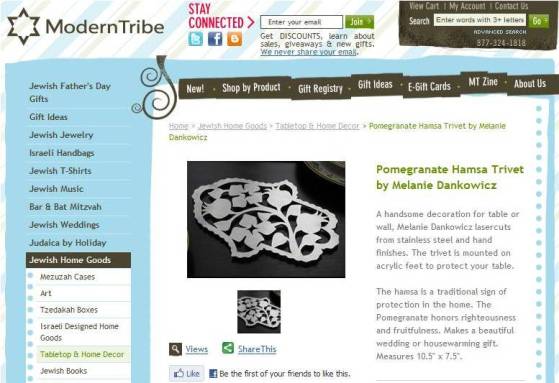
After all your hard work, make sure you don’t ruin your table with a piping hot pot of matzo ball soup. Set it down on this beautiful hamsa trivet that you can purchase on Modern Tribe. Check out the site for more Jewish themed home, holiday, gift, and personal items. You could really spend hours drooling over the online store’s gorgeous and unique items!

We love the pomegranate details and the hamsa is a symbol that wards off evil… like a dark and misty June Gloom day.

Hungry for Chuppahs? Feast Your Eyes!

Times are tough. They say the economy is in the toilet. We’ve heard it all before. But who says the housing market is so bad? On your wedding day, you’ll own the most beautiful home you could ever hope for: a chuppah.

The Hebrew word “chuppah” literally translates to “canopy” or “covering,” and it’s what the bride and groom stand under during their Jewish ceremony. In its most basic form, a chuppah needs a canopy or a sheet, attached to 4 poles in each of its corners, tall enough to allow the couple and their officiant to stand inside.

A chuppah symbolizes the first home that the bride and groom build together, and it’s considered a regular and basic requirement for any Jewish wedding.

Like many Jewish traditions, there are many explanations for the chuppah’s elements. The 4 open sides of the chuppah represent hospitality, just like Abraham’s tent was intended. Therefore, the family and friends who attend and witness the wedding ceremony are considered the bride and groom’s first guests in their “home.” This “home” features no furniture because tradition says the basis of a Jewish home is the people in it and not the possessions or material objects. Apparently, Pottery Barn and Bloomingdale’s Home Store are not actually priorities in the true meaning of life! Thank you, Jewish traditions, for grounding us and keeping us humble.

Even the order in which the bride and groom enter the chuppah has meaningful significance. The groom enters the chuppah first to represent ownership of the new home on behalf of the couple. Then, the bride enters, receiving shelter from her soon-to-be husband, symbolizing his care and responsibilities to her. Totally sweet and gush-worthy, right?

Chuppah decor is a major part of the wedding planning process. Brides are faced with many choices when it comes to designing a chuppah, so we’re offering a brief brainstorm of ideas and chuppahs we’ve seen that work. If you choose to have your florist provide your chuppah and its decor, make sure that the florist has designed and built a chuppah before. When I was planning my wedding, I once met with a florist who didn’t know what a chuppah was. That was a quick and easy cross off my possible florist list!

It’s no lie that chuppahs are beautiful. No matter which style or styles you design, you will be standing under an inspiring and warm space with your partner, in front of all of your favorite people, and pledging to each other the most romantic promise: lifelong love. This alone will make any chuppah you choose a vision of beauty.

In its simplest and very beautiful form, a chuppah canopy can be a tallit that’s attached to the 4 poles that are either secured into the ground or held up by people that the bride and groom may wish to honor. I’ve even heard of a family table cloth draped over the poles to signify a life that’s never hungry and a life that’s full of the company of friends and family, just as that tablecloth had hosted for several generations. Here are some examples of traditional chuppahs:

simple-chuppah

simple-chuppah

Floral chuppahs are probably the most popular. Flowers that coordinate with the wedding’s overall theme and colors are typically incorporated in the chuppah. Here’s a hint: you can save a bit on your flower bill if you reuse the pieces on the chuppah in your reception. They can be recycled and placed on the bride and groom’s table, decorating on a piano, presented along a fireplace, bordering the bandstand, sprucing up the bathroom, or laced within the dessert or dinner buffet. Here are some chuppahs that feature lush and beautiful flowers:

floral-chuppah

floral-chuppah

Many modern Jewish brides are also incorporating cool and chic textiles into their chuppah. Strands of crystals are very glamorous and trendy right now. They give the chuppah some extra sparkle and offer a very rich and unique style. Other modern chuppahs tend to feature severe draping made out of fabrics like gossamer or tulle. The posts of the chuppah can also have modern inspirations, using unique woods like bamboo or twisted pines. These styles complement the surrounding canopy and other embellishments. Below are some neat examples of modern chuppahs:

crystal-chuppah

crystal-chuppah

modern-chuppah

Combining elements from each style of chuppah is gorgeous, too! If you want to hang some strands of crystals from your great grandfather’s tallit canopy and include bunches of dahlias around each post, you would be marrying different ideas to form one beautiful concept.

The day you stand under the chuppah is so special and beautiful! Your chuppah should reflect you as a couple and the kind of life you’re about to begin together.

Welcome home.

Images courtesy of Next Exit Photography, Kim Fox, Michael Norwood, Marc Berenson Studio, Jay Kelly.

Get Down On The Floor-a & Dance The Hora

You and your groom got through the ceremony. The glass is broken. You spent time alone. The guests are enjoying cocktails. It’s time for your grand entrance. You’ll probably show off your first dance. And most likely, right after, you and of your closest family and friends will gallop onto the dance floor and the Jewish instinct kicks in “Fiddler On The Roof”-style: you and your wedding guests grapevine your way into a festive hora dance.

Dance has always been a part of the cultural element of Judaism, usually incorporated into celebratory occasions as early as Exodus 15:20, which was when Miriam led the women in rhythmic dances after the crossing of the Sea of Reeds from Egyptian slavery to freedom. Today, dance also inspires spiritual expression.

So, it’s no wonder that the hora is the norm-a at Jewish weddings. It’s a time to celebrate and honor traditions!

The hora, also sometimes spelled, horah, is danced in 6 beats, usually to the song “Hava Nagila”:

  • Form a circle with your guests and hold hands
  • Step out on your left foot
  • Put your right foot behind your left
  • Step out on your left foot again
  • Kick your right foot out
  • Kick your left foot out
  • Repeat until you’re pooped!

Have you ever mushed up a bunch of Yiddish-sounding words and faked the lyrics, because, really, you have NO idea what the words are? Admit it, you have no idea. Thanks to the Yentas, now, you can dance and sing the right words:

Hava nagila (Let’s rejoice)
Hava nagila v’nismecha (Let’s rejoice and be happy)

Hava neranenah (Let’s sing)
Hava neranenah v’nismecha (Let’s sing and be happy)

Uru, uru achim! (Awake, awake, brothers!)
Uru achim b’lev sameach (Awake brothers with a happy heart)

Uru achim, uru achim! (Awake, brothers, awake, brothers!)
B’lev sameach (With a happy heart)

Somewhere during the dance, your cousins or the fathers or even some shnockered groomsmen will grab some chairs, lift you up, and toss you around while you hold on for dear life. This makes for some fabulous photos! Word to the wise: Have your venue set aside two arm chairs near the dance floor just for this portion of the evening. Emphasis on the ARM chairs. You’ll want something to grab on to. Trust us!!

A mother or an aunt will probably toss a napkin at you. This is not because you have chicken skewer sauce on your face left over from cocktail hour. This is because there’s an Orthodox rule that women and men, including the bride and groom, cannot touch, therefore, dance together. When the bride and groom hold on to each end of the napkin, they can “dance” together up in the chairs without touching. Conservative and Reform couples usually incorporate this tradition in their hora dances due to its festive nature, even if they’re not having an Orthodox wedding.

And now we leave you with a video of a hora at a wedding by Perspective Video. It’s such a fun way to get the party started!

hora-chair-lift

Image courtesy of Next Exit Photography.

Battle of the Bands

He liked it so he went and put a ring on it. Mazel tov.

Now that the engagement ring is taking up coveted finger real estate, it’s time to tackle one of the items on your To Do list: purchasing wedding bands. Naturally, this is a fun and important activity, and most brides daydream about adding some extra bling to the fourth digit or complementing the glory of the engagement ring.

Hold your horses! Don’t rush off to the jewelry store yet! There are some traditions that you may want to know about first so you know how to plan the big ring exchange on your wedding day.

According to tradition, you should probably swap out this

for this.

I can hear your whining from here: “But Yentaaaaaaas! I’ve always wanted an intricate, pave-set, 2 carat, eternity diamond wedding band in white gold!!” Wipe the worry from your little punims. I have a solution, but first a little story, just like all good Yentas tell.

Jewish law says that a marriage becomes official when the groom gives his bride something valuable and that’s typically a ring. The rabbis say that it should be made of plain gold, with no blemishes, ornaments, or breaks in the ring. The continuity of the ring promotes the hope for an everlasting marriage and the lack of ornaments (read: diamonds. Yes, diamonds) signifies the simple beauty that comes from marriage.

During the wedding ceremony, the groom declares to the bride, “Behold, you are betrothed unto me with this ring, according to the law of Moses and Israel.” Don’t worry. The rabbi will cue the lines. No memorization necessary. Jewish law requires that only the groom gives a ring to the bride, but many modern couples choose to exchange rings.

Okay, now brace yourselves. This may be news to you. Raise both your hands. Put your left hand down. Your wedding ring finger is now your right pointer finger, according to Jewish tradition. While Christianity says the left finger is closest to the heart, the Talmud says that it’s the right forefinger that is closest to the heart. The next time a priest and a rabbi are in a bar, they can duke that one out.

So now you know the details of the ring’s appearance and important fingers according to Jewish law. But, wait, let me guess: you’re a modern bride and you already bought your icy wedding band and you’ve perfectly manicured your left fourth finger. Borrow a solid gold band from a family member or friend and use it in the ceremony. Have your best man (who, most likely, was already carrying the ceremony rings) hold onto the “real life” wedding band and you can slip that on after the ceremony so you can party in it. I actually borrowed my grandma’s solid gold band to use in our ceremony and it served double duty as my something borrowed (and I suppose my something old?). It was special looking out at her during the ceremony, knowing I was carrying on a Jewish tradition, using her family heirloom.

The beautiful custom that takes place during the ceremony is meaningful and important. It’s great to honor this tradition, but it’s also reasonable to live your modern, American Jewish life. After all, what happens in the chuppah, stays in the chuppah.