Category Archives: Jewish Traditions

Noshing At Tiffany’s – Styled Shoot, Westlake Village, California

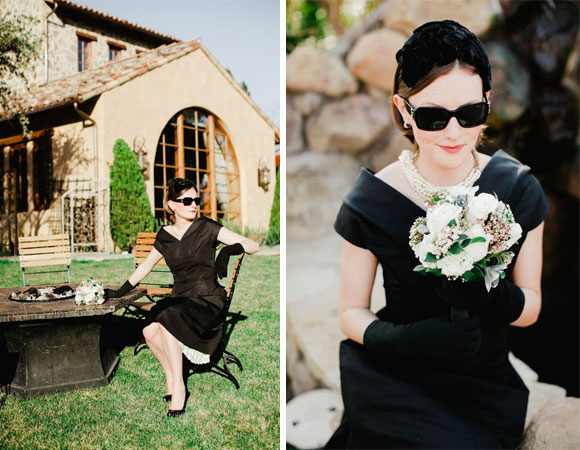
Elegance. Femininity. Fashion. High society. Total Glam.

Those are the words that describe Holly Golightly, Audrey Hepburn, and, of course, Breakfast at Tiffany’s.

Aren’t these wonderful words to use to describe a wedding? Who says you can’t have a wedding in the style of Breakfast at Tiffany’s? Every girl can have her Audrey moment.

But you’re having a Jewish wedding. You have to stick to… tradition! How do you incorporate this kind of aesthetic when your wedding day is mildly or heavily guided by tradition?

Ah ha! A little word play has never been so glamorous:

The Wedding Yentas is proud to present Noshing at Tiffany’s!
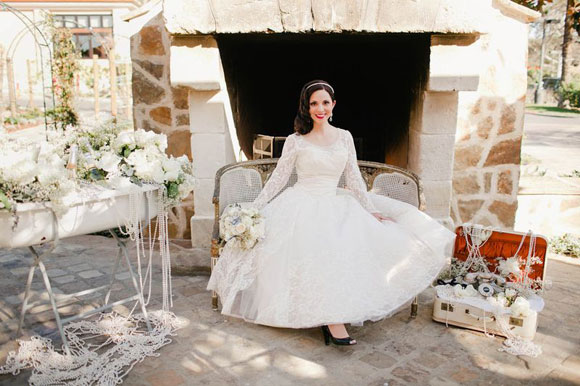
Noshing at Tiffany's Styled Shoot

So how do you pull off a Noshing at Tiffany’s wedding, borrowing details from the movie and style while combining some Jewish flair?

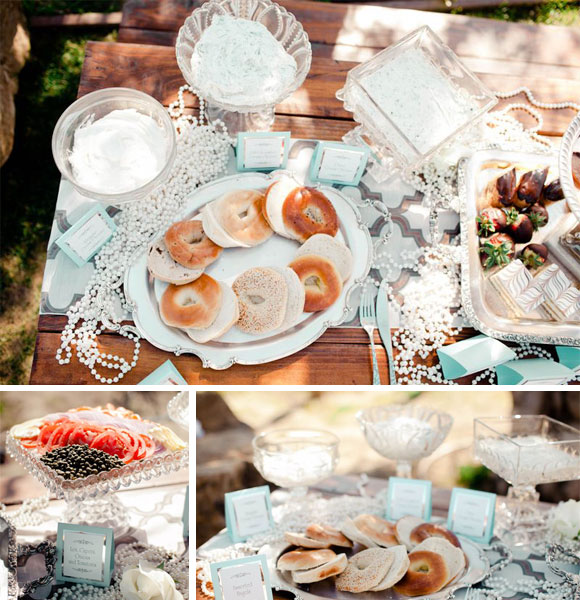
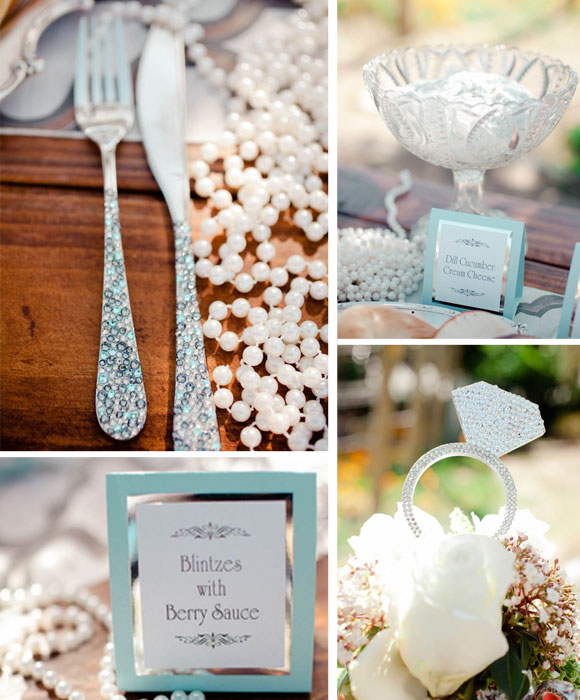
It all starts with food! A brunch time wedding is so yummy and high society! Pick a place that provides a beautiful brunch ambiance. We did (Stonehaus at The Westlake Village Inn) and the environment, food spread, and service provided the most luxurious spot for our photo shoot. While delicate desserts like Tiffany-blue chocolate covered strawberries (Bobalu Berries) and colorful macarons bring in ultimate class, go ahead and bring out the nosh with Jewish delicacies like black and white cookies, blintzes, and other treats you’d find in your deli’s spinning glass dessert case. A variety of bagels will always be welcome at any Jewish event and you can’t forget the accouterments: lox, onions, capers, cucumbers, tomatoes. And the cream cheese? But of course!

Here’s the wedding spin on cream cheese: You know the colorful spread of candy in apothecary jars or delicious dessert buffets we see at wedding receptions as we walk out with our midnight snacks? Here’s a new one for you:

Schmear Bar!

Different flavored cream cheeses to accompany your bagel! Noshing at Tiffany’s fusion does not get any yummier or Jewishy than that!

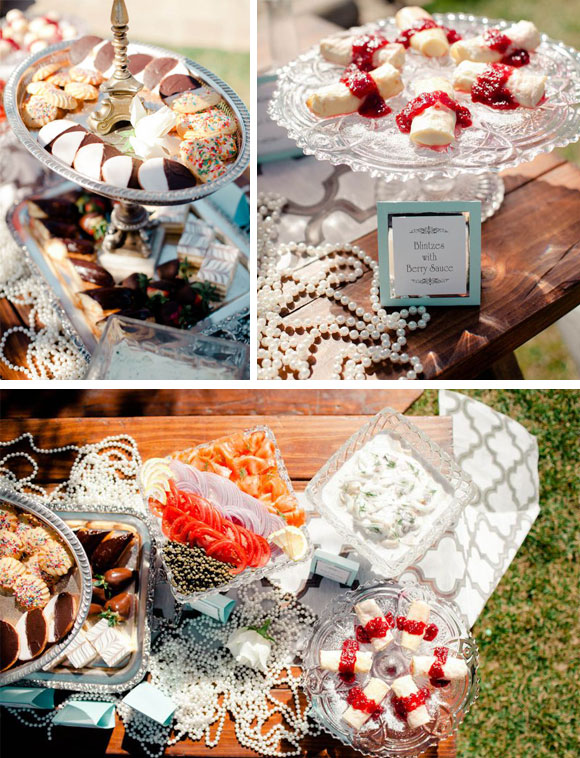
Noshing at Tiffany's Styled Shoot

Noshing at Tiffany's Styled Shoot

NAT4

It would have been criminal of all of us to produce a vintage Tiffany’s-themed styled shoot without that perfect twinkle of blue!

We’ll learn more about the inspiration for the design (An Enlightened Event) later this week, but I’m too impulsive to wait to share the details that are dripping in Tiffany’s robin’s egg blue. The table scape (Pretty Vintage Table and Ventura Rental Party Center) is dessert for my eyes and the brunch buffet even manages to boast signature blue via tri-fold labels (Fla-de-Dahs) and sparkly servingware (Bling Diva Designs). And what’s a better way to tip your hat to Tiffany’s? How about a “cake topper” (Bling Diva Designs) blinged out in Swarovski crystals in the figure of a class Tiffany’s diamond engagement ring? Since Noshing at Tiffany’s is a brunch, we didn’t include a cake and created a dessert tower instead and that pretty little gem of a topper dazzled from the highest tier.

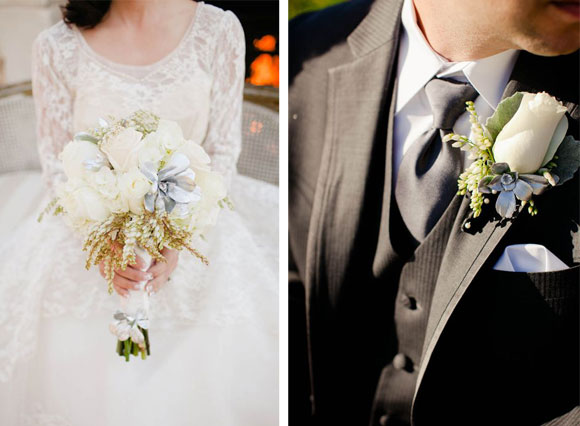
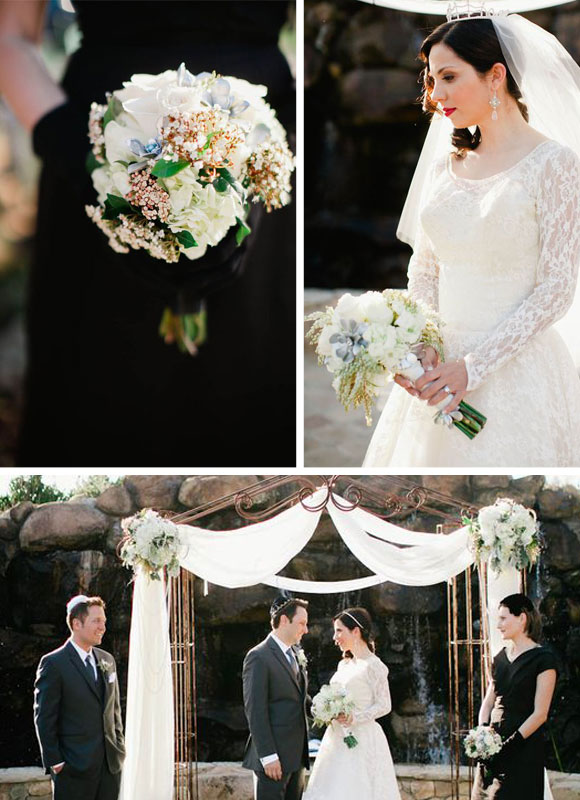
The flowers (Happy Flowers) with silver spray painted succulents add a necessary antique quality to the dream of cream hydrangeas. This carries over from bouquets to boutonnieres to chuppah. The little things add to the big look! The rest of the floral design included romantic and textured blooms like roses, Million Star Gypsophila, Queen Anne palm seeds, Dusty Miller, renunuclas, and Pieris japonica.

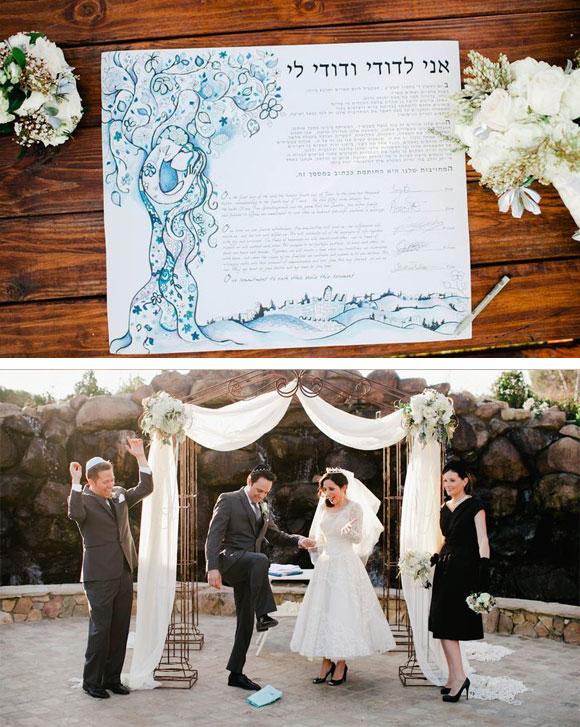
You can even incorporate the palette in your Jewish details, too! Your ketubah (Anna Abramzon Studio) doesn’t need to be made out of Tiffany diamonds (although, twist my arm!), but why not select a piece of art that you love and integrates the color scheme? Success for Noshing at Tiffany’s! And you can purchase glass or use a bag for the glass that pays homage to the look of your wedding.
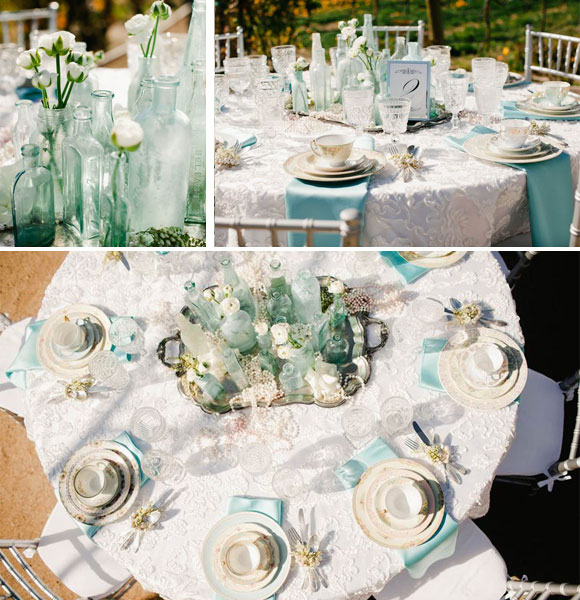
Noshing at Tiffany's Styled Shoot

NAT6

NAT7

NAT8

Noshing at Tiffany's Styled Shoot

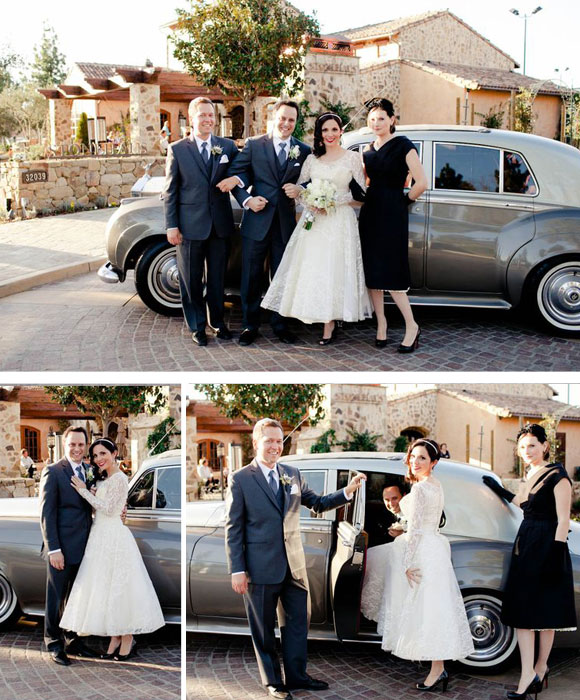
What screams “vintage” more than a Breakfast at Tiffany’s period Rolls Royce? Whether it’s for a getaway or just for photos, a vintage car (Classy Chassis) seals the deal on a vintage wedding. Shots in, out, and around the car with as a couple or with your bridal party is a great way to capture memories from your day.

This is something that even the girliest girl can get excited about!
Noshing at Tiffany's Styled Shoot

It’s impossible to talk about 1961’s Breakfast at Tiffany’s without mentioning what Audrey Hepburn is most known for: timeless, sophisticated fashion. So, for Noshing at Tiffany’s, this was brilliantly achieved and also appropriate for a Jewish wedding.

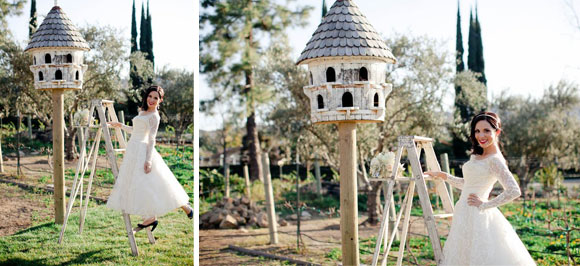
While the dresses our models wore (Mill Crest Vintage) were time-period appropriate (more on the fashion of the shoot later this week!), the wedding dress in particular would be a beautiful gown for a traditional Jewish bride as it boasted a modest neckline and covered shoulders. And the black bridesmaid dress is a reminder of that little black dress that Audrey made so famous.

Wedding experts will tell you that your wedding dress will help dictate the style of your wedding, and dictate it did! The wedding dress was the starting point, and the rest of the vision followed, including the ladies’ hair (Hair of the Bride) and makeup (Sam Salk) styles.
Noshing at Tiffany's Styled Shoot

NAT12

NAT13

This is just the tip of the Noshing at Tiffany’s iceberg! This week you’ll see in-depth details and analysis from the top-notch designers who expertly created the look of this photo shoot. They are the epitome of true professionals in the field. The idea came to me during coffee on a trip to Chicago with the vintage wardrobe designer from Mill Crest Vintage, and then I called upon my troops and they put their creative juices to work! This kind of collaboration is not only inspiring for brides who are currently planning weddings, but for individuals and businesses in the wedding industry.

It was an honor to coordinate this shoot with my wonderful team and I can’t wait for the Yentas community to see the rest of this dreamy result.

Photographer: Erin Saldana Photography
Venue and Catering: Stonehaus at The Westlake Village Inn
Styled Shoot Designer and Wedding Coordinator: An Enlightened Event
Bride and Bridesmaid Dresses & Accessories: Mill Crest Vintage
Floral Design & Chuppah: Happy Flowers
Event Design and Rentals: Pretty Vintage Table
Tuxedos: Friar Tux
Blue Chocolate Covered Strawberries: Bobalu Berries
Rolls Royce: Classy Chassis
Dessert Topper and Servingware: Bling Diva Designs
Paper Food Cards and Paper Table Number: Fla-de-Dahs
Ketubah: Anna Abramzon Studio
Hair Stylist: Hair of the Bride, Helena Van Zandbergen
Makeup Artist: Sam Salk
Linens: Ventura Rental Party Center

Wonderful Models: Runya Simon, Jason Simon, Yana Ward, Jonathan Bluth

Los Angeles Jewish Wedding Video Teaser

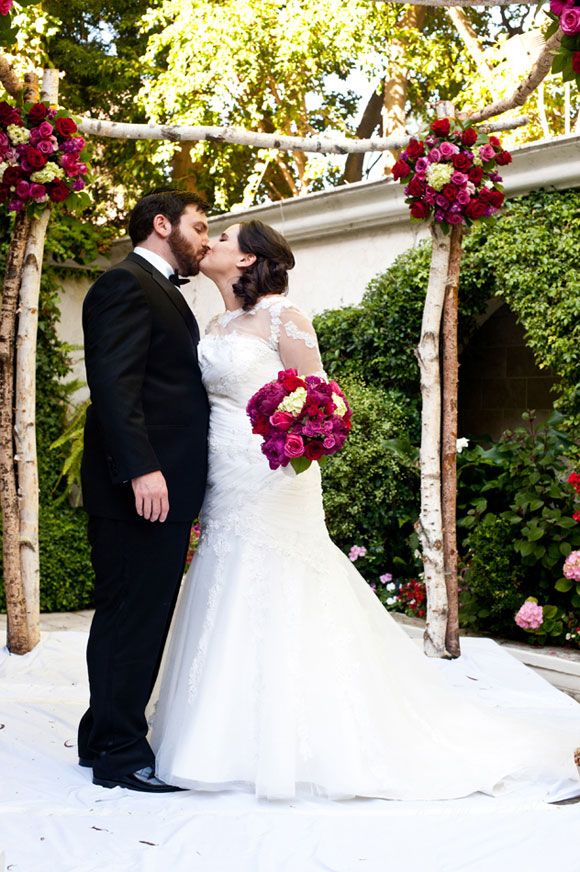
Tuesday, you were treated to Kim Fox‘s amazing photos of Barrie and Daniel’s traditional Los Angeles Jewish wedding. I mean, was it not beautiful?! As bride and groom, they looked like the epitome of true love — of b’shert — through Kim’s lens.

Today, we get to see those gorgeous details and true love in live action thanks to this perfect wedding video teaser from Ahava Films!

Barrie + Daniel from Ahava Films on Vimeo.

Los Angeles Jewish Weddings by Kim Fox

kf7

kf22

kf29

Venue: Sephardic Temple Tifereth Israel
Photographer: Kim Fox Photography
Florist: Efren at Elegant Thorn
Music: Robby Helperin, Simcha Orchestra
Caterer: Pat’s
Hair: Juliana Eckblad
Makeup: Jenna Keller
Cinematographer: Ahava Films
Officiant – Groom’s brother-in-law, Rabbi Stephen Burg

Mourning and Wedding Dates: What You Need to Know About Jewish Customs

Usually around these parts of the inter webs, we talk about fun, happy, pretty things — the wedding equivalent to rainbows and unicorns and fairy dust. I like it like that. And clearly you do, too, since y’all are so loyal as fellow Yentas. But here’s the thing: sometimes, gefilte fish gets real, and we need to talk about things that aren’t as rainbowy and unicornish and fairy dust-like.

I’m going to be frank with you: sometimes, people die. Well, people always die, but sometimes it’s poor timing and they die within the year of your wedding. This could be a, how do I say this? a problem.

This week, I got a phone call from a hotel catering manager who was looking for some information about the Jewish mourning period because her bride and groom just notified her that they’d have to postpone the wedding. The wedding was set for summer of 2013 and a grandparent just passed away. They want to delay the wedding until the period of mourning is over, but the venue clearly stated that their deposit would not be transferrable as noted in the contract. Obviously, the couple is upset by this, and they are currently working on a solution that is mutually beneficial.

This sad tale brought the catering manager to me via phone call (she and I did not know each other previously as we live in different states and have never worked together on The Wedding Yentas) and we spoke about the significance of mourning in Judaism and why we both think that the venue should accommodate the couple and transfer their deposit to a TBD date.

So, not to sound like your bubbie, but, a thousand times POO POO (spit), in case you need to know, I thought I’d share some Jewish mourning guidelines and how they might be relevant to your wedding if the timing is unfortunate. As always, the way you choose to observe Jewish traditions is up to you and what’s best for your family, or consult your rabbi for guidance. As with most traditional Jewish observances, there are many layers to the restrictions. What’s covered here is literally the tip of the iceberg and should not be used as the absolute manual regarding the mourning period.

Basically, after a loved one passes away, there is a series of stages that the mourner goes through varying from solitary grieving to being comforted by others, from staying in the home to returning to the normalcy of life. Typically, the first seven days (Shivah) are the hardest for the mourner who, only at the end of Shivah, begins to take callers and well wishers. Shloshim lasts 30 days and the mourner begins to move on as he or she goes out into the world to do what he or she needs to do. However during Shivah and Shloshim, joining in on celebratory parties or taking part in joyous events is not acceptable as the mourner’s wounds are still so fresh.

When Shloshim ends, the mourner is bridged into the remainder of the year (the whole year makes a revolution from the burial date to the anniversary of the burial). According to Jewish observances, for the mourning of one’s parents, there is to be no attending celebrations of joy during that first year.

Now, who is to say what’s a joyous occasion? This can be such a subjective term. What if going for a walk with your dog brings you joy? What if eating ooey gooey chocolate chip cookies for breakfast brings you joy? The “joy” that the scholars refer to is religious joy or celebration like… you guessed it… a wedding celebration. Going to wish the couple “mazel tov” or attending the chuppah ceremony is OK. However, joining the festivities of a meal and dancing to gleeful music is not.

If a wedding ceremony takes place in a catering or banquet facility where music is played, there is a general rule that people who are mourning parents should not attend for 12 months and 30 days for other relatives.

A festive meal with friends and relatives is considered joy, and the mourner should avoid occasions like these until after 12 months when mourning for parents, and 30 days when mourning for other relatives.

Interestingly, if a mourner chooses to not be part of the wedding day or has requested that there be a postponement of the wedding date and there is a possibility that the delay might cause the bride or groom to withdraw from the marriage, the mourner may attend at any time of mourning and under any conditions in order to avoid indefinite cancellation. The bottomline here is: mourning should not cause the wedding to be canceled. However, if the wedding can be simply postponed, that is better.

It is said that if a mourner feels her or she must attend the wedding celebration before the mourning period is officially over, he or she should perform a serviceable role, like help prepare or serve the dinner or usher guests to seats at the ceremony.

In my personal opinion, a delay of a wedding due to a death in the family is absolutely reasonable, though unfortunate, and wedding vendors should honor this custom without penalizing the couple monetarily. Most contracts typically say that events can’t be canceled without penalty unless there is an act of God. Typically, most people think of natural disasters that make it impossible for society to function. However, a death in the family may also be considered an act of God by some people, and is typically unavoidable.

I hope that none of you ever have to refer to this cheat sheet, but thought the information may be helpful. Now, go out and live life and enjoy your wedding planning!

April O'Hare Photography

Jewish Wedding Tips

Over the course of almost three years, The Wedding Yentas has written extensive articles with your Jewish wedding in mind. Among these articles have been tips about signing with specific ketubah pens, what to drink under the chuppah, what kinds of chairs you should sit on during the Horah chair lifts, and more. Unfortunately, below the hundreds of beautiful Real Weddings, fun giveaways, and Tales From the Veil posts from real brides, some of these iconic pieces of Jewish wedding advice have been buried.

I was with some friends at a Jewish wedding last week and we were talking about certain traditions. “Didn’t you write something on The Wedding Yentas about that?” they’d ask. “Yes, but it was probably over two years ago,” I’d answer. And so it was decided I should unearth these gems and put them in one post so that you could easily read them.

So, here they are! Jewish wedding tips at your fingertips!

Who can sign the ketubah?
Every ketubah must be signed by two witnesses and these people can double dip their honors by being part of your wedding party or they can be two entirely different people. According to Jewish law, the two ketubah signers must be Jewish and unrelated to the couple by blood (sisters and brothers-in-law are technically allowed to sign). Depending on the ketubah text and the couple’s Jewish affiliation, the ketubah signers will most likely sign their names in Hebrew. Give your witnesses advance notice to find out their Hebrew names so they can bring them to the ceremony. The rabbi can also help them write their names in Hebrew if they need help. After all, it’s probably been a while since their bar or bat mitzvah!

What is “yichud?”
The yichud translates in Hebrew to the word seclusion. Traditionally, unmarried men and women should never be secluded together so, in theory, the wedding day is the first time this ever happens between the bride and groom. This law came about after the rape of King David’s daughter when she was left alone with her half brother. It was then that David and his high court extended this prohibition to all unmarried girls. Typically, the laws of yichud are followed by Orthodox Jews but all Jews may interpret the laws to fit their ceremony or beliefs. In early historical times, the yichud was when the just-married couple would consummate the marriage and witnesses would be there to guarantee privacy and verify that it indeed happened because technically, this was a legal and required act.

Fast forward to 2012. Modern day traditional brides and grooms leave the chuppah and go directly to a private area or room for their yichud. For couples who chose to fast on their wedding day in order to start their life anew, this is when they would also break the fast and exchange gifts. Typically, the bride will bless the groom, saying “May you merit to have a long life, and to unite with me in love from now until eternity. May I merit to dwell with you forever.” This is a recommended event on your wedding day as it gives you both a chance to catch your breath, relax, and enjoy your first moments as newlyweds.

How does the groom get a good crunch when he breaks the glass?
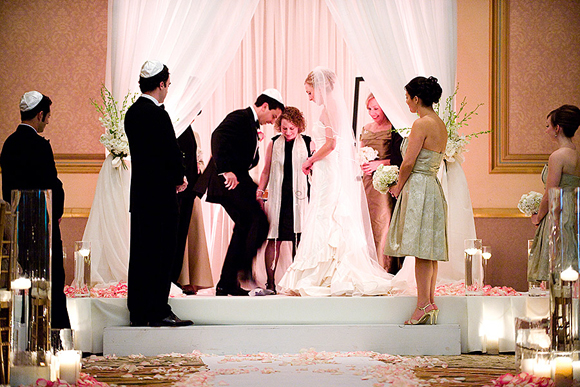
At the end of the ceremony, a glass is placed under the groom’s foot and he stomps on it. Word to the wise that our own wedding coordinator reminded my husband: Use your heel!! You’ll get a louder crunch and you’ll prevent any accidents. Also, include a lightbulb in the bag. Whether you choose to use keepsake glass (typically, colored glass that you can repurpose as a memento) or not, still shove a lightbulb in there (separate it in a plastic baggie if you’re also using keepsake glass). The crunch will be quite satisfying!

Scott and Tem Photography

Scott and Tem Photography

What’s the purpose of the chuppah?
The chuppah is a canopy that symbolizes the home that the bride and groom will build together. The chuppah is open on all sides, also symbolizing that friends and family are always welcome in the newlyweds’ home.

What pen should I use during the ketubah signing?
Avoid pens that feather or bleed. You also want to be certain that your ink won’t fade over time, even if your ketubah soaks up sunlight and UV light. Waterproof pens are also a good idea because someone in your family will be crying tears of joy (I have my money down on a mom). Therefore, you should make sure to use an archival pigment ink pen, which you can find at any framing or art store.As you sign your ketubah, be sure the ink has dried before wrapping or rolling it up. You’d hate to smear your document! And never, ever use a felt tip pen like a Sharpie because it will bleed into the paper and potentially damage any art on your ketubah.

How should I personalize my yarmulkes?
There’s no rule here. For my own wedding, I just included The Wedding of Alison & Bryan with our wedding date underneath. While it’s not wrong to include last names, you might not want to take up extra space and clutter the area with the 2 additional names. Plus, by the time people take them home to re-wear them, you will no longer be known as your first name and maiden name (exciting, right?!) and you will both have the same last name (mazel!). So, my suggestion would be to keep it to the first names. Nothing’s right, nothing’s wrong. Personal preference and that’s mine.

You can also include your wedding date below the names. You can use the American calendar like I did — May 25, 2008 — or you can include the Hebrew month, day, and year. You’d need to check to make sure you have it correctly, but it just depends on how Jewish you want to make it.

What kind of ring should be used in the ceremony?
Jewish law says that a marriage becomes official when the groom gives his bride something valuable and that’s typically a ring. The rabbis say that it should be made of plain gold, with no blemishes, ornaments, or breaks in the ring. The continuity of the ring promotes the hope for an everlasting marriage and the lack of ornaments (read: diamonds. Yes, diamonds) signifies the simple beauty that comes from marriage. Jewish law requires that only the groom gives a ring to the bride, but many modern couples choose to exchange rings. While Christianity says the left finger is closest to the heart, the Talmud says that it’s the right forefinger that is closest to the heart. The next time a priest and a rabbi are in a bar, they can duke that one out.

So now you know the details of the ring’s appearance and important fingers according to Jewish law. But, wait, let me guess: you’re a modern bride and you already bought your icy wedding band and you’ve perfectly manicured your left fourth finger. Borrow a solid gold band from a family member or friend and use it in the ceremony. Have your best man (who, most likely, was already carrying the ceremony rings) hold onto the “real life” wedding band and you can slip that on after the ceremony so you can party in it.

What kind of wine should we drink under the chuppah?
When you think of Kosher wine, you probably picture it to be red. But there is white Kosher wine that’s totally legit and absolutely delicious and, most importantly, it won’t STAIN YOUR WHITE EXPENSIVE DRESS if it drips or splatters during the ceremony. You really won’t regret this decision and I hear couples ask all the time, “Why didn’t I think of that?” Well, now you have!

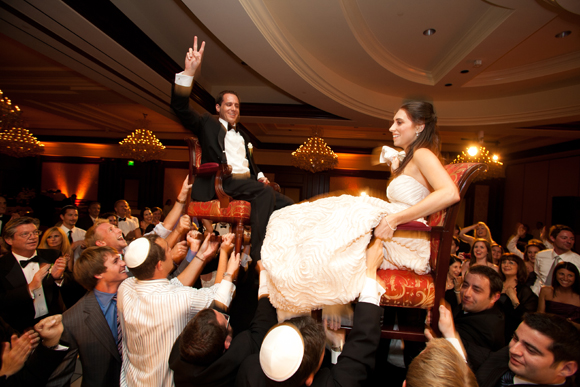
During the Horah, what kind of chairs should we be lifted in?
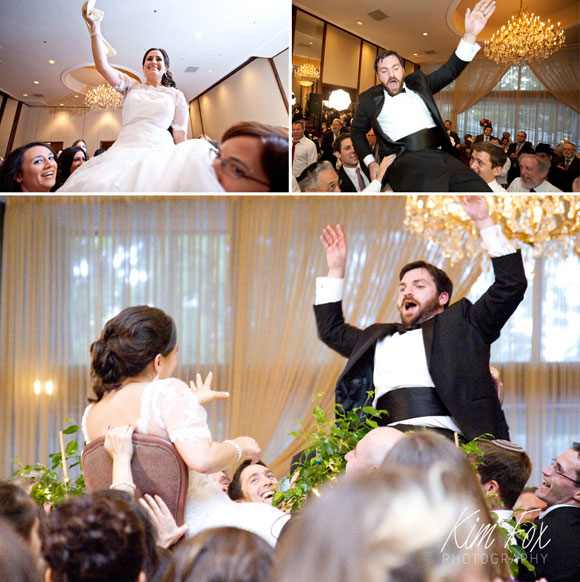
If you are feeling The Chair Scare, hopefully you’ll gain some peace of mind here. This is supposed to be a fun tradition and definitely not something that causes you stress. Make sure that your venue or wedding coordinator set aside two arm chairs for you. There should be two chairs with arms. Make sure the chairs have arms. You should use arm chairs. Is the point clear? This gives you something to hold on to and provides your body with boundaries as you become (lightly) jostled around.

Mi Belle Photography

Mi Belle Photography

Jewish Weddings 101 For Groomsmen

The Wedding Yentas are happy to have Brian Becker guest-blog today! Brian, who is not Jewish and more of a practicing Nothingish, has been the Best Man in a Jewish wedding and brings his expert opinion to the Yentas family of readers. Here he explains what every Jewish bride and groom should tell their non-Jewish wedding party.

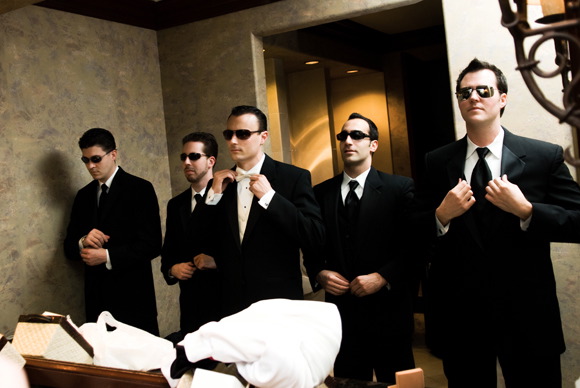
I am not a Jewish Bride. I’m not even Jewish. But having been the Best Man, I do have an important piece of advice for anyone getting ready to tie the knot – a little list I like to call “Things to Tell Your Gentile Groomsmen.”

image-courtesy-of-eight20-photography

Look, men are already at a disadvantage because…well…we don’t know about weddings. And unlike bridesmaids who are let in on every little detail, for the most part, nobody tells us anything. So imagine how confusing it can be to be the goyim in the wedding party when the more traditional customs start to unfold. For example…

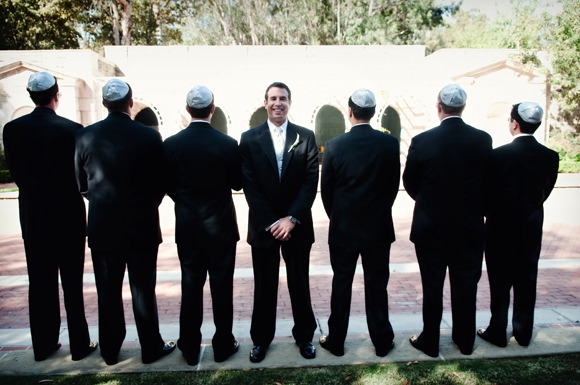
Yarmulkes. We’ve probably never worn one. In fact, I just had to look up how to spell it. On top of that, we’re expected to fasten it with another foreign piece of hardware: a bobby pin. In my case, the groomsmen did such an abysmal job that the bridesmaids had to do emergency readjustments just seconds before we escorted them down the aisle. So please, do everyone a favor and offer a little kippah 101 in advance.

image-courtesy-of-eight20-photography

Rings. As the Best Man, I was the nearest person with pockets at any given moment. That meant that I was constantly being handed more things to carry. In fact, I ended up carrying three ring boxes (one for the groom, one for the bride and one plain, unornamented ring for the bride to use during the ceremony). Add to that other last-minute cargo like vows and tissues, and the groomsmen can start to feel like we’re wearing saddle bags. Do your best to think through who will schlep around your wedding day accessories – and give that person a heads up!

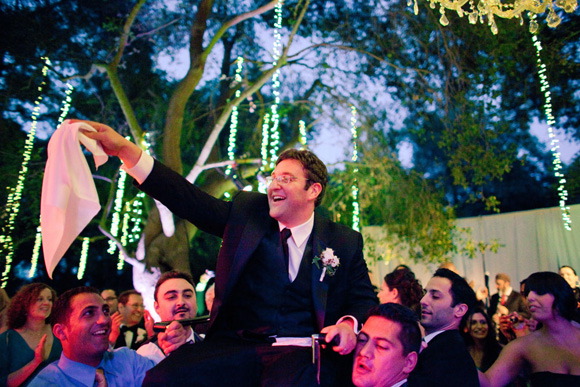
The Hora. Think for a second what it must be like to witness a giant whirlpool form on the dance floor just moments before someone grabs your hand and pulls you into the vortex. Speaking for the “non-chosen people,” we do not see that one coming. What’s more, we’re expected to hoist the groom up on a chair and carry him around for several minutes. This is a great moment, and a lot of fun. Just make sure you prep your bridal party that some heavy lifting may be required.

image-courtesy-of-meghan-aileen-photography

The Ceremony. If you’re incorporating Jewish traditions into your wedding, it’s a nice idea to explain them in advance. Otherwise, while you’re circling your husband seven times, your groomsmen may be scratching their heads. If you fill the bridal party in on the significance of the customs featured in your ceremony, they’ll be able to share the moment with the rest of your guests, instead of wondering what’s going on.

Take it from a Jewish wedding survivor: A little orientation can go a long way. Make a point to share some your wedding customs with the gentile-men in your bridal party, and you’ll help ensure that every one is relaxed and happy on your special day. Good luck…and l’chaim!

brian-becker-best-man

Brian Becker is a freelance writer and editor, and most importantly, a Best Man extraordinaire. He lives in the Los Angeles area and enjoys a good Captain and Coke, an Aaron Sorkin flick, and a round of trivia.