Category Archives: Jewish Traditions

Choosing Sides

I recently went to the wedding of one of my best friends and it was absolutely perfect in every way. Not a detail was missed and my sorority sisters and I had the time of our lives celebrating our girl marrying her dream boy.

Our friend is Jewish and her husband is not. We knew that they weren’t going to have a religious ceremony for either religion, and we knew it would be a beautiful blend of their individual selves coming together as one. But still, even though we knew not to expect the Sheva Brachot (the seven wedding blessings) to be recited or a presentation of a ketubah, and we knew there’d be no religious clergy of any kind to marry them, our group walked into the gorgeous ceremony ballroom and had no idea on which side we should sit.
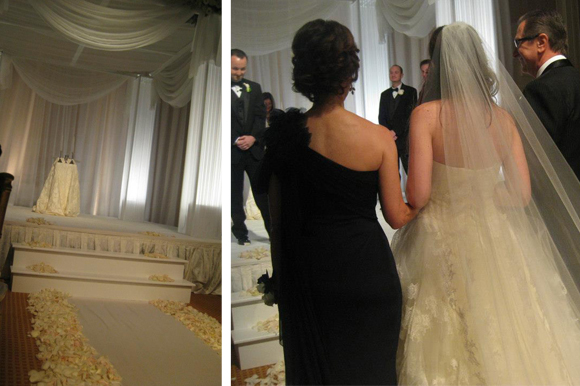
In a Jewish ceremony, our right side would have indicated the bride’s side. But, in a non-Jewish ceremony, the bride’s side would be to our left. We were some of the first to walk in (SOMEONE had to have the best seat in the house! What a Yenta!) and couldn’t even deduce based on the rest of the friends and family we knew.

So, we gambled (which was appropriate since the wedding was in Las Vegas, the bride’s hometown). We chose the left side, assuming the wedding wouldn’t be a traditional Jewish wedding, and continued to wonder if we’d made the right choice.

According to Rabbi Barry Tuchman of Weddings with Spirit, the Jewish people always maintained brides standing on the right and grooms on the left for no religious reason at all. It was just tradition. The Catholics and Christians also coordinated the same positioning for their weddings, but it wasn’t until the 1400s when it was decided that brides needed to be standing on the side opposite of the groom’s sword. Swords? In a wedding? Is The Princess Bride based on a true story?

Gather round the campfire, friends, and prepare to hear the wedding lore of long ago. Back in the day, like, hundreds of years ago when there were horses and swords and stuff, kidnappers would abscond with the bride so that they could get his paws on her dowry. These bad guys literally shoplifted the bride. Uncool. Because chivalry still existed, obviously the groom had to protect his woman so it was decided that the bride would stand opposite of his sword arm. And apparently, all men back then were right handed, so the sword hand was his right side and the bride would therefore stand on his left. This is the tradition that dictates where the bride and groom stand in mainstream/non-Jewish weddings. However, in Jewish ceremonies, the bride still stands on the right and the groom still stands on the left just as they always had.

Apparently nice Jewish boys don’t carry swords???

Nowadays, it’s becoming common for the couple’s guests to just pick a seat with no affiliation to the bride or groom’s “side.” Most couples share groups of friends and many are already living together and spending time with each others’ families, so the notion of a guest being at the ceremony in support of one of the two people getting married is becoming more and more dated. In fact, photos of signs are showing up instructing guests to sit where they’d like instead of on the side of either the bride or groom.
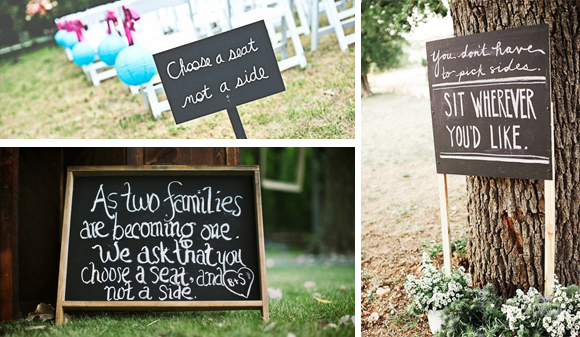
Top: Emmaline Bride; Right: Project Wedding; Bottom: Weddingbee

Meanwhile, back in Las Vegas…

While we waited for the processional to start at our friend’s wedding, we wondered which side each would stand on. We were on spilkes hoping we weren’t committing some terrible faux pas. All suspense was satisfied when the handsome groom stood on the left. Gasp! It was shaping up to be a Jew-ish ceremony after all. And it was! Some sips of wine. Some glass breaking. A hearty “mazel tov!” All surrounded by a beautiful chuppah. No Hebrew, no prayers. Just wonderful, deep-rooted traditions that make sense for any couple of any faith — whole or blended — and in love.

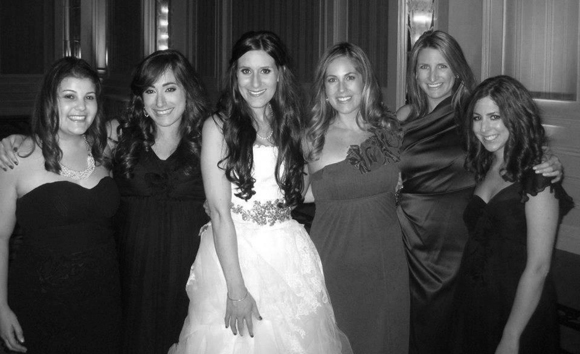
I decided that even though I’m a sap for tradition, I am also a big fan of not taking sides at a wedding. While in this particular case, I’ve known the bride longer and she has been a dear friend since I was a freshman in college, the groom had also become my friend. We’d traveled together as couples. He became friends with my husband. I’d met his family. All of us sorority sisters and our fellas who traveled to Las Vegas to attend the wedding were there for both the bride and groom. Also, another perk to sitting opposite of the bride: we could see her the whole time! Her back was never to us. We could gush over how beautiful she looked. We saw every giggle and tear that graced her face. It was not about having to pick a side. We’d picked her side long ago. The wedding was about them picking us to support them.
What do you think about bride and groom sides at a wedding? Will you tell your guests to sit where they please? Do you make sure to sit on a specific side when you attend as a guest?
Sponsored Post: Choosing Your Wedding Rings

Today The Wedding Yentas is happy to welcome Zoara as an expert in all things wedding jewelry! Zoara is the culmination of over 50 years of combined professional expertise in the diamond and jewelry industries. For decades the company’s founders and management have been offering high-end jewelry and diamonds to the public in retail stores and online at Zoara.com.

*****************************

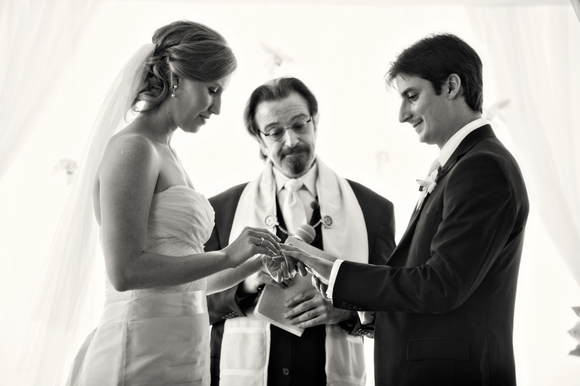
Rabbi Barry Tuchman performs a Jewish wedding ceremony and ring exchange. Photo by B&G Photography.

Choosing such a personal item like a wedding ring is going to take some time and looking around. One of the biggest mistakes you can make is thinking this will be a simple task. Even if you just want a simple band, there are a lot of decisions to make: Curved or flat? Polished or matte? Narrow or wide? The list is long.

Traditionally kosher Jewish wedding bands are plain and without stones set into them. This came from a tradition where the bride should be able to easily find out its value and was needed because its worth, not the actual ring, that mattered. Nowadays, this is much more relaxed among modern Jewish couples, although most brides and grooms opt for plain rings anyway. According to Jewish tradition, it is not necessary for the bride to give the groom a ring, but most husbands and wives both choose to wear rings for equality.

Here are a few features to consider when choosing your wedding rings:

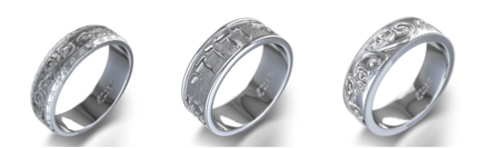
Textured Wedding Rings
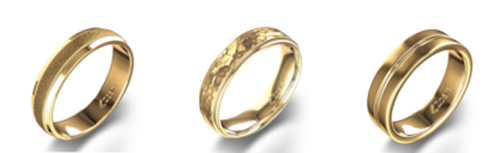
Women’s and men’s wedding rings come in loads of different textures. This is a great way to add some detail to the ring while still meeting kosher requirements. There are many textures available and it is easy to choose matching rings for bride and groom. A texture is not a design, but rather a finish or combination of finishes.

Ring on the Left
Ring in the Middle
Ring on the Right

Patterned Wedding Rings
These wedding rings have a pattern engraved in them. They have limitless possibilities of what can be engraved or embossed. A popular choice for wedding bands is “Ani L’dodi” rings. This is taken from Song of Solomon and means “I am my Beloved’s.” Other patterns can include floral designs, geometric shapes, and just about anything you can think of.

Ring on the Left
Ring in the Middle
Ring on the Right

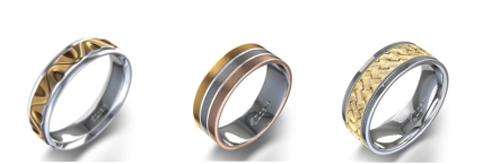
Two Toned Wedding Rings
This is one of the latest trends, especially for men. Multiple tones of gold are used to give added dimension and interest. These rings are especially beautiful and they have that element of uniqueness. The various colors can be intricately incorporated with designs or simply just bands of color. Two toned rings present an opportunity for you to explore the artistic and creative side of jewelry.

Ring on the Left
Ring in the Middle
Ring on the Right

If you are having trouble finding jewelry that you like for affordable prices, you might try shopping online. It is a great option because prices are very competitive which means you get a great deal. Zoara is an online jewelry store with a huge range of wedding rings and Jewish jewelry available. You are certain to find the perfect wedding rings that you will treasure for the rest of your lives.

What kinds of rings do you like?

The Names You Should Use On Your Yarmulkes and Ketubah

Two very reasonable questions came my way and I thought they’d be great to share with all of Yentaland. These questions crossed my mind when I was planning my wedding as well, so I’m sure there will be readers who are looking for these answers, too.

First, a message from Melanie:
Hello Yentas!
I am so glad I finally found you! I am trying to order the yarmulkes and I have no clue what to write inside. I don’t live in my home town so I can’t go to the drawer with all of the old ones in it. So do personalize them with:

“The Wedding of Bride’s First and Last Name & Groom’s First and Last Name” or should I just use our first names?
What goes inside? Please and thank you!
Melanie

Answer from The Wedding Yentas:
Hi Melanie!
It’s really up to you when you personalize the inside of your yarmulkes! It’s a personal preference. For my own wedding, I just included The Wedding of Alison & Bryan with our wedding date underneath. While it’s not wrong to include last names, you might not want to take up extra space and clutter the area with the 2 additional names. Plus, by the time people take them home to re-wear them, you will no longer be known as your first name and maiden name (exciting, right?!) and you will both have the same last name (mazel!). So, my suggestion would be to keep it to the first names. Nothing’s right, nothing’s wrong. Personal preference and that’s mine.

You can also include your wedding date below the names. You can use the American calendar like I did — May 25, 2008 — or you can include the Hebrew month, day, and year. You’d need to check to make sure you have it correctly, but it just depends on how Jewish you want to make it.

Good luck!!
Alison

Great question, right? Melanie, I hope that helped you!

Next, another question about last names, but this time it’s in regards to the ketubah.
On Facebook, Megan asked:

Ok this may be a dumb question but do I sign the ketubah with my maiden name or married name??

Answer from The Wedding Yentas:
Not dumb!! Totally reasonable question. Since you sign the ketubah before your chuppah ceremony (which also serves as your official civil ceremony), you’ll autograph the ketubah with your maiden name. All ketubah signers, as well as marriage certificate signers, should use their full names, and that includes the bride and groom. If you have a Hebrew name, be prepared to know what it is and sign that as well. If your Hebrew is a little rough or non-existent, your rabbi should be able to help you write the letters. Always check with your officiant for specific directions.

So there you have it! Two totally reasonable questions with answers that hopefully help some fellow Yentas in distress.

If you have more questions, feel free to email them to alison @ theweddingyentas [dot] com and I’ll be happy to help you! I’m a geek, so I normally know the answer but if I don’t, I’ll find out for you. Consider The Wedding Yentas your personal wedding concierge!

Sponsored Post From The Expert: Jewish Wedding Ceremony Traditions and Explanations

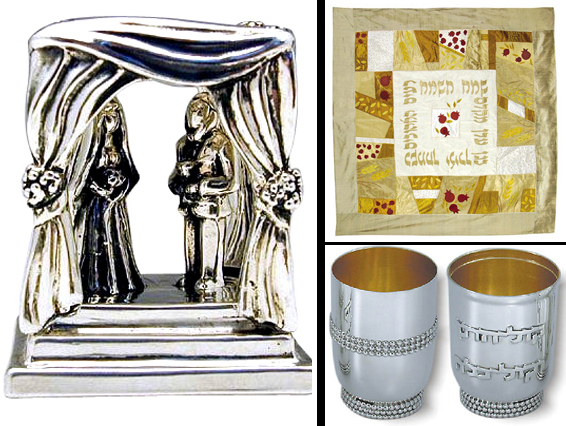
Sometimes, we need a play-by-play reminder of what the Jewish wedding traditions and ceremony are all about. If you’re new to Jewish weddings or you need to brush up on the whole event since your the marriage booth at your summer camp’s carnival, this post, sponsored by World of Judaica, will be a total lifesaver! Keep this post bookmarked so you can refer to it as you plan your wedding. Remember, though, that it’s a traditional guide and you should check with your officiant about how your wedding ceremony will be personalized and tailored to you since every couple is different and every Rabbi or Cantor is different! Mazel tov from World of Judaica!

**************************************

It’s true that many traditions may vary between the Ashkenazi and Sephardic communities, but no matter the affiliation and heritage, the wedding day is supposed to be the happiest and holiest day in one’s life. This day is considered a personal Yom Kippur for the bride (Kallah) and groom (Chatan).

It is customary for the bride and groom not to see each other for one week before the wedding. This is called the Kabbalat Panim, and is intended to increase anticipation and excitement for the wedding. When the couple first sees each other on the wedding day, the groom will perform the Badeken, veiling of the bride. The groom lowers a veil over the bride’s face because the tradition of veiling goes back to biblical times when Rebecca covered her face before marrying Isaac. (Many Sephardic communities do not perform the Badeken.)

Before the couple heads to the Chuppah (wedding canopy) for the ceremony, they must first sign the Ketubah. The Ketubah, or marriage contract, outlines the groom’s responsibilities and obligations to his wife. The Ketubah must be signed by two witnesses and has the standing of a legally binding agreement. After the Ketubah is signed the wedding ceremony may commence. The ceremony takes place under the Chuppah, which is a symbol of the home that the new couple will build together, and is open on all sides just as Abraham and Sarah’s tent was open on all sides to always welcome guests with unconditional hospitality.

The best man is first to walk down the aisle standing to the left under the Chuppah, the groom is escorted by both his parents down the aisle before he takes his place to the left of the best man. Next comes the bridesmaids walking single file and take their place to the right of the Chuppah. The maid of honor walks down the aisle alone and takes her place on the right side of the Chuppah. The bride is escorted down the aisle by both parents before entering the Chuppah and joining her groom.

Like many Jewish ceremonies, the wedding ceremony begins with a cup of wine. The Rabbi says a blessing over the cup of wine and a second over the marriage. Both the bride and the groom drink from the cup. This portion of the ceremony is called the Kiddushin. During the ring ceremony the wedding ring is placed on the bride’s right index finger, which is the finger most visible to the witnesses. Jewish wedding rings must be made of solid uninterrupted gold, silver, or platinum with no precious stones or holes breaking the circle. The continuousness of the ring represents the hope for an everlasting marriage. After the exchanging of the rings, the Ketubah is read aloud. Once the groom has handed the Ketubah to his bride, they are officially husband and wife.

The second half of the ceremony continues with the Nissuin. A second cup of wine is filled and the Sheva B’rachot, seven blessings in honor of the wedding, are recited. At the conclusion of the ceremony the groom smashes a glass with his foot and the guests then shout “Mazel Tov!” — congratulations and good luck.

For more information on Jewish wedding traditions, other Jewish traditions and Judaica items visit World of Judaica and their Jewish Learning Center today.

Explanation of Traditions for Your Wedding Program

********** GIVEAWAY GOING ON NOW THROUGH JULY 2nd!!! ***********

Don’t forget your chance to enter to win! Clay Bouquet is giving away a $25 gift certificate to her store! Just check out Clay Bouquet‘s shop and report back by leaving a comment here and sharing what you would choose if you won the prize!

Entries will be accepted through Monday, July 2nd at 11:59 p.m. PST. Winner is selected at random and announced on Facebook on July 3rd. Good luck!

******************************************

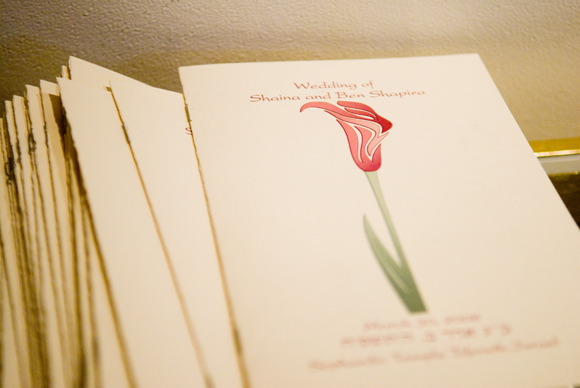
Are you providing programs for your guests? Programs are a great extra detail to create for your wedding ceremony. It’s a perfect place to welcome your friends and family, say thank you to those who made your wedding day possible, and even remember the loved ones who are no longer with you, but hold a special place in your heart and memory.

And, most importantly, it’s an ideal place to share some of the traditions your guests may see while you’re under the chuppah. Usually, a rabbi will lead the ceremony and describe what’s happening and why, but for those who want to take the program with them or if they missed the rabbi’s description, your friends and family can read about the beautiful traditions you’re including.

A typical wedding program will include the couple’s name, wedding date, and location on the cover. Inside, guests can usually find a welcome message from the couple, an ordered list of the people in the processional (officiant, parents, grandparents, bridal party, etc.), the order of the ceremony (this includes readings or songs and who will be performing them if it’s anyone other than the officiant), the traditions included throughout the day before, during, and after the ceremony, and an in memoriam-type of list.

This is a guide that has popular, mainstream Jewish traditions. If you are choosing to include other customs from another religion or culture, this would be a good place to add them. If your ceremony is more on the super reform side, you can tailor the wording and traditions listed below. And if you’re going ultra traditional, you’ll most likely need to add several more components. These selected traditions are from a modern, mainstream “conservaform” wedding and seem to follow the types of Jewish wedding ceremonies that visiting Yentas are designing. Feel free to “steal” what works for you and confirm with your officiant. It would be impossible to include every couple’s possible specific traditions and their “whys” and “hows” since all couples’ interpretation of Jewish weddings are different. So, I must reiterate, this is a skeleton, not a set-in-stone format.

Good luck! Email alison@theweddingyentas.com if you have additional questions!

Ketubah
The marriage contract (ketubah) specifies the couple’s commitment to each other. The ketubah was signed during a ceremony before the wedding service and contains the signatures of the bride and groom as well as two witnesses who are Jewish and not blood relatives. The rabbi has also signed and dated the ketubah to make it official.

Bedeken
The bedeken is the veiling ceremony during which the groom placed a veil over the bride. This ceremony took place privately and is considered one of the most moving elements of a traditional Jewish wedding. By covering his bride with a veil, the groom ascertained her identity, and confirmed that he is marrying the woman of his heart’s desire.

Chuppah
The chuppah is a canopy that symbolizes the home that the bride and groom will build together. The chuppah is open on all sides, also symbolizing that friends and family are always welcome in the newlyweds’ home.

Hakafot
The bride circles the groom (hakafot) seven times. Two interpretations of the significance: seven is the number of days of creation, and the wedding ceremony is the creation of a new household; seven is the number of times the phrase “when a man takes a wife” occurs in the Torah.

Wrapping the Tallit
During the final benediction, the couple is wrapped by a tallit (prayer shawl) around their shoulders. This wrapping symbolizes the private Jewish life the bride and groom will have together.

Breaking of the Glass
The wedding ceremony concludes with the groom breaking a glass under his foot. There are many significances behind this custom. One of them is that it is a reminder that relationships are as fragile as glass and must always be treated with care, love and respect. After the breaking of the glass, the guests yell, “Mazel Tov!” which means good luck.

Yichud
After the chuppah ceremony, the couple is escorted to a private room and left alone for a few minutes. These moments of seclusion signify their new status of living together as husband and wife.